Blog Archives
Alarmed Green Heron
 Friends, this green heron was alarmed by my presence, and i was alarmed when i got a closer look at this image, long after the bird had flown away, it was then that i noticed the feathers on the top of his head standing straight up on end. Usually when i see this green heron, his head feathers are slicked back (like Elvis) and he is peacefully hunting the shoreline for aquatic food. But when he discovered me, his feathers pointed the way and up he went. Live and learn til Tomorrow MJ
Rusty Heron
Friends, this great blue heron doesn’ t look very blue, more brown, but he was sitting still so i took his picture. i think he is an adult bird cause he has the little black feather off the back of his head, and maybe he is brown because the iron-rich water stains the big birds by late summer. The feathers of sandhill cranes and trumpeter swans in Crex are also rust colored from the water this time of year. til Tomorrow MJ

Green-winged teal

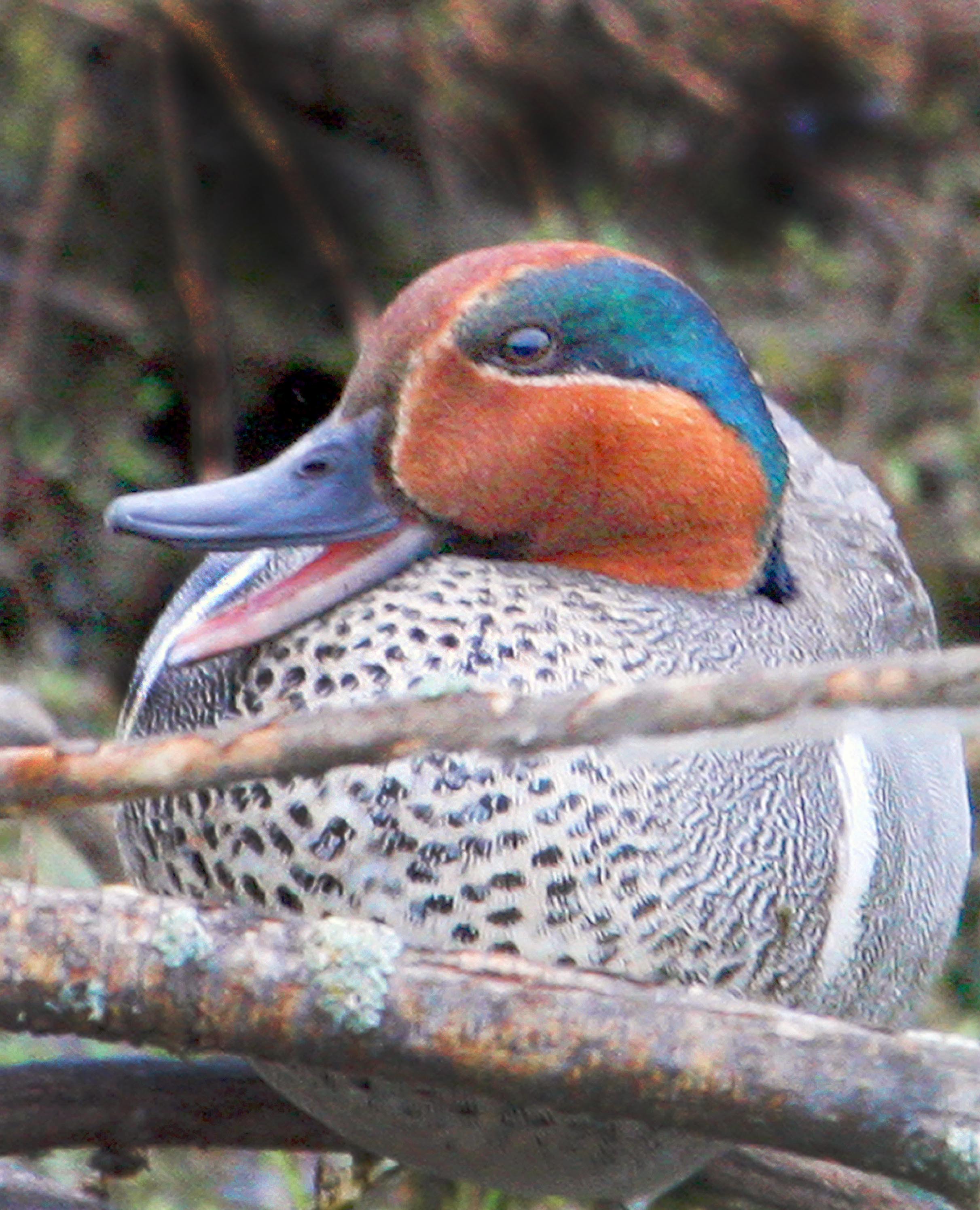
Friends, this sassy fellow is a green winged teal waiting on the ice for spring to begin. They are migratory and appear to be resting up after their long flight to our northland. I love the little detailed feathers along his side and his beautiful green eye stripe. Does this mean that spring is around the corner, no, it means i made this image last spring. :), til Tomorrow MJ
Pin Feathers

Friends, today we have winter all in one shot, been short of snow all winter, now on leap day, Feb 29th, we have a foot of snow and more coming. This is another macro shot of my favorite bird feathers with the yellow shafts. This time i concentrated on the base of the shaft and the pretty pin feathers. This preparation is dry (no ice) cause a friend requested that i show the through focus technique in a dry situation. well here it is, do you like dry or ice??, I personally think that the ice gives a more saturated colors and i like the bubbles. til Tomorrow MJ
Feather details in Ice-Part two
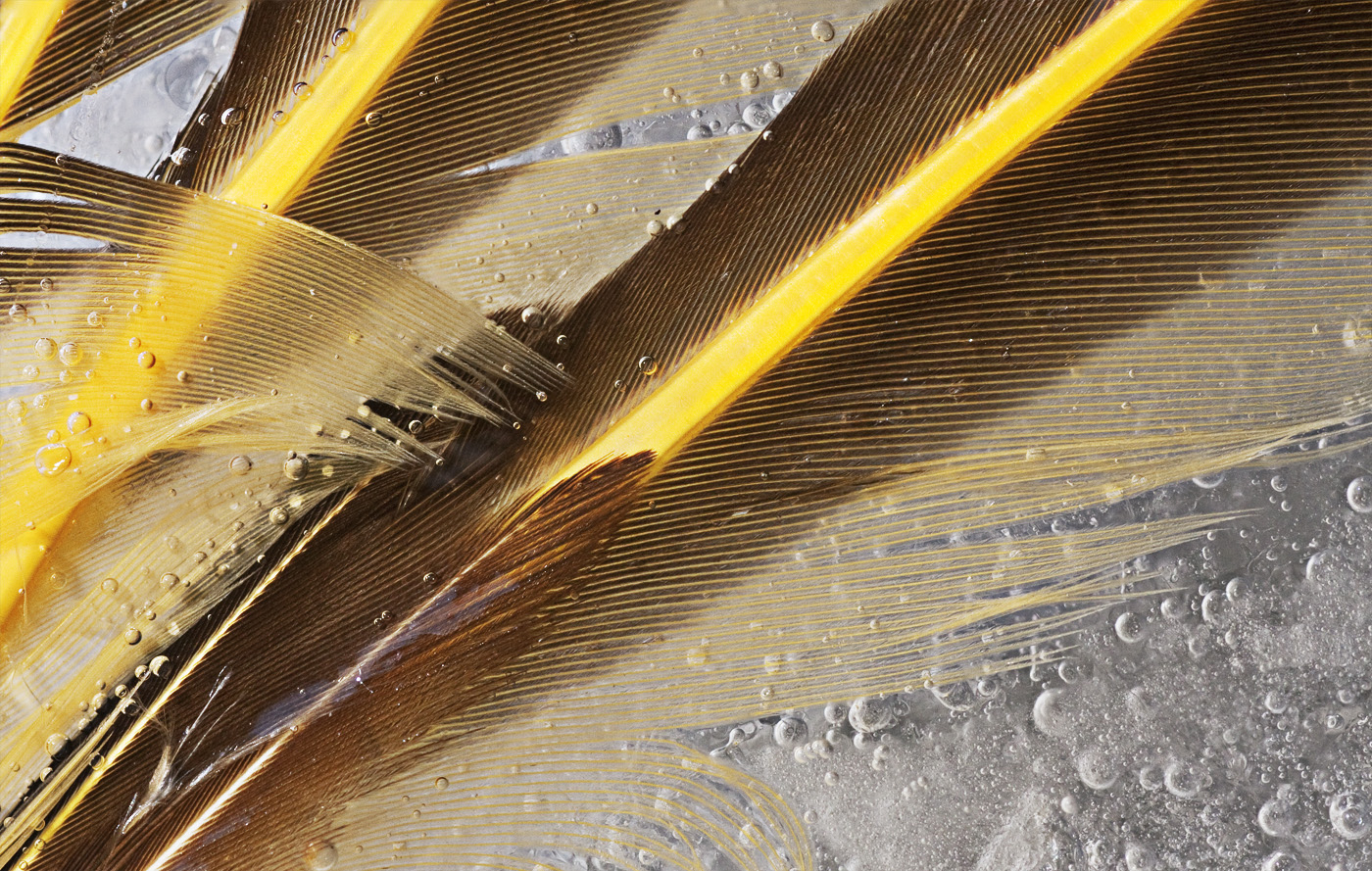
Friends, more bird (Northern Flicker) feathers in ice. Using the same technique as in a previous post these feathers were frozen in ice. In a single image, the whole field was not focused as the feathers were on different planes. Multiple images (8) with different focus points were taken and combined as layers in a single photoshop image. Briefly all the layers were selected and the two commands auto-align layers and auto-blend layers were run sequentially from the edit menu. This process combines the images with layer masks that only allow the focused region to be part of the overall image. I love the bright yellow shafts and the small details that show up in the feathers and in the ice.
These feathers were found in Crex Meadows and are from an unfortunate Northern Flicker. The feather identification was facilitated by an online data base at this address http://digitalcollections.ups.edu/slater/ til Tomorrow MJ
 MJ Springett
