Blog Archives
Juvenile Cranes-Talking While Flying
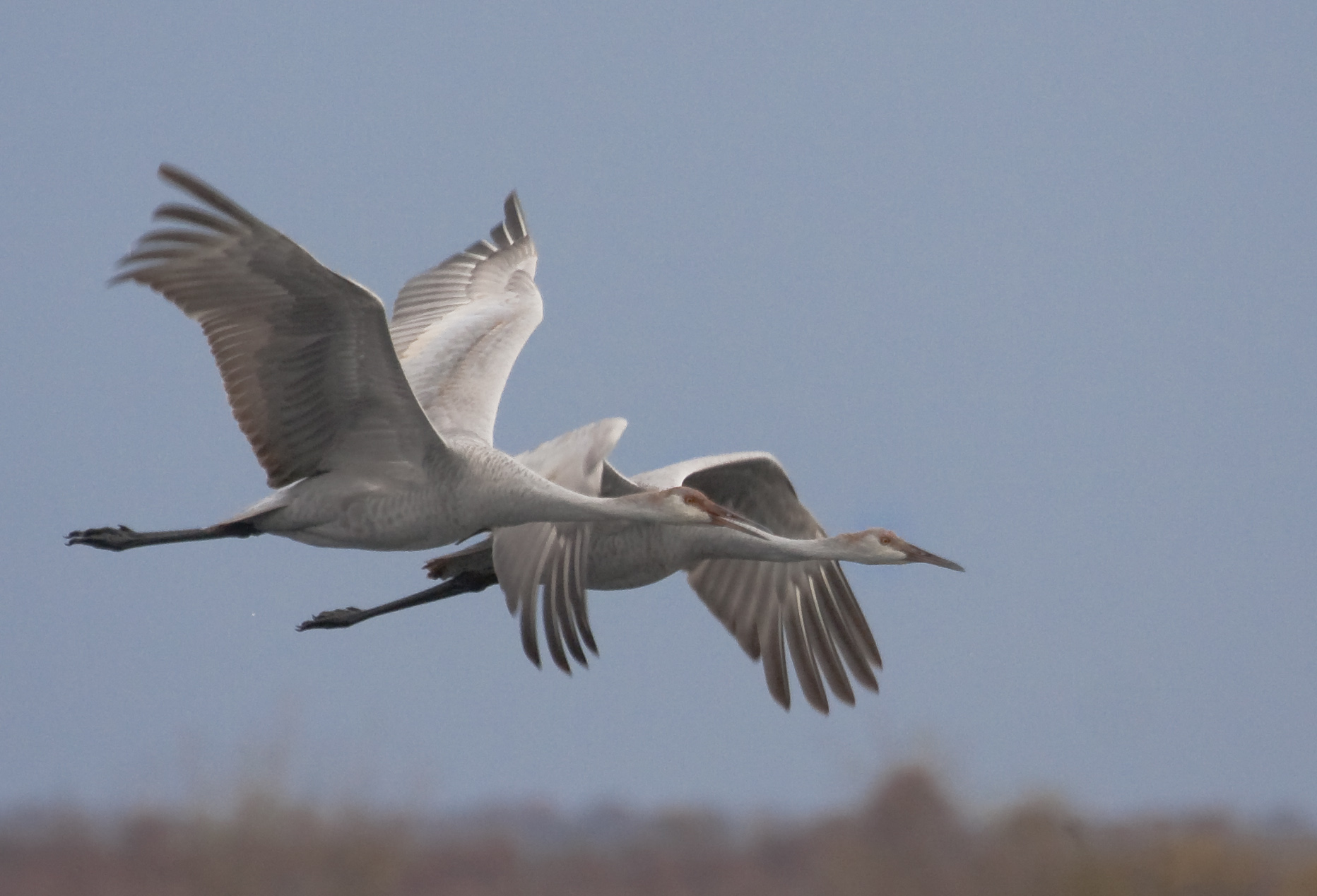
Friends, whenever i am feeling down, i just look at one of my images of the Sandhill Cranes, especially flying shots like this one and i am cheered immediately. Sometimes i think one of my major purposes in life is to photograph the cranes as they fly overhead. These birds are juveniles, their crowns are rusty instead of bright red, and as all young ones do, they are busy talking as they fly. I have recorded their sounds and play them back often to remind me of the beauty of Crex Meadows in the fall. Now i am feeling much better, til Tomorrow MJ
Dysfunctional Swan Behavior
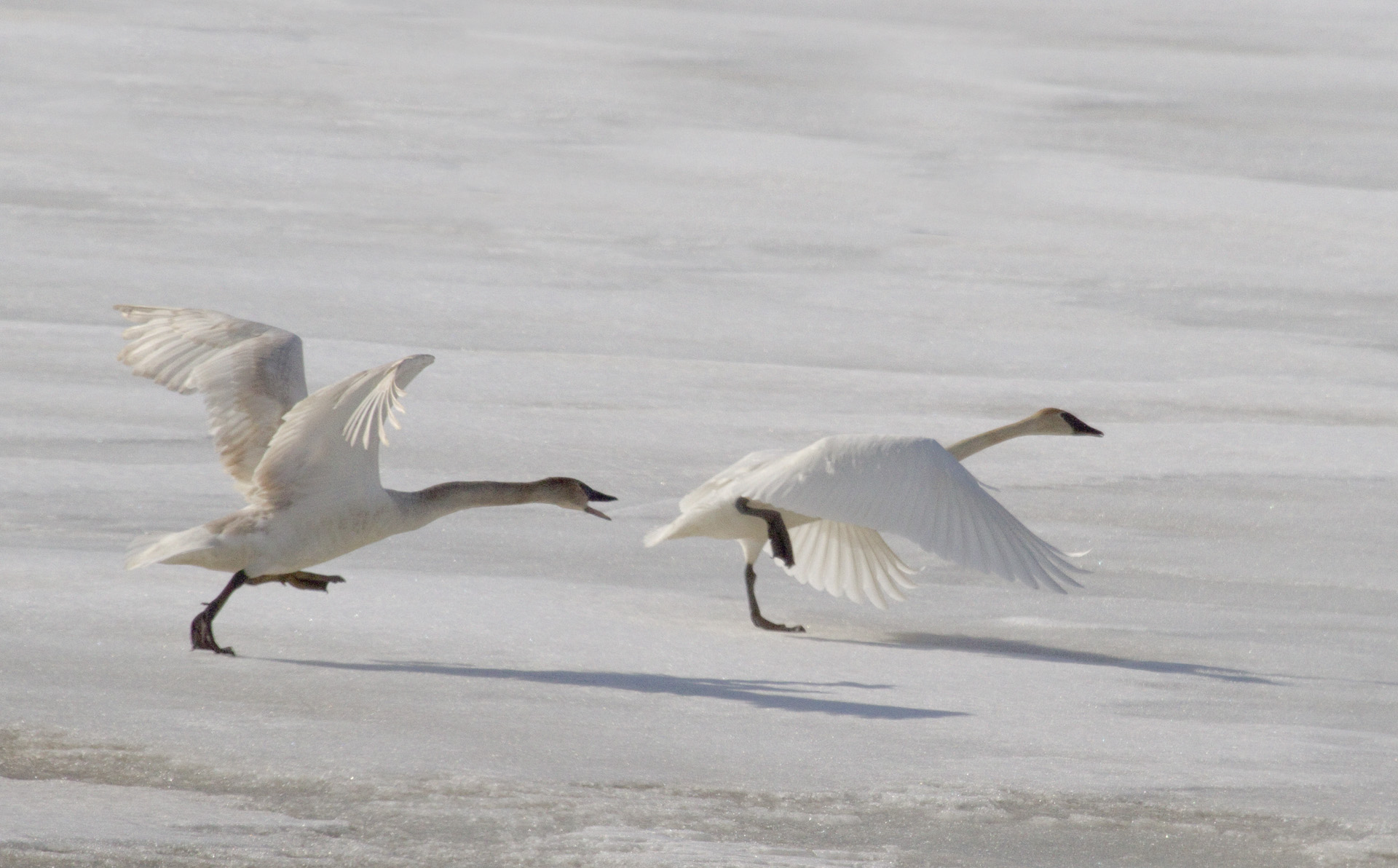
Friends, not the pretty swan picture that you are accustomed to seeing, but normal behavior during the breeding season, chasing away the competitors, and this takes place in Crex Meadows before the ice melts on the lakes, i like to think of them chasing away the cold weather and ushering in the warm, no Pasque flowers yet but 66 degrees F yesterday so warmer times are coming 🙂 I am ready, til Tomorrow MJ
Green-winged teal

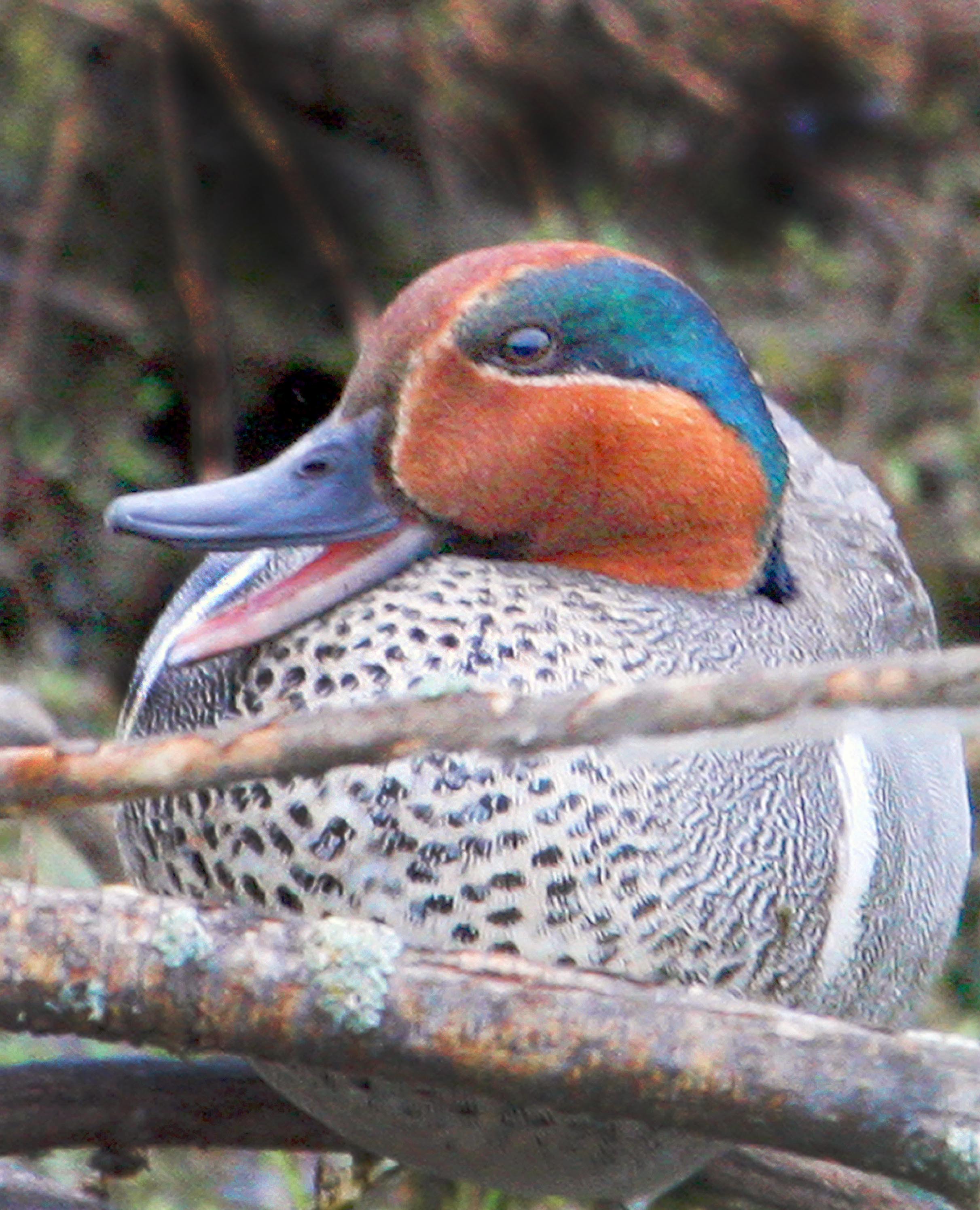
Friends, this sassy fellow is a green winged teal waiting on the ice for spring to begin. They are migratory and appear to be resting up after their long flight to our northland. I love the little detailed feathers along his side and his beautiful green eye stripe. Does this mean that spring is around the corner, no, it means i made this image last spring. :), til Tomorrow MJ
Trumpeter Swan, summer

Friends, this summer Trumpeter Swan is stretching his wings and sports the latest in neck bands. This flapping of wings is thought to be a form of exersize or simply a stretch of his chest muscles. These muscles need to be very strong to propel him back and forth on the migratory route. His pectoral muscles serve to push the wing down, while the supracoracoideus muscles raise the wings. His red band suggests that he was released from Iowa and now makes his summer home in Wisconsin, Crex Meadows. Your anatomy lesson for the day . :), til Tomorrow MJ
Swans on the Ice
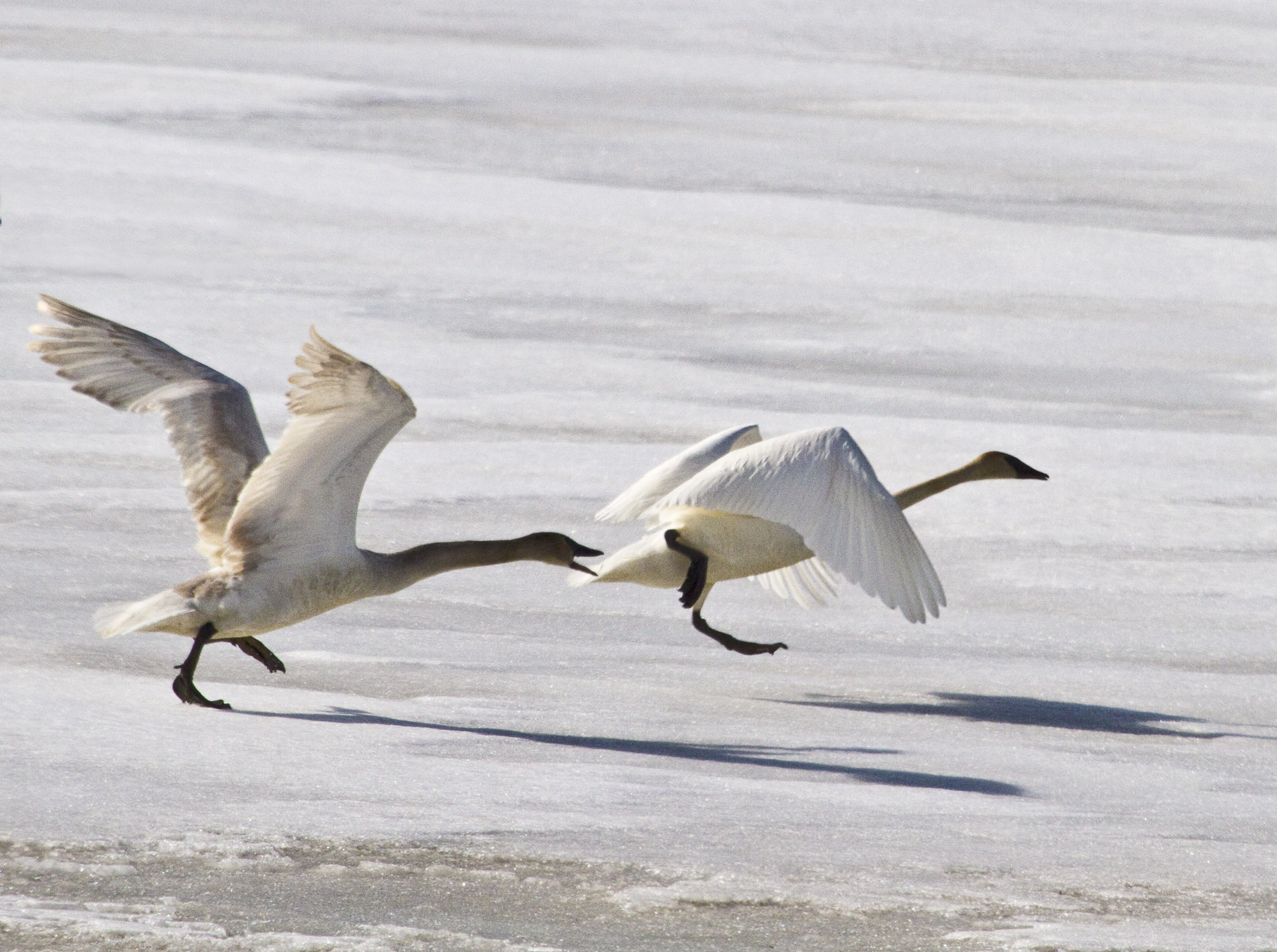
Friends, The ice (and snow) are still on the lakes and covering Crex Meadows, but the Trumpeter Swans return anyway cause they know it is nearing time to nest. Last spring, we watched a pair of swans build a nest in Crex, lots of pulling up vegetation and piling it on a muskrat house. When they first return a lot of chasing behavior establishes the area boundaries and eliminating possible competition for mates. This specie was almost extinct and has rebounded well in the last few years. Lead poisoning is still the biggest threat so please make sure your fishing weight is secure and doesn’t land in the bottom of the lake. til Tomorrow MJ
Yellow Rumped Warbler
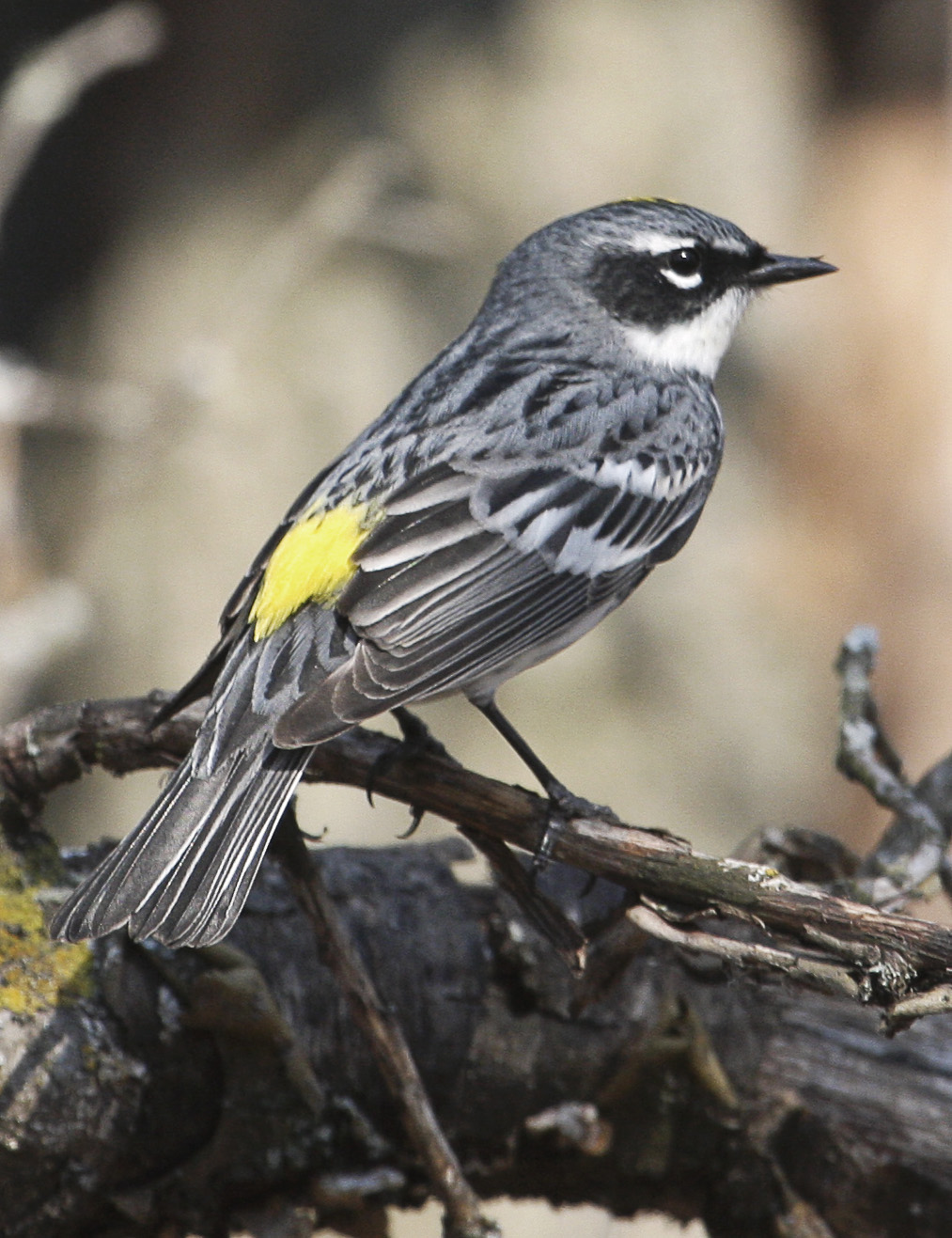
Friends, this handsome fellow is an early spring visitor, the yellow-rumped warbler. We haven’t seen them yet but i think they are probably on the doorstep. When they arrive in Crex Meadows, they cruise the edge of the lakes and eat the mosquitos as they hatch. They will also eat berries and fruit, but prefer the insects. til Tomorrow MJ
Pin Feathers

Friends, today we have winter all in one shot, been short of snow all winter, now on leap day, Feb 29th, we have a foot of snow and more coming. This is another macro shot of my favorite bird feathers with the yellow shafts. This time i concentrated on the base of the shaft and the pretty pin feathers. This preparation is dry (no ice) cause a friend requested that i show the through focus technique in a dry situation. well here it is, do you like dry or ice??, I personally think that the ice gives a more saturated colors and i like the bubbles. til Tomorrow MJ
Baby Owl

Friends, This baby owl is a young Great Horned Owl with his ears flattened down. When he is an adult bird the feathers on the top of his head will stand erect and give the appearance of horns, hence his name the Horned Owl. This particular bird is a captive owl after being injured or abandoned. His handler brought him to Crex Meadows on a family day where he posed for photos. I loved his big yellow eyes that were watching me intently. Now i know how a field mouse feels when being hunted. til Tomorrow MJ
Feather details in Ice-Part two
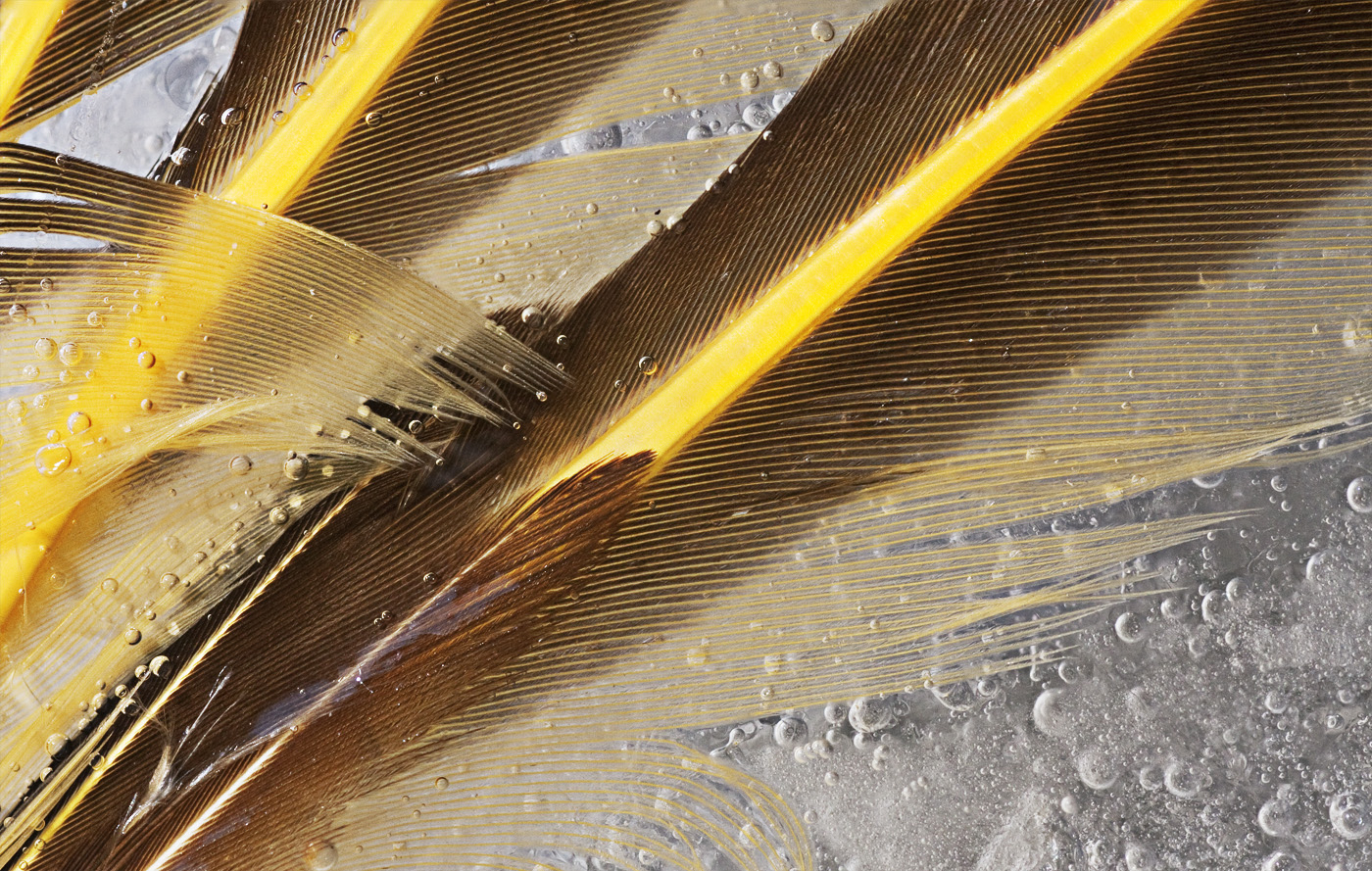
Friends, more bird (Northern Flicker) feathers in ice. Using the same technique as in a previous post these feathers were frozen in ice. In a single image, the whole field was not focused as the feathers were on different planes. Multiple images (8) with different focus points were taken and combined as layers in a single photoshop image. Briefly all the layers were selected and the two commands auto-align layers and auto-blend layers were run sequentially from the edit menu. This process combines the images with layer masks that only allow the focused region to be part of the overall image. I love the bright yellow shafts and the small details that show up in the feathers and in the ice.
These feathers were found in Crex Meadows and are from an unfortunate Northern Flicker. The feather identification was facilitated by an online data base at this address http://digitalcollections.ups.edu/slater/ til Tomorrow MJ
Feather details in Ice
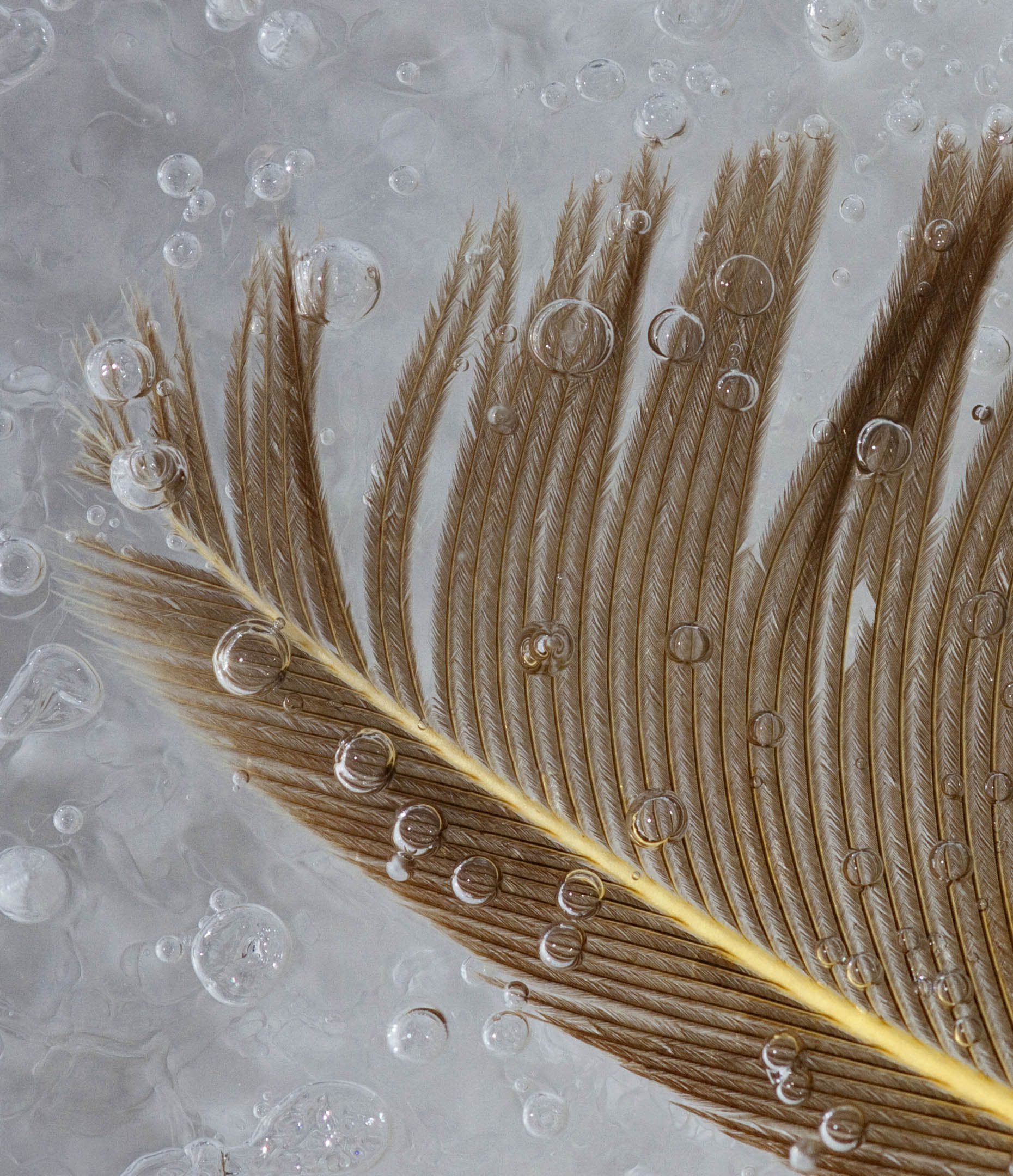
Friends, I have always been frustrated by the limited depth of field when using my macro lens. When trying to photograph this bird feather in ice, the bubbles and the fine feather details were not in focus even at f/22 on a single image. Other macro photographers have remedied this problem by shooting multiple photos at different focus points and then blended the images together in Photoshop, to achieve the focus range that they want in the final image. To find more info on this technique, there are several excellent tutorials online, just google “image stacking in photoshop”. Viola, the method works, this image is a merging of four separate images taken to focus the bubbles, the feather shaft, and the tiny barbules on the barbs above the shaft. These elements were on three different planes but were combined by Photoshop to my satisfaction. More practice is needed to be able to go nose to nose with the wild flowers of spring. til Tomorrow MJ
 MJ Springett