Category Archives: Wildlife
Mule Deer-Where Are They
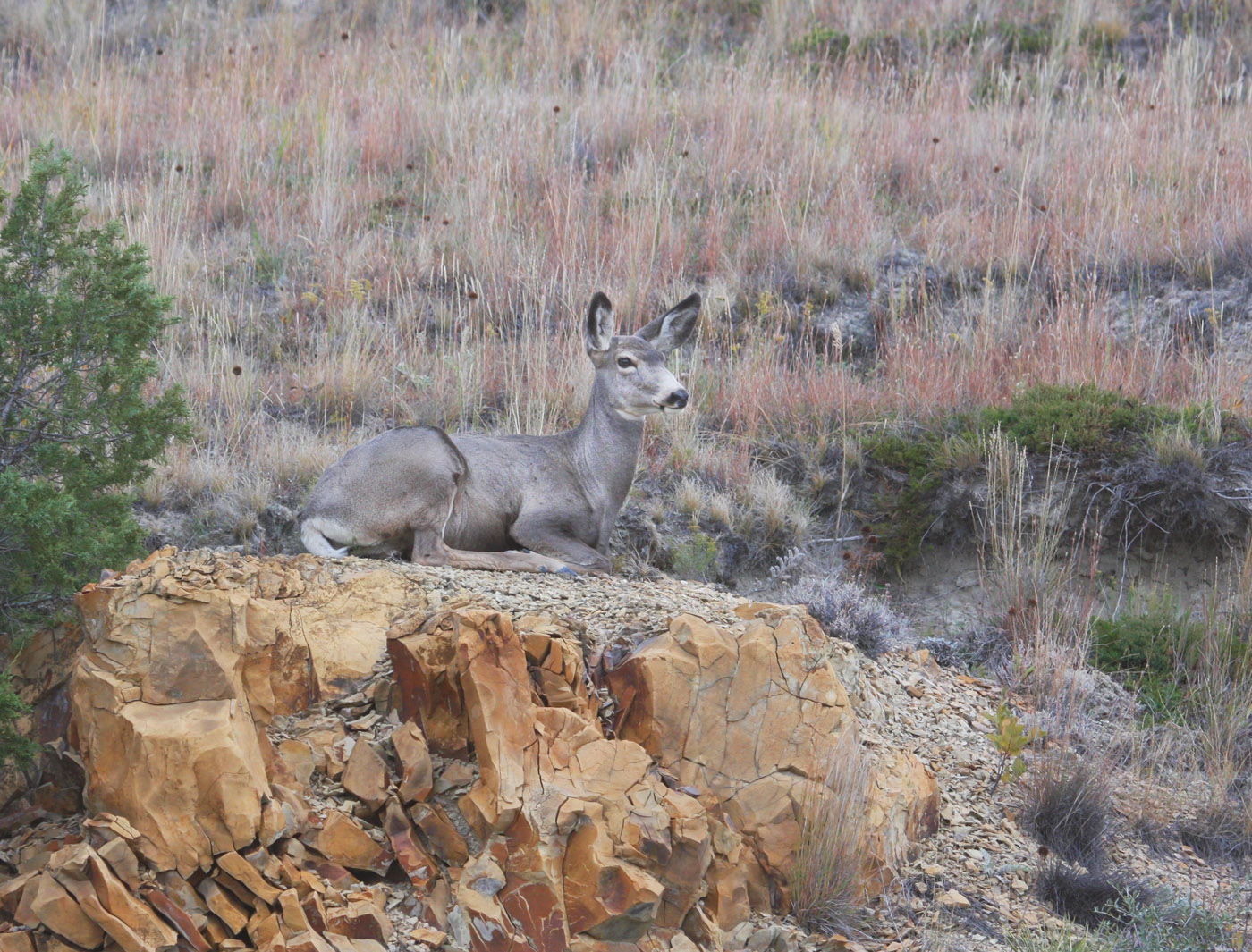
Friends, Mule Deer are everywhere if you look up into the rocky slopes and down into rabbit brush filled ravines. They often lay down in the day light hours, but along toward sunset, they are roaming everywhere. Driving through the National Park after 5pm, if you don’t see deer, you are not looking very hard. til Tomorrow MJ

More muleys
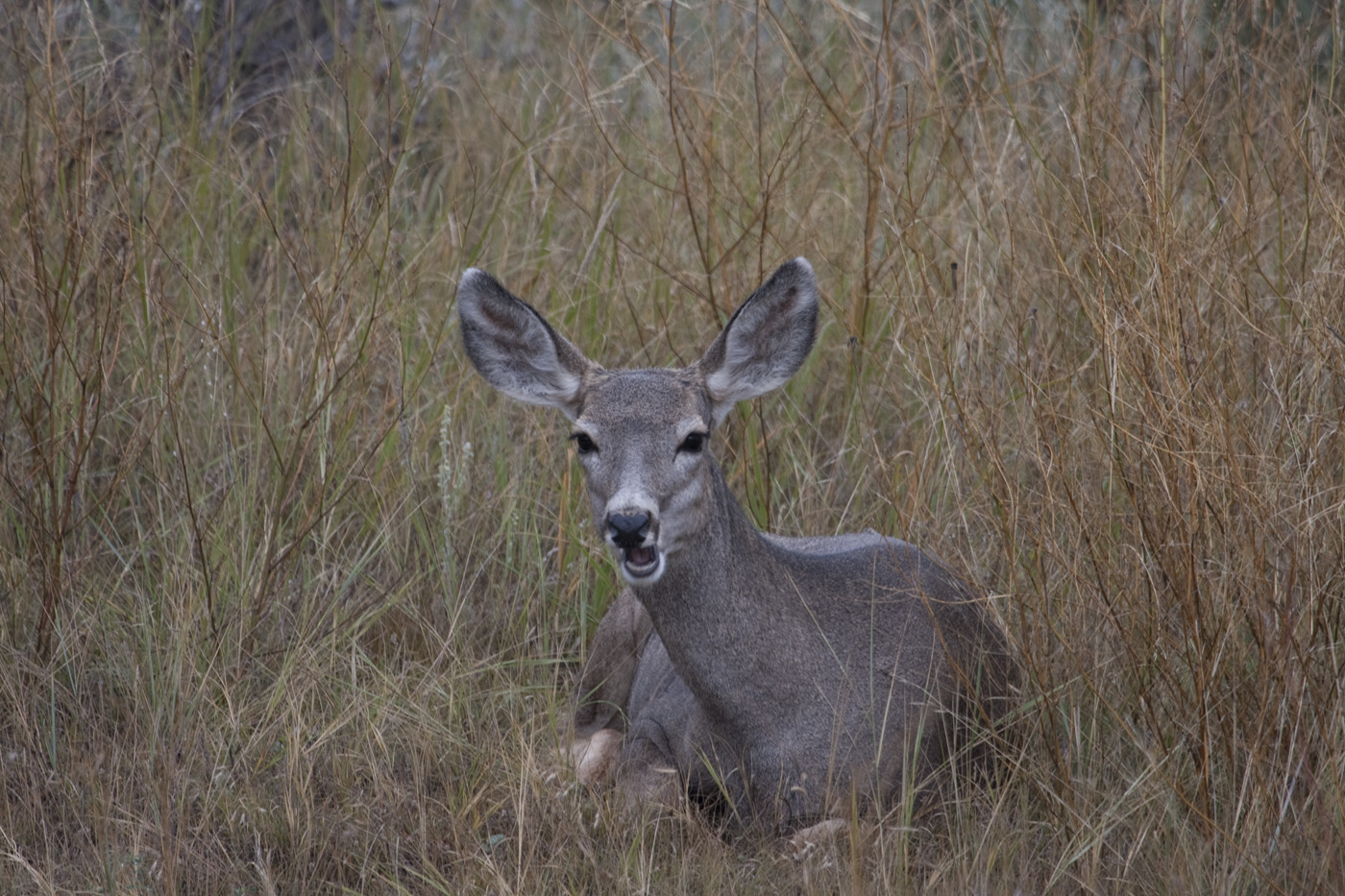
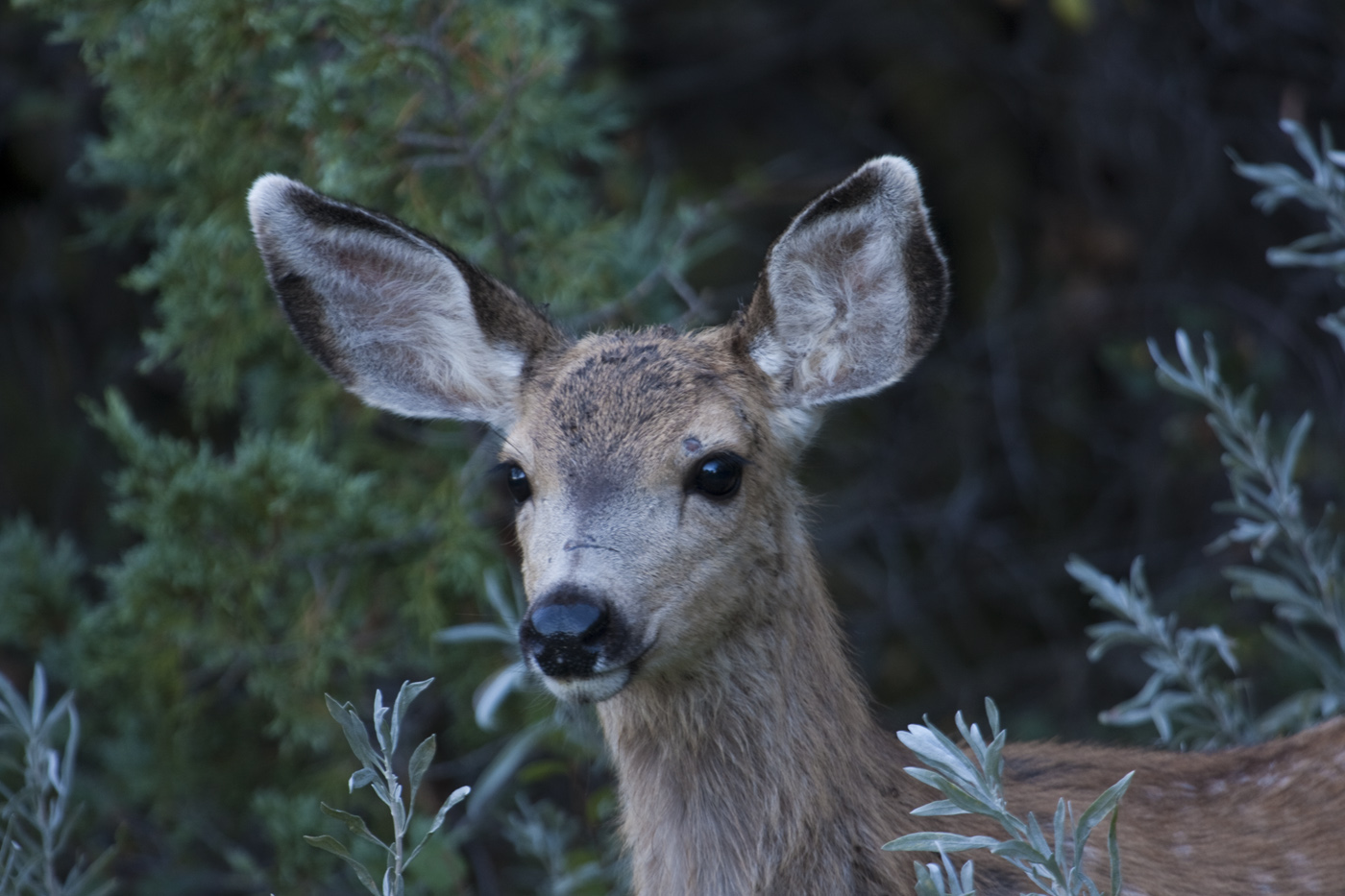
Friends, this big-eared mule deer doe is relaxing in the grasses of the badlands. She is chewing her cud and checking out the photographer. One of the characteristic traits of these deer are the large ears hence their name, mule deer with mule ears. The image below is a fall image of a fawn that was born in the spring, if you look closely you can see remnants of his spotted coat. til Tomorrow MJ
Mule Deer

Friends, yesterday i showed you a white tail deer and today’s image is of a mule deer in the badlands. His antler tines branch and in spring and summer his antlers are covered in velvet, a vascular tissue that causes the antlers to grow and deposit calcium. He loses his antlers every year like the white tail but is a much larger animal. They frequent the rugged ravines and steep hills regions of the National Park. The below image shows the very early stages of antler growth. til Tomorrow MJ

Along the River

Friends, most of the badlands in North Dakota are very dry (arid) except the area directly adjacent to the Little Missouri River. The Whitetail deer are found mainly along the river while Mule deer are found in the drier areas. This Whitetail buck posed for us in the fall with his antlers polished and ready to chase the girls. White tails are smaller than mule deer and get their name from the white underside of their tails that they flag when they flee from danger. The bucks grow antlers every spring and summer, then shed their antlers every winter to begin the cycle over again. The whitetails have antlers with tines coming off a main beam. In this image you can see his all white tail and his antlers are quite typical for a whitetail buck. Below image is the Little Missouri River bottom. til Tomorrow MJ

Weekly Photo Challenge: Two Subjects
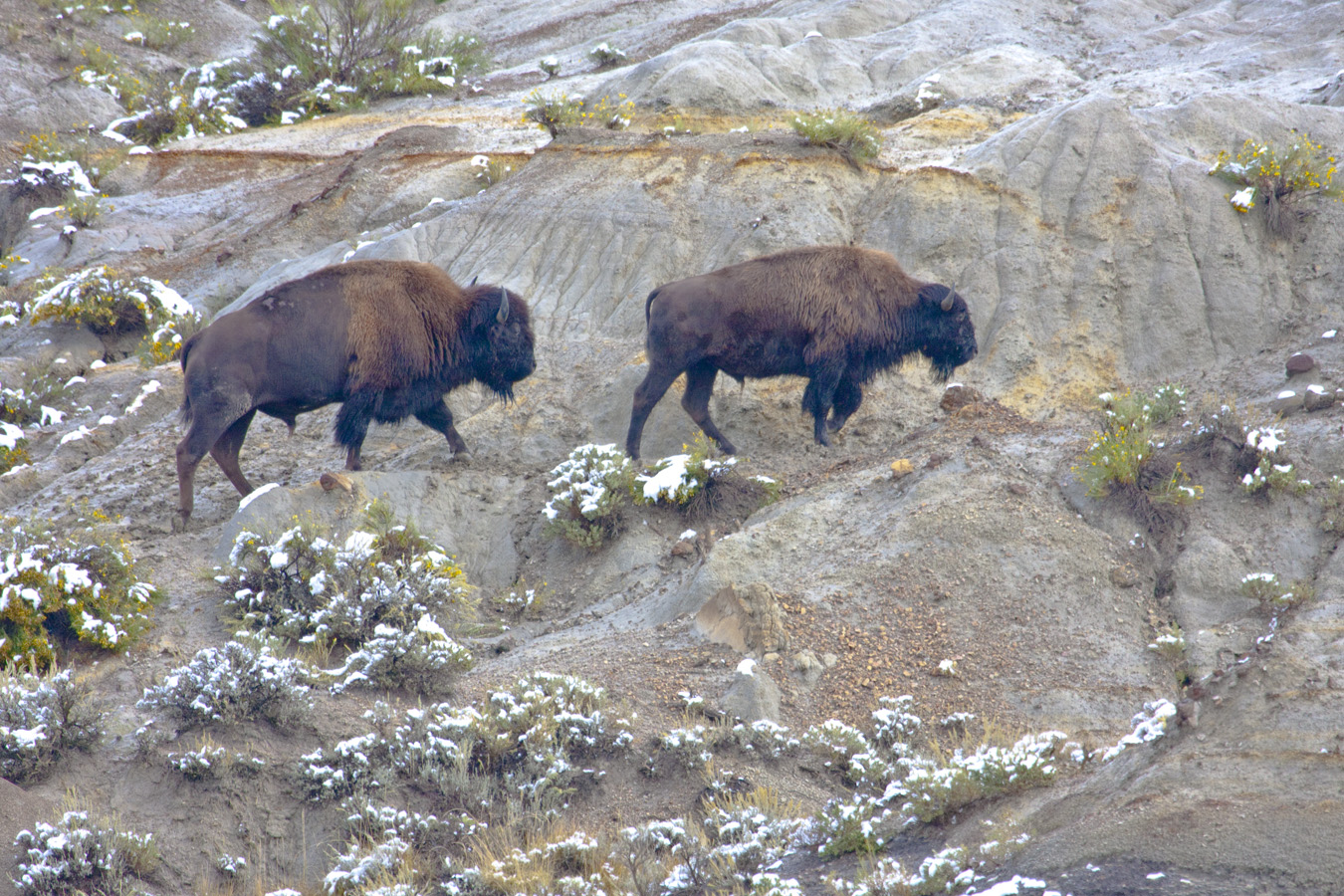
Friends,Two American Bison heading up the side hill to greener grasses. While this may look like a couple, they are actually two males, the one in the front being a younger version of the one in the back. An early snowstorm in September had painted the sage and brush with white and as the snow melted, the clay on these slopes became very slippery. The whole herd was progressing very slowly with an occasional stall when an animal had difficulty moving to the higher ground. The Bison have been reintroduced to the Theodore Roosevelt National Park and thrive within the fenced region. Cattle of the badlands they compete with wild horses, elk, deer, antelope and other grazers for the lush grasses. Even the prairie dogs eat the grasses. til Tomorrow MJ
Butte Candle

Friends, This wildflower is called a butte candle and it grows right out of the scoria rocks that you can see in the background. This plant has several stems as seen above, and below image shows the whole plant orientation.
Typically many of the plants that grow in scoria are capable of concentrating selenium within their tissues. Selenium is a mixed bag as it is a required nutrient for some animals and at the same time, toxic in large doses. Selenium concentrations have been responsible for bird and fish poisoning. While its effect on cattle is well known, the effect on grazing wildlife is not well studied. The tiny hairs on this plant probably repel the grazers in the badlands and these plants are not abundant. Are the badlands wildlife safe from selenium? A research question. til Tomorrow MJ

Weekly Photo Challenge:Journey
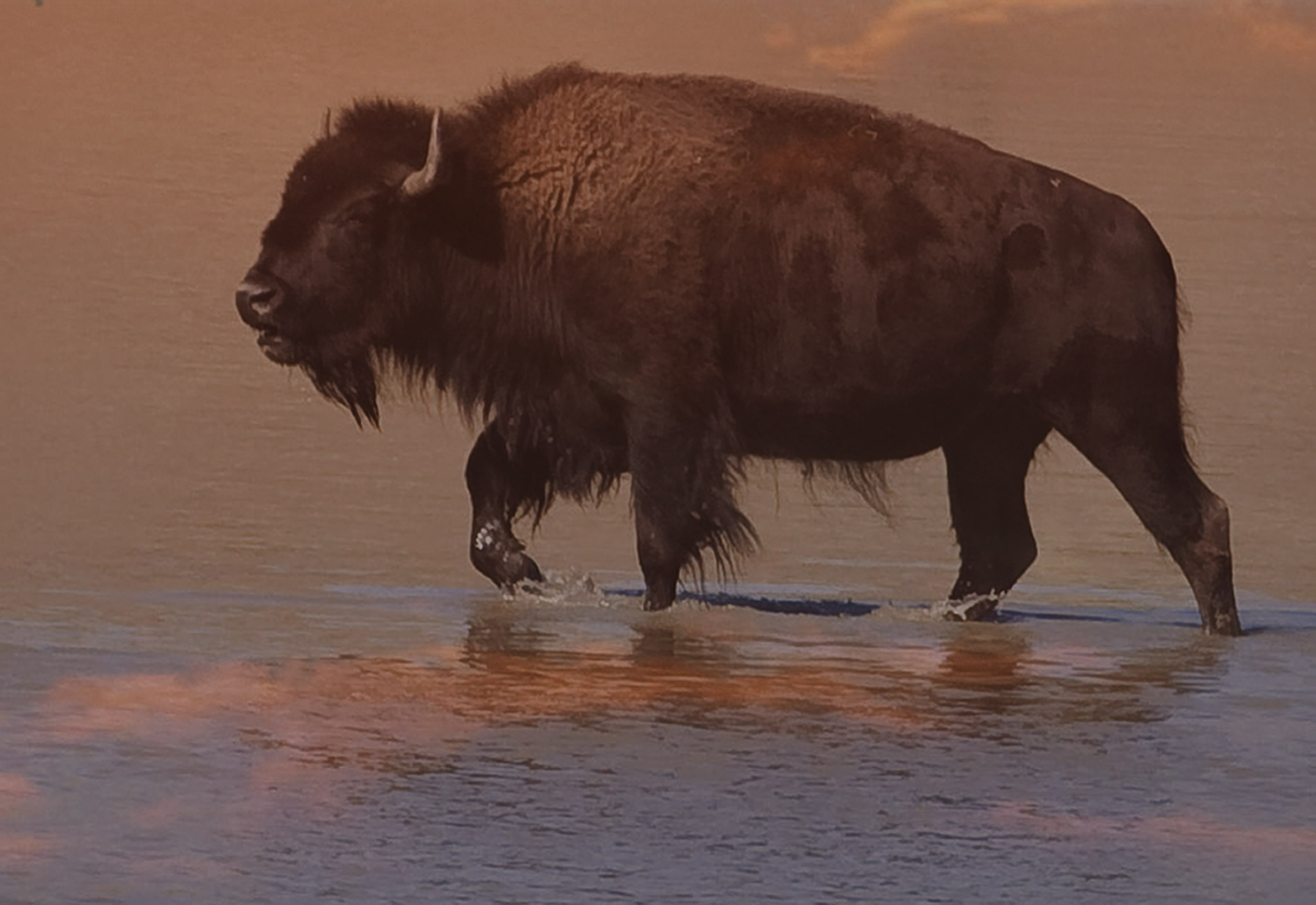
Friends, this was a journey across the river near sunset and into evening. She was bawling for her calf who meandered across the Little Missouri a few feet ahead of her, She is a mature Bison cow and her splashing in the river got my attention. I was photographing the sunset in the opposite direction and heard her behind me, I did not test her patience and made my way back to the vehicle. When it comes to the Bison, I always give them the right of way, living to photograph another day. til Tomorrow MJ
What the trees hide

Friends,The dense tree cover serve to hide the wildlife in the badlands. This male elk is venturing into a clearing after raking his antlers on the brush, scraping the velvet off and polishing his antlers for the fall breeding wars. I know he is in the middle of the image but i wished to emphasize the surrounding trees and the small clearing. The male mule deer (below) is peeking from behind a tree. His antlers are still growing and covered with “velvet” , but his curiosity is over whelming. By setting the deer and elk in the middle of the frame, the emphasis is on the surrounding trees. An experiment in composition. til Tomorrow MJ

Another Award? Thanks
 Thanks, Christine for nominating my blog for the Kreativ Blogger Award, her blog can be found at dadirridreaming.wordpress.com, thanks again and keep writing your wonderful blogs.
Seven things about myself:
1) I am driven by creativity even in retirement
2) I live in a white pine woods in a house covered with cedar siding
3) I am a great problem solver as long as the problems are not mine
4) I photograph nature at least four days a week
5) I learn at least one new photo technique every week, during noon hours on the bright sunny days not suited for photography
6) I love macro photography and all the tiny things that most people overlook
7) I love researching the natural history story behind an image
So now I am supposed to nominate seven other blogs for this award: but only have time for five, here they are:
bluebirdslivinginthemeadow.blogspot.com to my lovely sister, who is very creative
http://claudeschillingphotography.wordpress.com/ to my friend in southern Wisconsin
http://ceeslifephotographyblog.wordpress.com/
Snake Tracks in the Sand

Friends, this pile of sand with a snake track across, reminds me to watch where i put my hands and feet in this country. Rattlesnakes, bull snakes and blue racers appearing on the trail can startle an unwary hiker and put the feet in reverse very quickly. But this image also reminds me that Wind Canyon is slowly turning into a huge pile of sand. Now I love sand. Sand is one of my favorite elements of nature, the tiny grains under a microscope are tiny colorful gems that reflect the colors of their parent rocks. The massive cliffs of Wind Canyon that stand high above the Little Missouri River are being eaten by wind and water and the gap between the sandstone walls has greatly increased even within my lifetime. Below is an image of Wind Canyon today and by the time my great-grandchildren are able to visit this country, the gap between the walls will be much greater than today. til Tomorrow MJ

 MJ Springett