Blog Archives
Scoria Lily

Friends, this lovely bloom is often overlooked because it doesn’t bloom until evening and thru the night, then closes in the morning. Locally it is called the Scoria Lily and does grow straight out of the red rocks (scoria) on a spiny, prickly plant. The plant often has several blooms but is not really a lily. The technical name is Mentzelia Decapetalia and indeed the bloom has ten white petals. In this season of Lilies I thought I would share some Lilies of the Badlands, but saving the best for Easter morning. til Tomorrow MJ
What the trees hide

Friends,The dense tree cover serve to hide the wildlife in the badlands. This male elk is venturing into a clearing after raking his antlers on the brush, scraping the velvet off and polishing his antlers for the fall breeding wars. I know he is in the middle of the image but i wished to emphasize the surrounding trees and the small clearing. The male mule deer (below) is peeking from behind a tree. His antlers are still growing and covered with “velvet” , but his curiosity is over whelming. By setting the deer and elk in the middle of the frame, the emphasis is on the surrounding trees. An experiment in composition. til Tomorrow MJ

Touching my roots
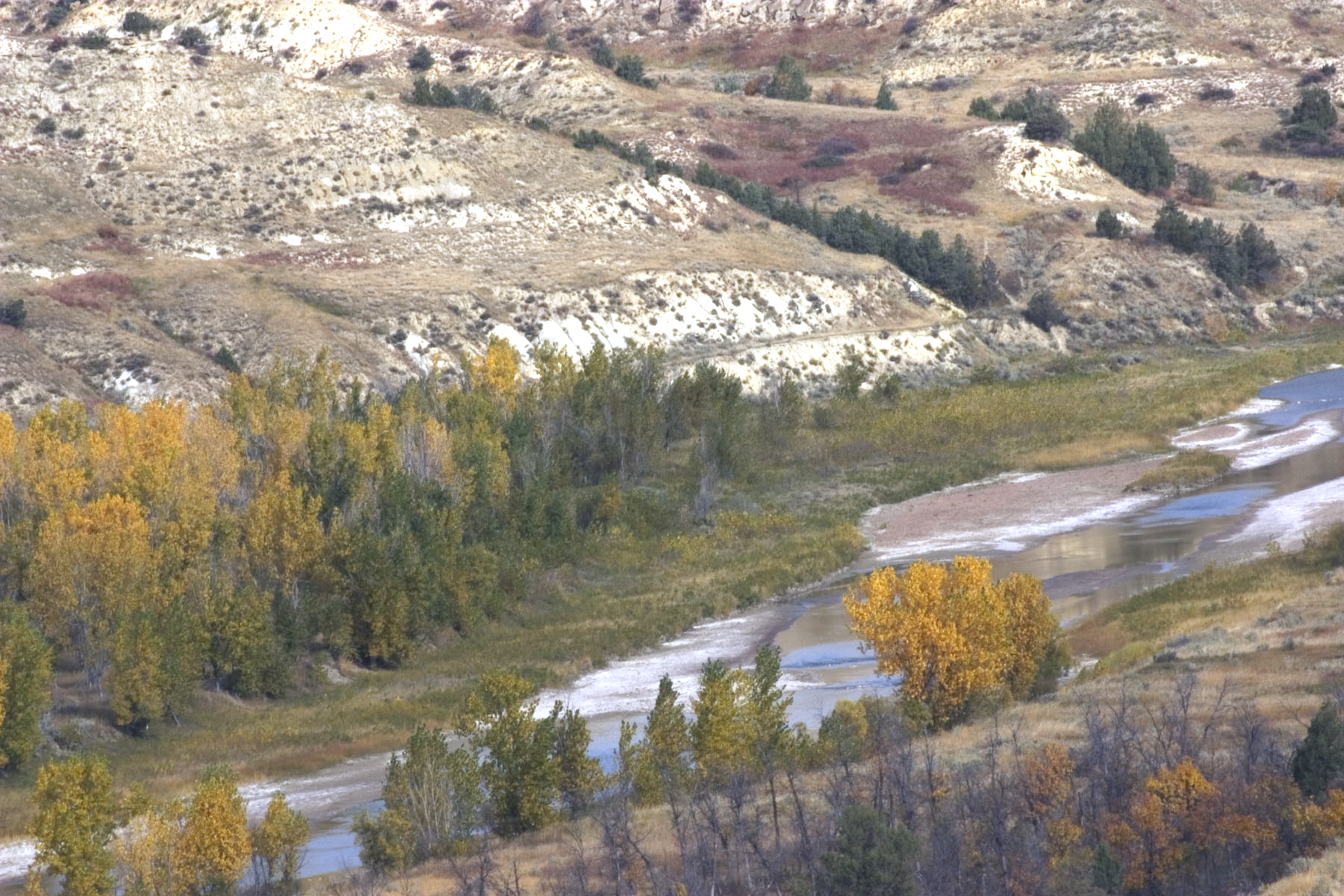
Friends, this image is the bottom of the badlands, fall foliage along the Little Missouri River. Like these trees along the river, my roots lie here and i often think of this place as home. On this site just to the right of the orange tree, my mother was raised on a ranch. Now it is a campground in the Theodore Roosevelt National Park. Where cattle and horses once grazed, the bison and elk now roam the bottoms in search of the best tasting grasses. Cottonwood trees, ash thickets and wild plum trees grow in abundance near the water. This is a little river in the fall, but is often full to the brim in the spring and sometimes the family needed to leave the river bottom to escape the floods. The river flooded last spring (2011) and reminded us that the river can still be an awesome force. til Tomorrow MJ
Trees?

Friends, I have often heard people describe North Dakota as barren and containing no trees. Well that may be true of some parts of the state, but this image shows the badlands with plenty of trees. They are evergreens, cedars and junipers, and keep the green all winter. The northern slopes are usually covered in green, while the south-facing slopes are often bare. In the autumn, the fall colors are apparent in the gullies and along the Little Missouri River. More badlands tree images tomorrow, til Tomorrow MJ
Stone Tree Stump

Friends, While this tree stump looks like wood, it has turned to stone. Petrified tree stumps are found all over the badlands, and you would swear that they are made of wood. The preservation of tree structure is so realistic, you can see worm holes and cell structures. These trees were redwoods and a forest of stumps is present in the western side of Theodore Roosevelt National Park. The park roads do not pass close to this forest, but it is only a two mile hike across the flats to access a land of stumps still being eroded from the clay slopes. Like bleached bones, their white is a stark contrast to the dark green of living cedar trees. In the early days, stumps ten feet in diameter and 80 foot logs were found, a remnant of a tropical past. til Tomorrow MJ
Hot Rock
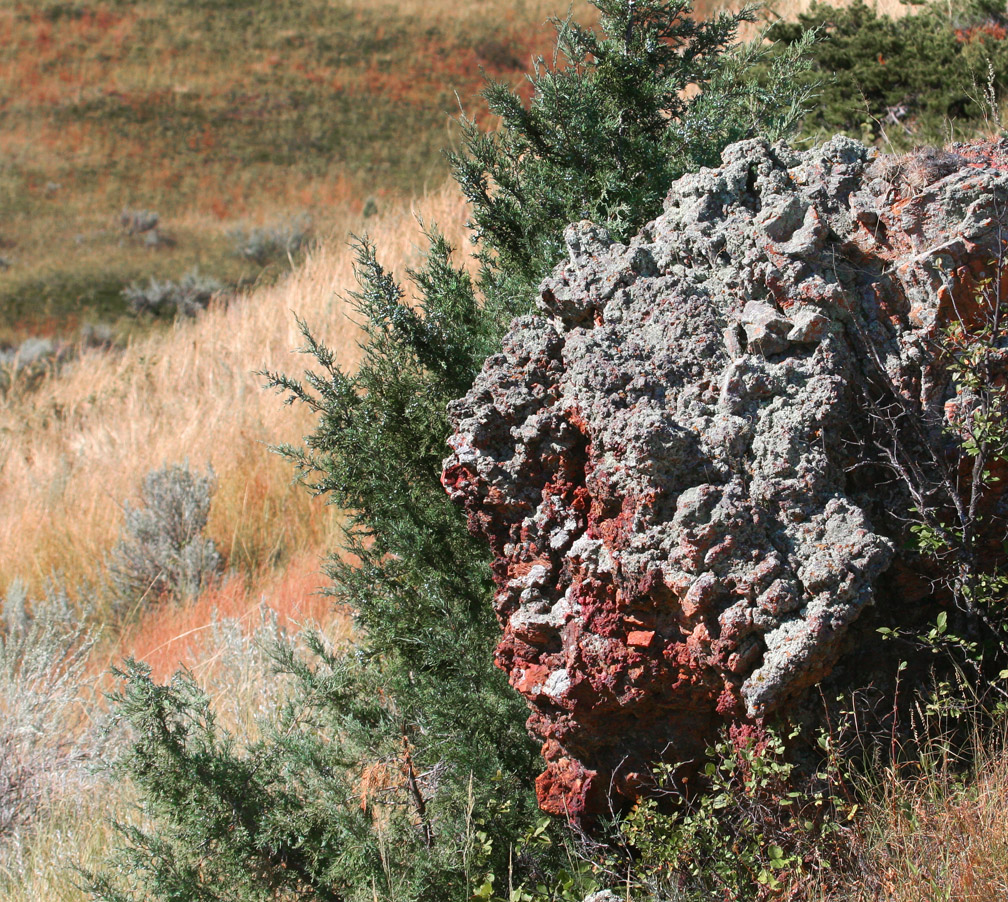
Friends, this holey rock is part burned coal and part scoria. Masses like these are prevalent and scattered throughout an area where a coal vein was burning in the recent past. They resemble lava formed from volcanic activity and are highly vesiculated (new word for the day). Walking the higher ridges around the coal vein area, great areas of the plains have sunk away as a result of the underground clay shrinking in the intense heat. The burned coal is a gray color and sometimes is tightly bound to the adjacent scoria as seen in this image. til Tomorrow MJ
Mountain of Red Rock-Scoria Point
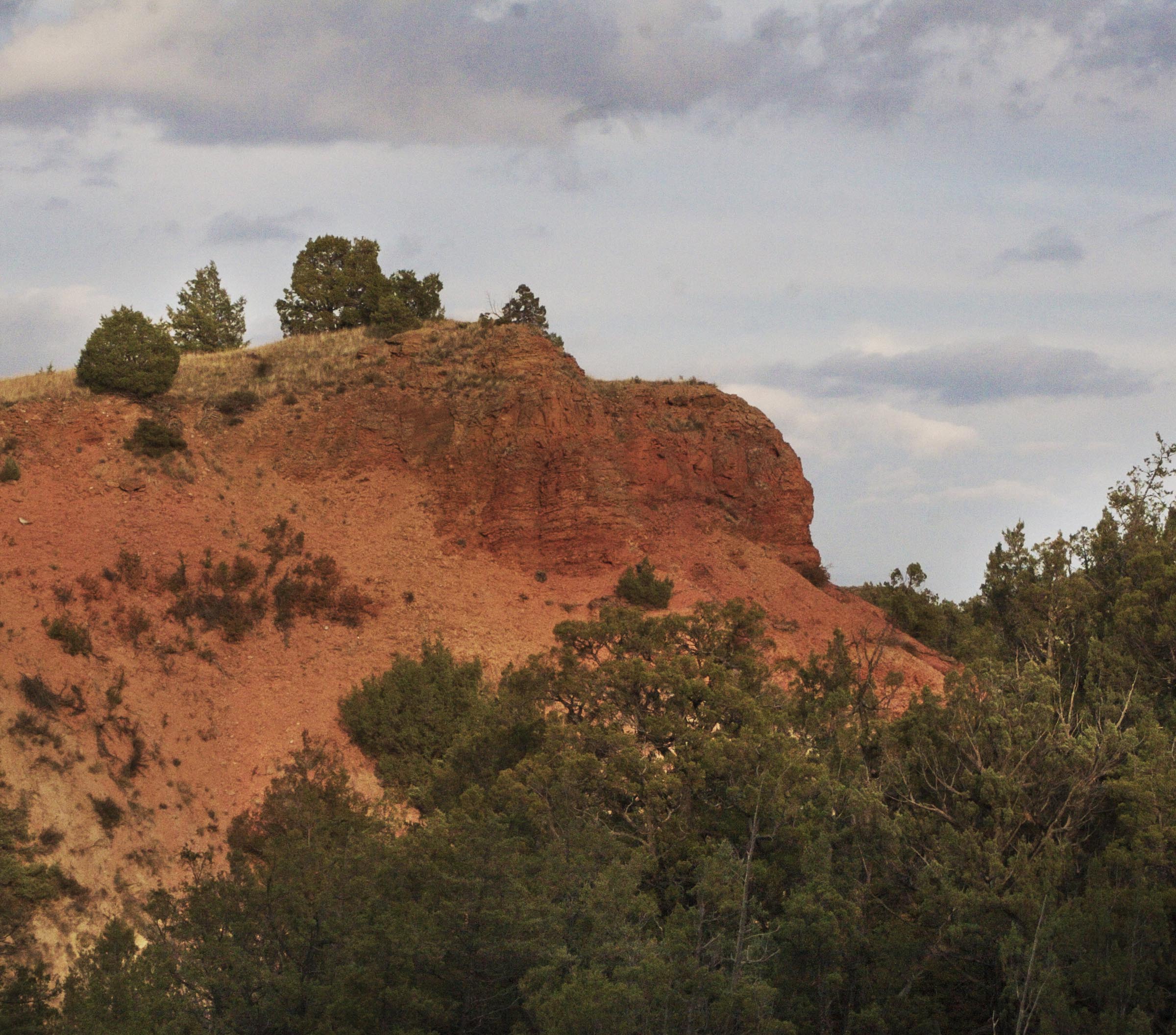
Friends, this is a formation called Scoria Point located within the Theodore Roosevelt National Park in western North Dakota. This red rock or scoria appears many shades of red, from pink to purple and all the oranges in between and the shade is dependent on the light. The day this image was taken, the light was slightly diffused through some clouds and the color appears a rusty orange with pink accents. But in the evening with a setting sun, the hill appears a bright orange and in the snow with cloud cover, the rock appears a very deep almost iridescent red. I haven’t yet captured the spirit of this rocky scene, but i keep trying. til Tomorrow MJ
Sandhill Sunrise
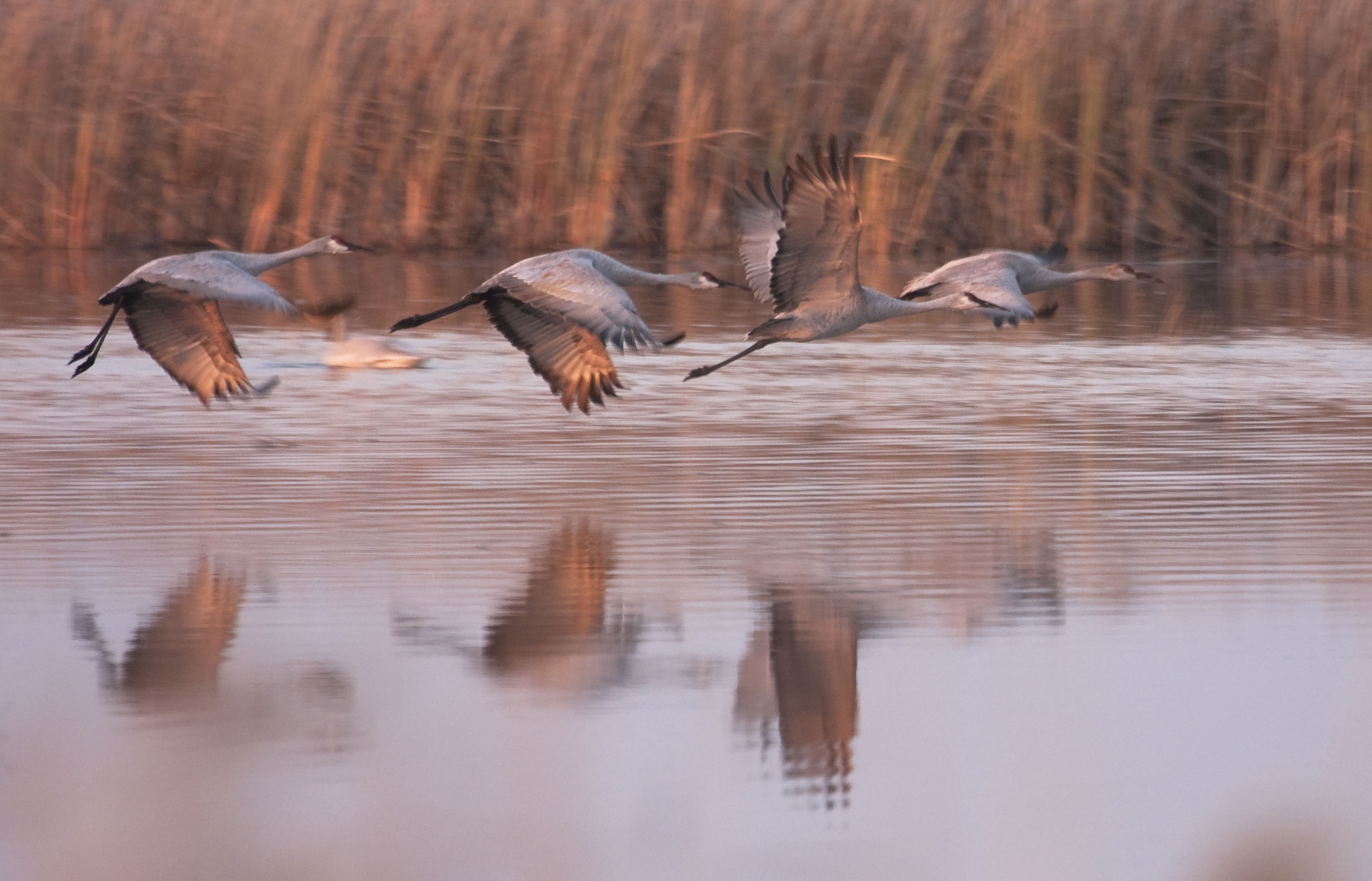
Friends, these Sandhills are taking off into the sunrise, pretty colors in the morning especially as the sun peeks over the horizon. Now i am done showing any more crane images until next fall. Tomorrow i start in a new direction, i will still be doing the nature photography, but the location will change from the Wisconsin birds to North Dakota badlands. I will show you the land, critters, wildflowers, lichens and tell you some natural history stories along the way. Tune in for a fascinating journey into a land touched by the sun,wind and history. til Tomorrow MJ
Winter Sundogs

Friends, Sundogs are rainbows formed when ice crystals are in the air. The hexagonal ice crystals act as tiny prisms and when falling vertically oriented appear as colored patches on both sides of a low-lying sun. The cirrus and alto-cirrus clouds may also suggest ice crystals and folk lore says that sundogs form when colder weather is in store. We saw this guy in the badlands of North Dakota so i included the grasses in the foreground to show the wind, that always seems to blow in ND. til Tomorrow MJ
Badlands in Black and White
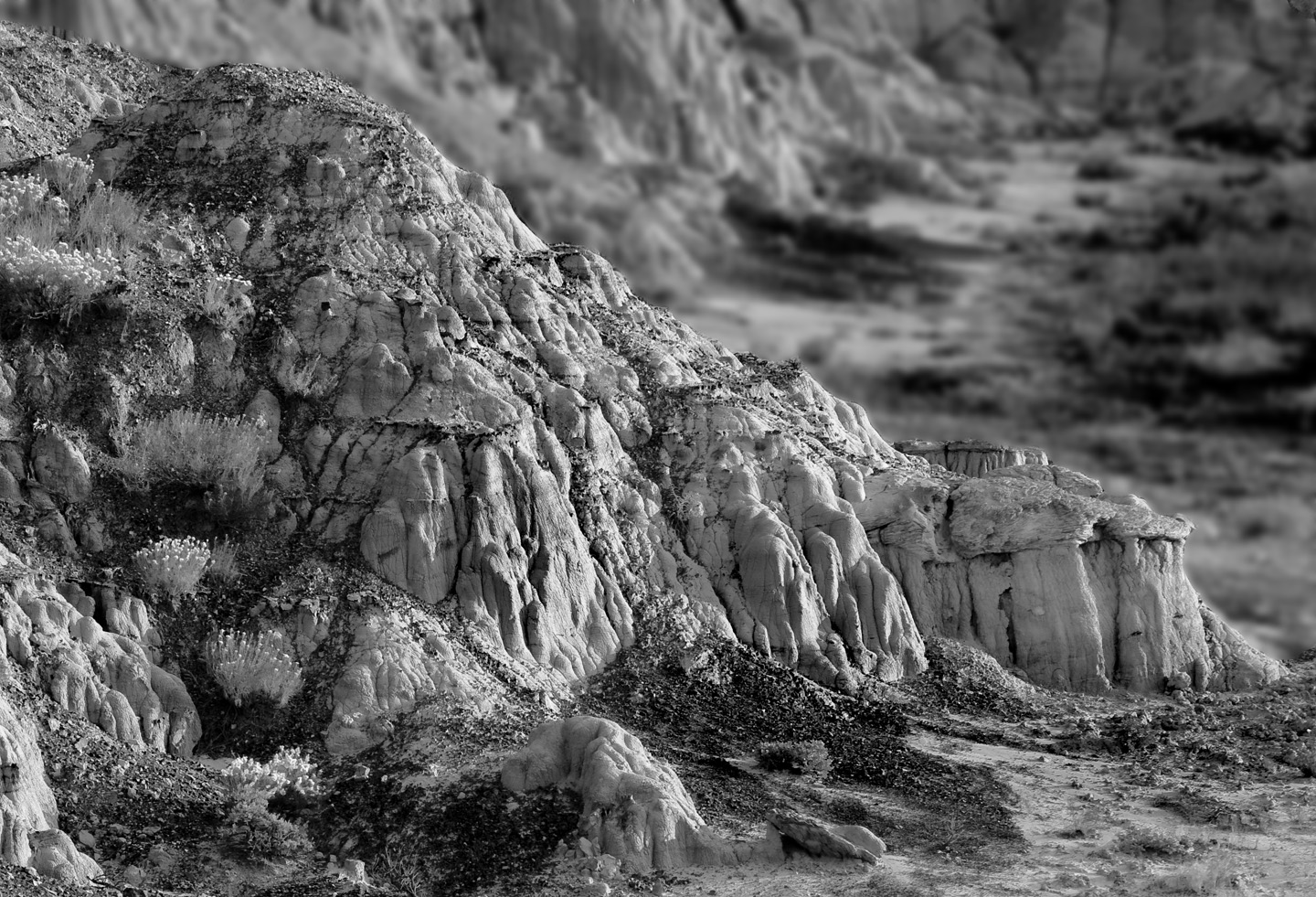
Friends, i know this looks like a moonscape, but it is a black and white image of the badlands of North Dakota, one of our favorite places to visit. I shot this photo at an aperture of f/16 to get the great depth of field, but every time i looked at it, it looked like a jumbled mess. no clear subject was evident. Further analysis revealed that the foreground was really the subject. So i made two layers, blurring the bottom layer and painting away the top sharper layer to reveal the blurred layer underneath. I had used this technique earlier to produce bokeh in other images. I also converted to black and white to further simplify the image and emphasize the rugged topography of the eroded landscape. What do you think? did I succeed ? til Tomorrow MJ
 MJ Springett