Blog Archives

Sparrow Ridge?

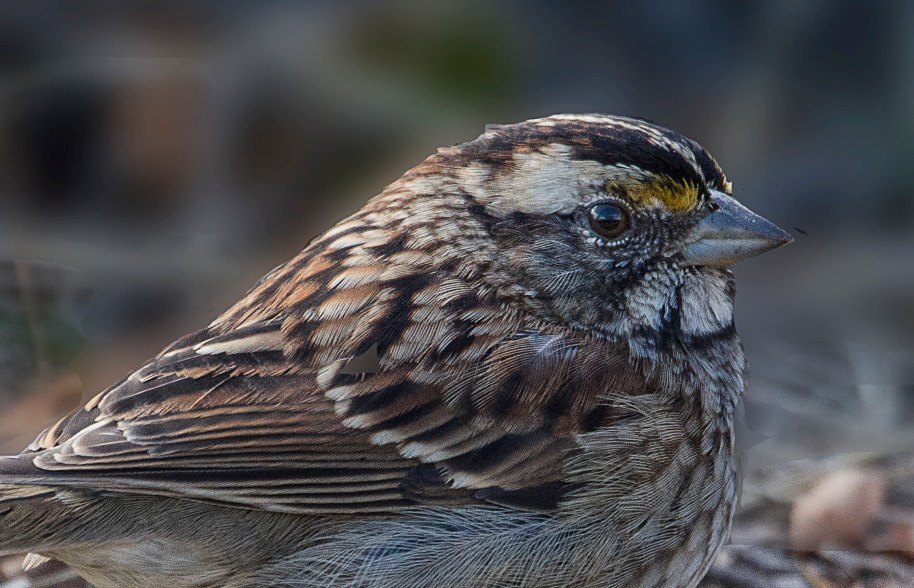
Friends, this tiny bird is a white-throated sparrow visiting Hawk Ridge sometime in October.  I love the little yellow spot in front of his eye, the image below is a close-up of his head.  You can see the new bracelet that the banders have given him .  Some of these little birds are captured more than once cause they tend to hang around the bird feeders.  Lots of birds follow Hawk Ridge on their migration routes, so maybe Hawk Ridge should be called Bird Ridge.  Just kidding of course, the more spectacular birds always bring the crowds. til Tomorrow MJ

Notched tail- Redtail

Friends, this is a red tail from a large female Redtailed Hawk.  While examining her in hand, she had two missing feathers on the left side of her tail, and two new feathers are growing back.  These new feathers are a little fresher looking than the other older feathers.  A weathered veteran of the wilderness wars, this image demonstrates that hawks are also in peril and often are the hunted ones as well as being the hunter.  Below is an image of her release back, the shorter feathers were not slowing her flight back to the wildness. An account of two eagles pursuing a redtail is included in this link: redtail pursued by golden eagles

Weekly Photo Challenge:Thankful

Friends, I am very Thankful for the birds of Hawk Ridge and Crex Meadows, who keep me busy photographing the wildness.  So back to Hawk Ridge for another Hawk lesson, or in this case, a Falcon lesson.  The portrait of the Merlin below shows an open beak and the notches in the cutting edge of the beak that fit together when the bird is killing his prey.  These interlocking notches are the tomial tooth of the falcons.  Hawks may have the upper notch but do not have the corresponding notch on the lower edge.  The higher magnification image shows this region to dramatize the tomial tooth. til Tomorrow MJ

The Smallest Falcon

Friends, this tiny hawk is an American Kestrel found in Crex Meadows.  The educators on Hawk Ridge have taught me that this is a male due to the blue outer wing.  Females have a red-brown feathering extending from the back out across the wing backs.  They are a small member of the falcon family, related to the Merlin and the Peregrine Falcon. When hunting, they will often hover (wings flapping while staying in one place) or kite (wings steady while staying in one place) over a hayfield or other open area.  I think this boy was hunting me.  til Tomorrow MJ

Jim’s Hawk

Last Day

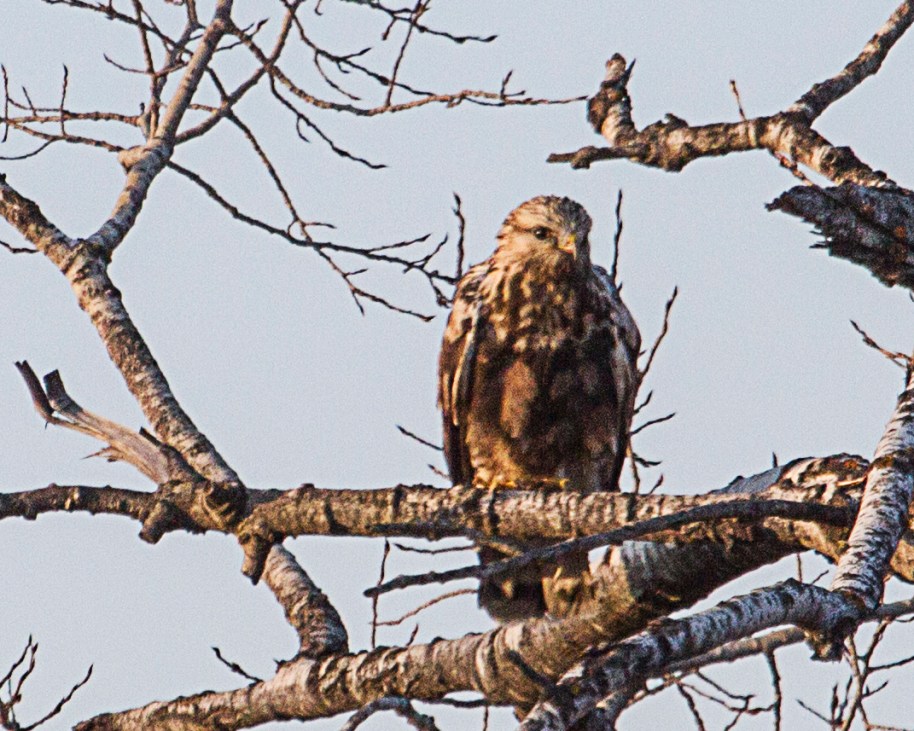
Friends, this is the last day at Hawk ridge for the educators and volunteers.  I have learned so much from them about the raptors that i can never thank them enough. I t has been a wonderful fall season. thanks everyone.  My one hawk that i have not seen up close is a rough legged hawk, but i saw this one on my way home on Monday, so maybe i will see one up close today.  This hawk was quite a good way and even with the telephoto he was probably too far for a great shot, but he is a symbol of the whole project and a target for today.  so onward and upward, til Tomorrow MJ


Color Variations

Weekly Photo Challenge:Foreign

Friends, These birds are sometimes foreign to Wisconsin having migrated from the far North.  We are Florida to these rough-legged Hawks.  I am putting together a book of the hawks that i have photographed from Hawk Ridge this fall during the migration. One specie is being difficult to get a photo, although a few have gone over the ridge, I have not been there when a Rough-Legged Hawk has been in hand.  This Roughie was photographed by me in Crex during a recent irruption year, maybe it will be my only photograph.  They get their name from the beautiful feathering on their legs that protects them from ice, snow and other hazards of the very far northland.    I have three days left to photo this bird, maybe I will get lucky.  til Tomorrow MJ

Sharpie Tail

Friends, this sharp-shinned Hawk is spreading her wings and tail to fly away. I think this image is a “pleasing blur” as described by Arthur Morris and Denise Ippolito in their book by the same name.  You can check it out at: https://store.birdsasart.com/shop/item.aspx?itemid=298.

I have been practicing my flying shots and found that using the manual mode, setting the aperture to f8 and the shutter speed to 1/1000, while putting the iso selection on auto, works well on these flight shots. Using a central focus point and panning with the image stabilization on setting 2 is also part of my digital data for this image.  Larger birds are best for practicing the panning technique so go out and find a bird.  Practice, practice, practice.  My goal is to be able to pan the smaller birds of winter, juncos, chickadees and pine grosbeaks.  til Tomorrow MJ

Angry Redtail

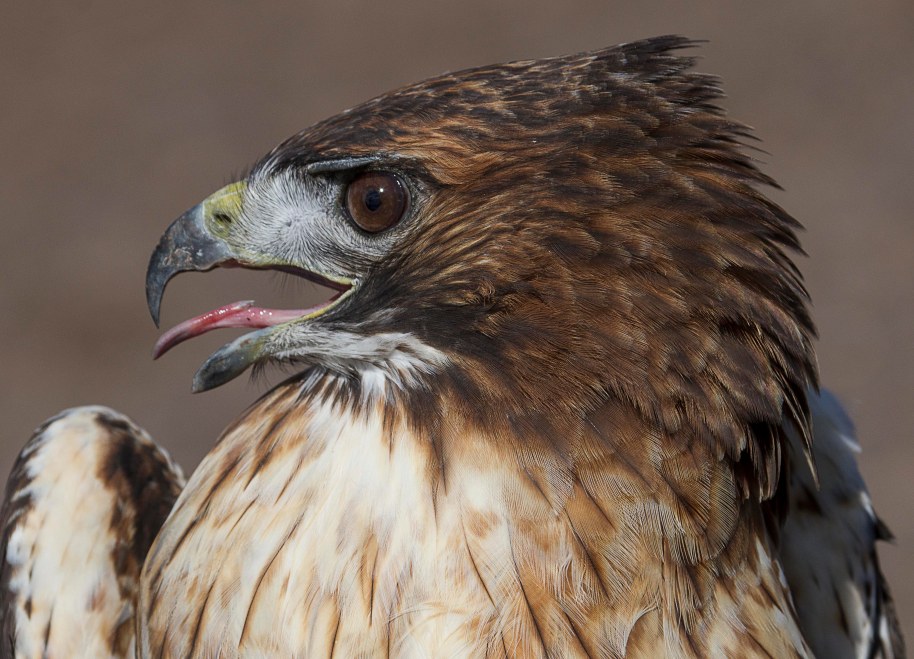
Friends, this Red tailed Hawk is not a happy camper.  Her hackles are raised on the back of her head and her mouth is open, both signs of a bird who is not happy.  As she was stroked by the educator she became quiet and her hackles went back to normal.  She is a beautiful mature female buteo and minutes after this photo was taken , she was released back to the wild thermals above Hawk Ridge.  I am running out of Hawk images, so I need to return to Crex or go back to Hawk Ridge. Hmmmm, such a lovely decision, til Tomorrow MJ