Category Archives: Badlands
Pronghorn

Friends, this is a male pronghorn from the badlands. They get their name from the horn grown by males that is forked with a hook-like branch. They do not grow antlers like the deer and elk, but grow a horn that is partially shed each year. They can run 60 MPH and rely on their speed and agility to survive out on the open grasslands. til Tomorrow MJ

Bull Elk
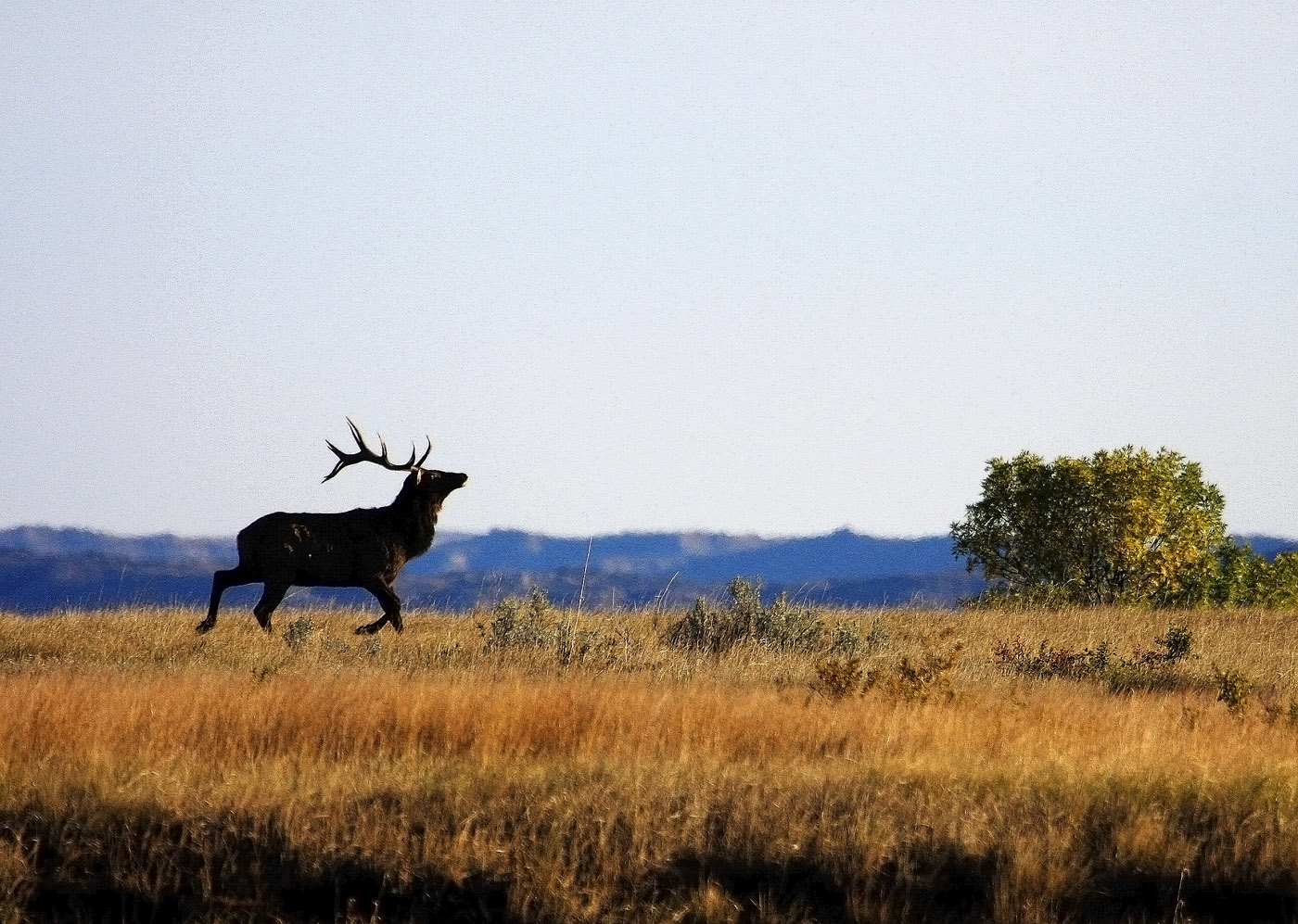
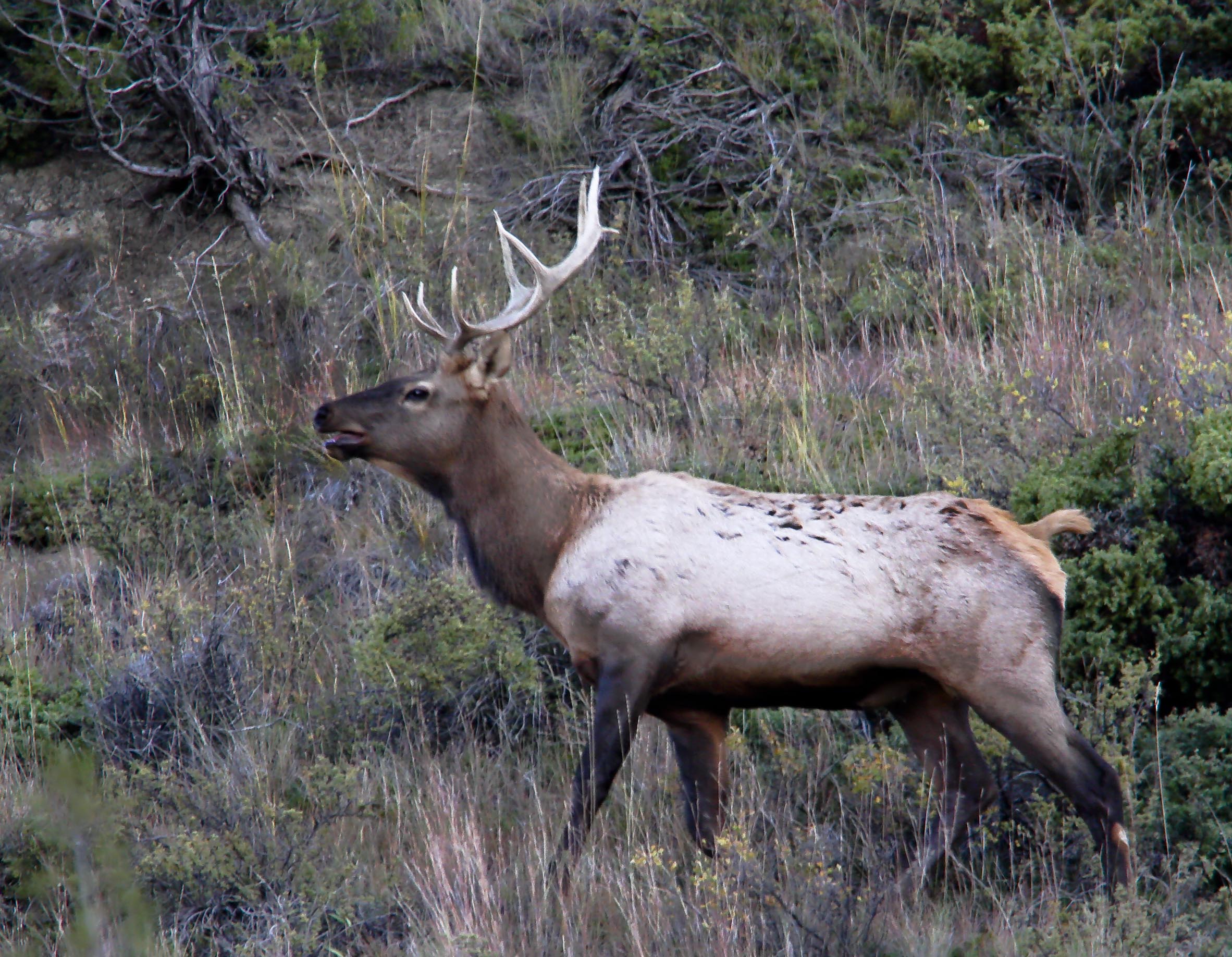
Friends, In the fall after his antlers are polished, this male elk runs the ridge top in search of a harem of cows. Males lose these antlers in the late winter and grow a new and bigger set in the spring and summer. The Rocky Mountain Elk have been transplanted to the park after being extinct from the badlands. Now they thrive within the Theodore Roosevelt National Park where they are protected.
The fall grasses have lost their green and have cured to a straw color and bushes are turning into spectacular hues of yellows and oranges. Elk are larger than the deer species and are harder to find in the vast acres of badlands. The male in the bottom images is a smaller bull and is gathering his cows while keeping a watchful eye on the photographer. It is always a thrill to see elk in the wild and it makes my heart beat faster or maybe it is because i am chasing them uphill. til Tomorrow MJ

Mule Deer-Where Are They
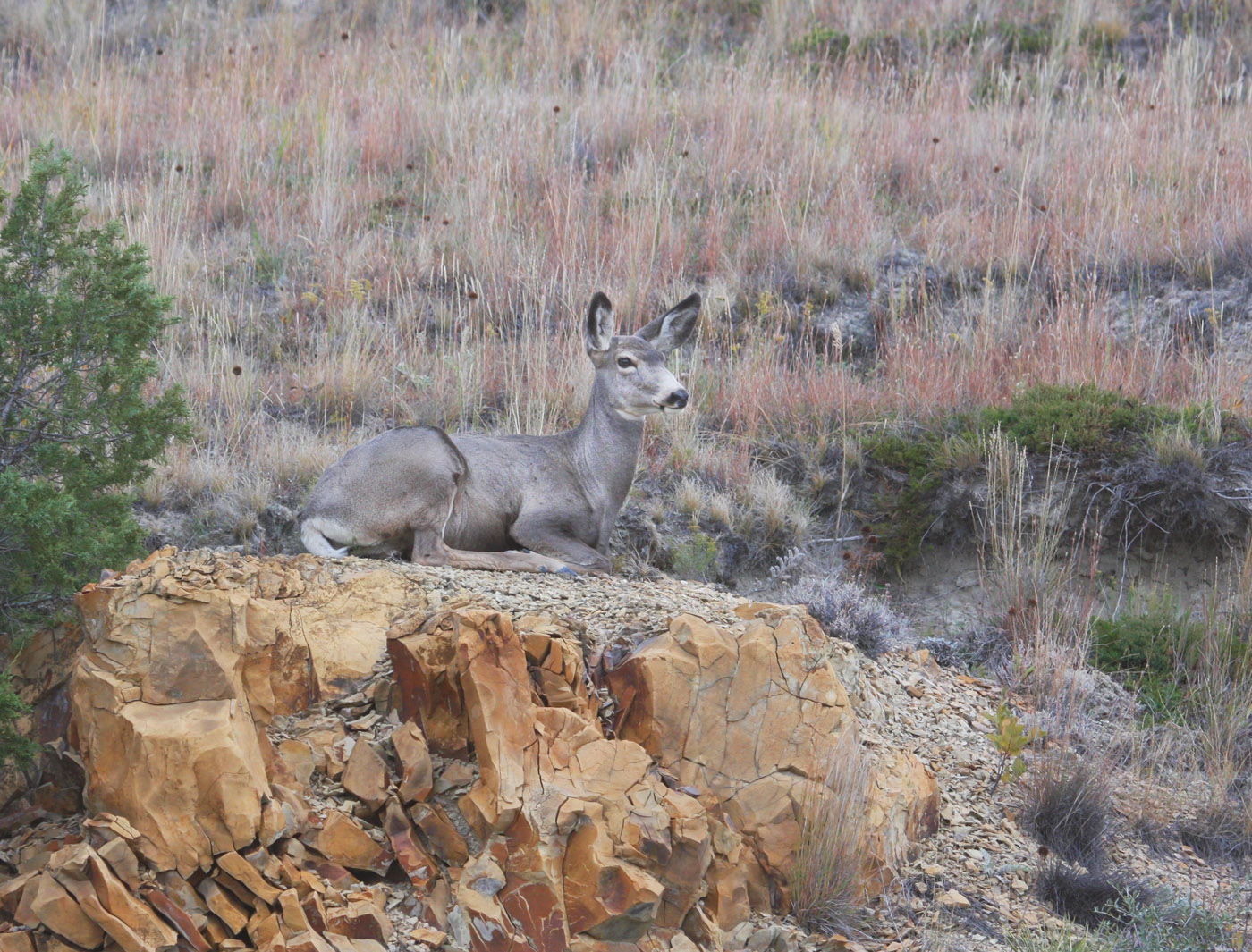
Friends, Mule Deer are everywhere if you look up into the rocky slopes and down into rabbit brush filled ravines. They often lay down in the day light hours, but along toward sunset, they are roaming everywhere. Driving through the National Park after 5pm, if you don’t see deer, you are not looking very hard. til Tomorrow MJ

More muleys
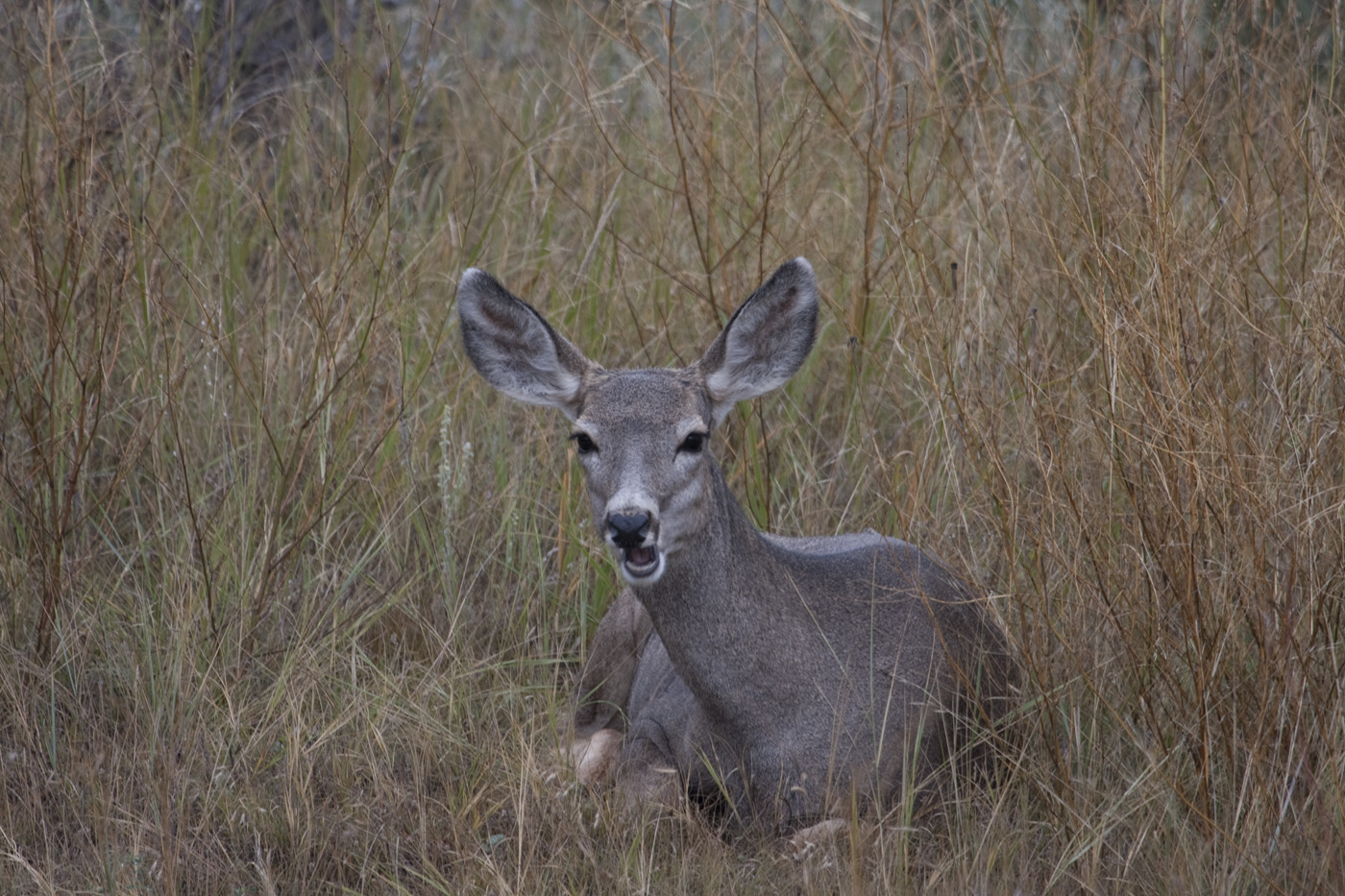
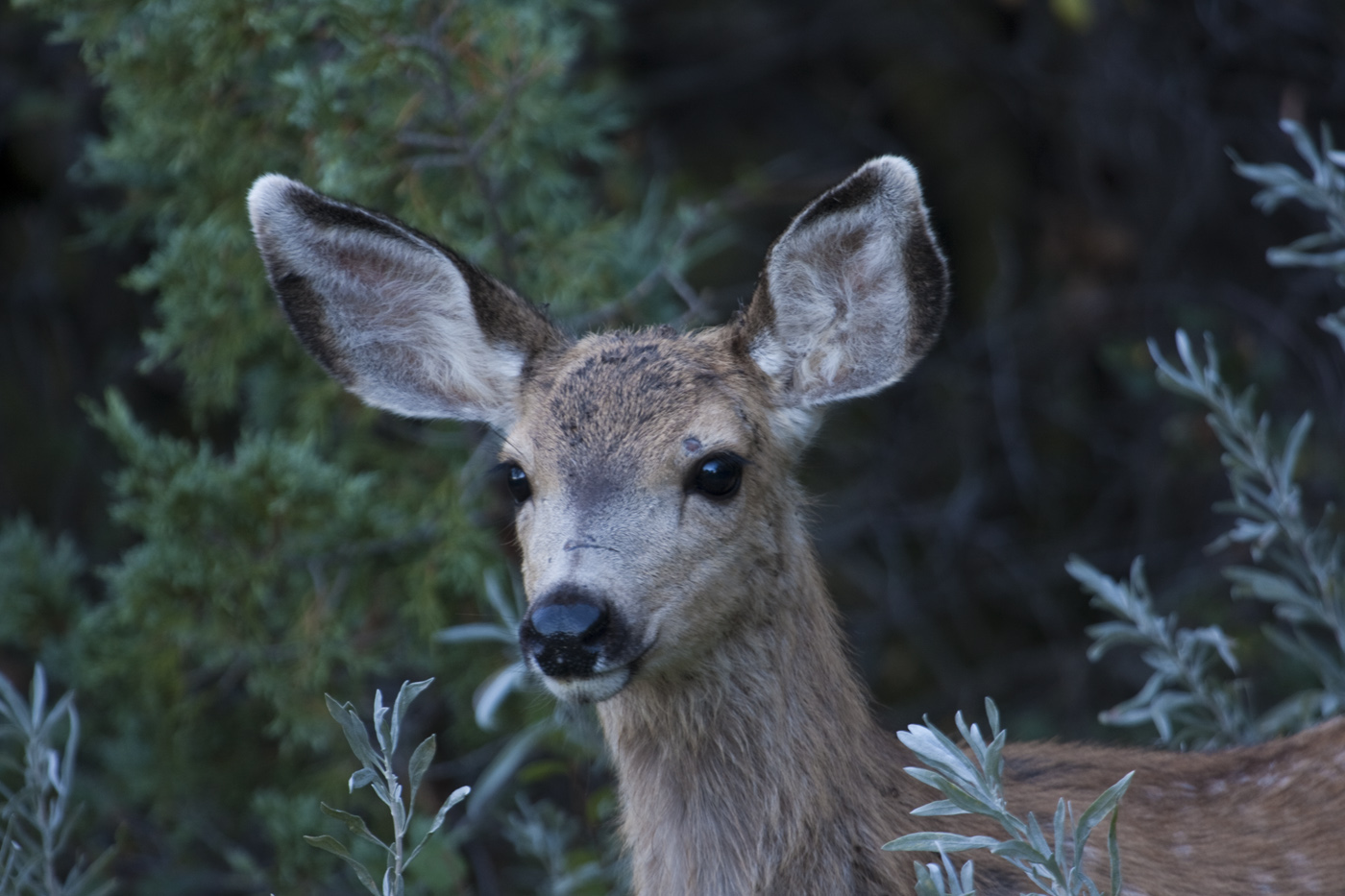
Friends, this big-eared mule deer doe is relaxing in the grasses of the badlands. She is chewing her cud and checking out the photographer. One of the characteristic traits of these deer are the large ears hence their name, mule deer with mule ears. The image below is a fall image of a fawn that was born in the spring, if you look closely you can see remnants of his spotted coat. til Tomorrow MJ
Mule Deer

Friends, yesterday i showed you a white tail deer and today’s image is of a mule deer in the badlands. His antler tines branch and in spring and summer his antlers are covered in velvet, a vascular tissue that causes the antlers to grow and deposit calcium. He loses his antlers every year like the white tail but is a much larger animal. They frequent the rugged ravines and steep hills regions of the National Park. The below image shows the very early stages of antler growth. til Tomorrow MJ

Along the River

Friends, most of the badlands in North Dakota are very dry (arid) except the area directly adjacent to the Little Missouri River. The Whitetail deer are found mainly along the river while Mule deer are found in the drier areas. This Whitetail buck posed for us in the fall with his antlers polished and ready to chase the girls. White tails are smaller than mule deer and get their name from the white underside of their tails that they flag when they flee from danger. The bucks grow antlers every spring and summer, then shed their antlers every winter to begin the cycle over again. The whitetails have antlers with tines coming off a main beam. In this image you can see his all white tail and his antlers are quite typical for a whitetail buck. Below image is the Little Missouri River bottom. til Tomorrow MJ

Prairie Smoke

Friends, another high key image (overbright). This hairy plant is the prairie smoke that usually has three nodding heads. When setting seeds, the red buds pop upright and open to release several feathery plumes that each have a seed attached. I was a little early, but if you look closely at the bottom of the top bud, the plumes are peeking out into the sunshine of spring. When the buds have exploded into wispy glory they resemble smoke covering the ground. This spring I will be hunting for a more advanced prairie smoke plant to show more of its natural history. til Tomorrow MJ
The Gumbo Lily
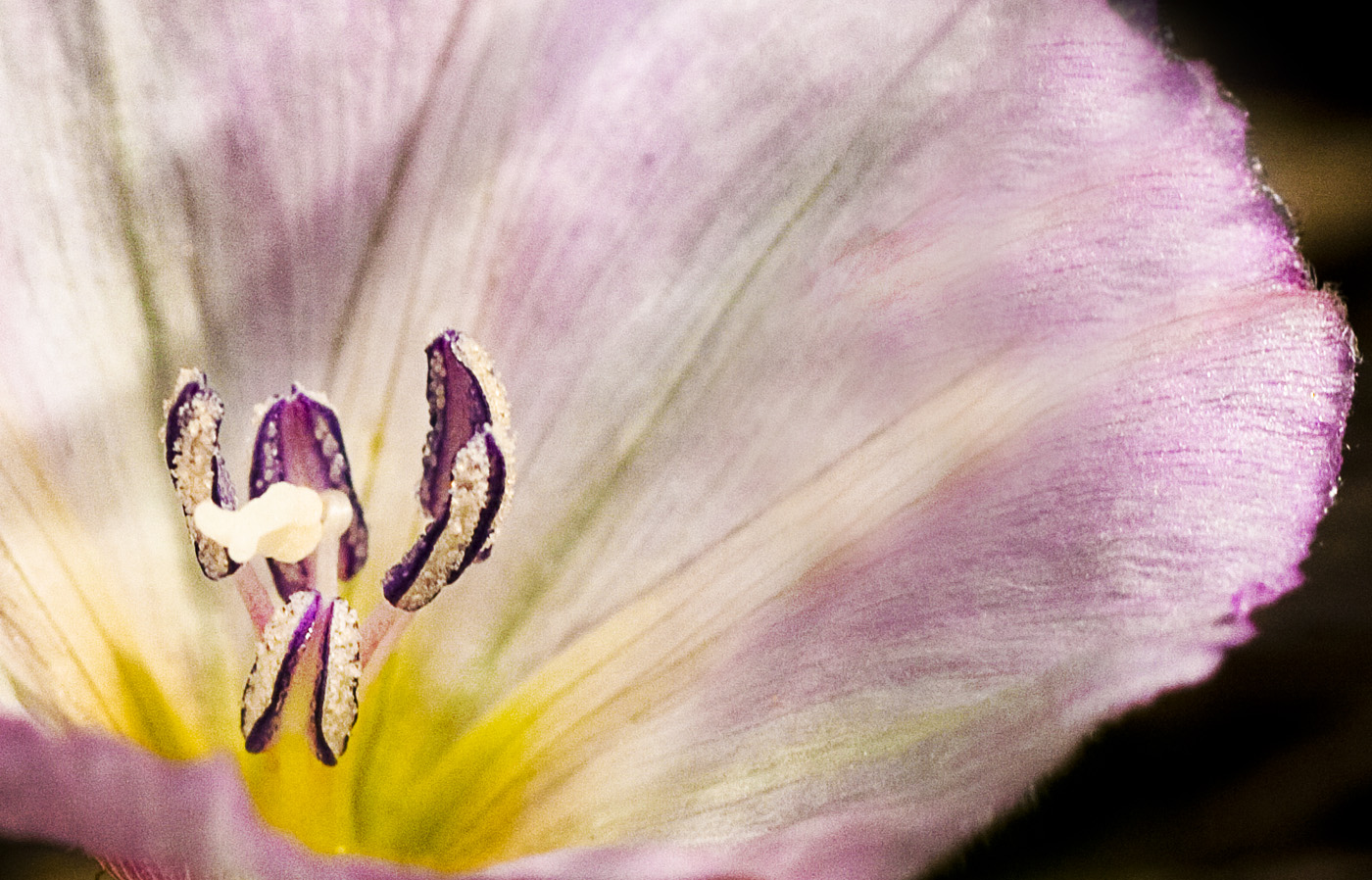
Friends, this bloom is locally called the Gumbo Lily because it arises out of the clay gumbo on mud flats in the badlands. It is officially known as the Evening Primrose and blooms out of very pink buds, quickly turning white in the strong spring sunshine. This wildflower grows very close to the ground so I had to lie flat on the dried mud to snap this macro shot. Good thing it was dry that morning. til Tomorrow MJ
Pentstemon-blue or pink
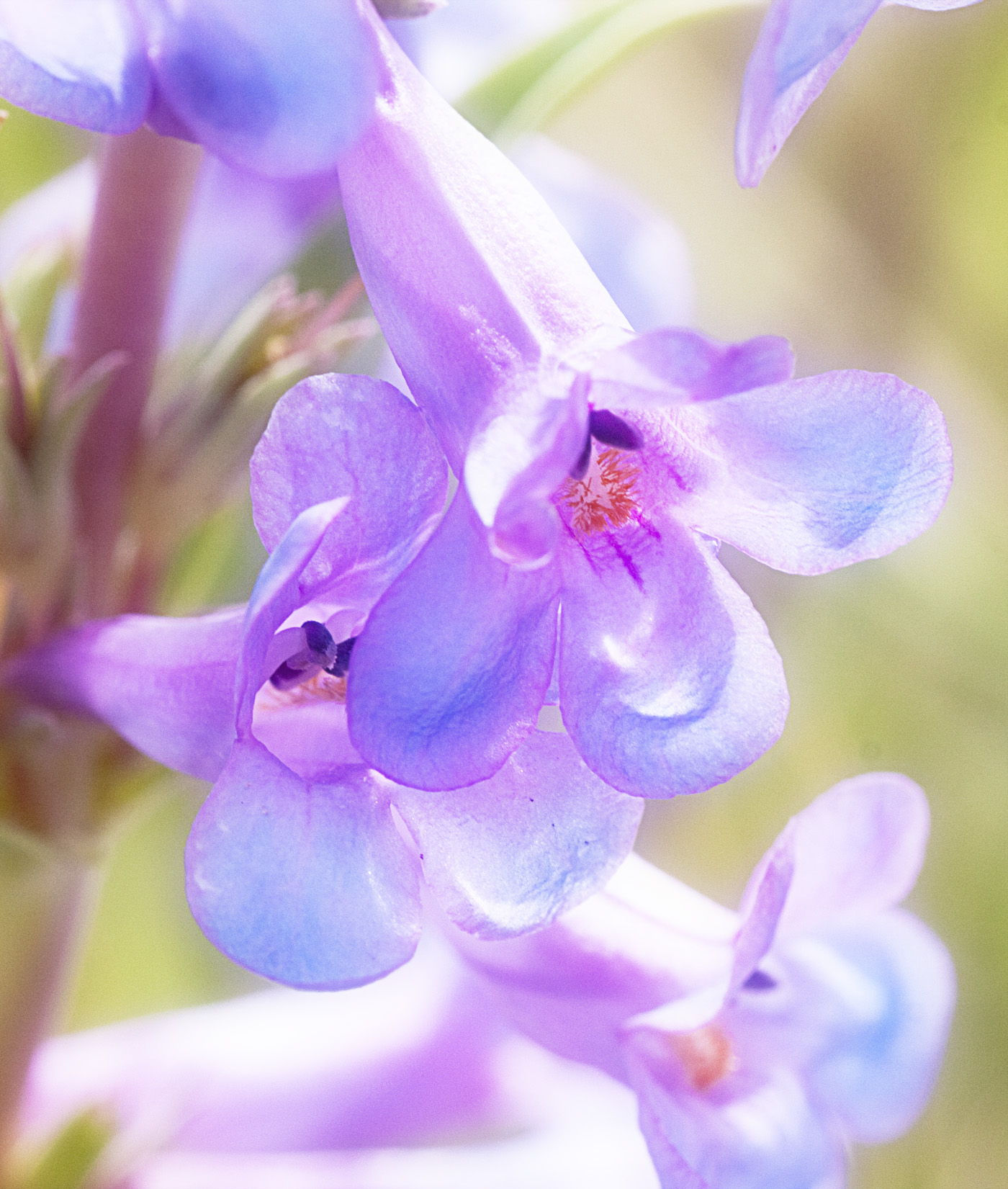
Friends, this tiny bloom of the badlands can’t decide whether it wants to be pink or blue, so when it first opens it is a mixture of these two colors. When the bloom has been open for a few hours in the spring sunshine, it is bright blue. The fifth stamen (pentstemon) is orange, densely- covered with hairs and this flower is often called a beard tongue. The red lines on the lower lip of the bloom is thought to guide pollinating insects inside to the treasures within. I am experimenting with high key images (over bright) to convey the spring sunshine effect with this macro shot. I like this effect, how about you? til Tomorrow MJ
Weekly Photo Challenge: Two Subjects
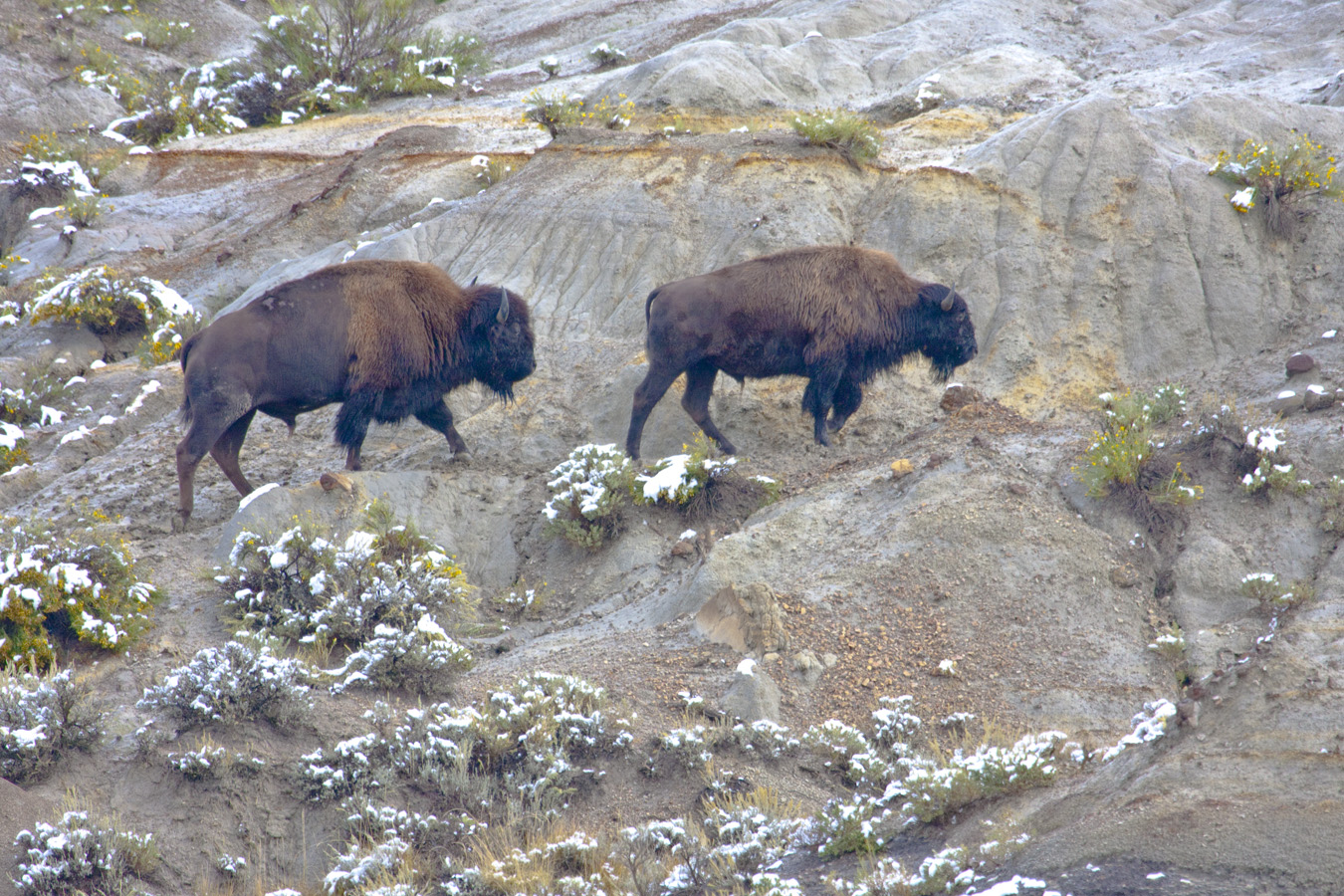
Friends,Two American Bison heading up the side hill to greener grasses. While this may look like a couple, they are actually two males, the one in the front being a younger version of the one in the back. An early snowstorm in September had painted the sage and brush with white and as the snow melted, the clay on these slopes became very slippery. The whole herd was progressing very slowly with an occasional stall when an animal had difficulty moving to the higher ground. The Bison have been reintroduced to the Theodore Roosevelt National Park and thrive within the fenced region. Cattle of the badlands they compete with wild horses, elk, deer, antelope and other grazers for the lush grasses. Even the prairie dogs eat the grasses. til Tomorrow MJ
 MJ Springett