Category Archives: Badlands
Touching my roots
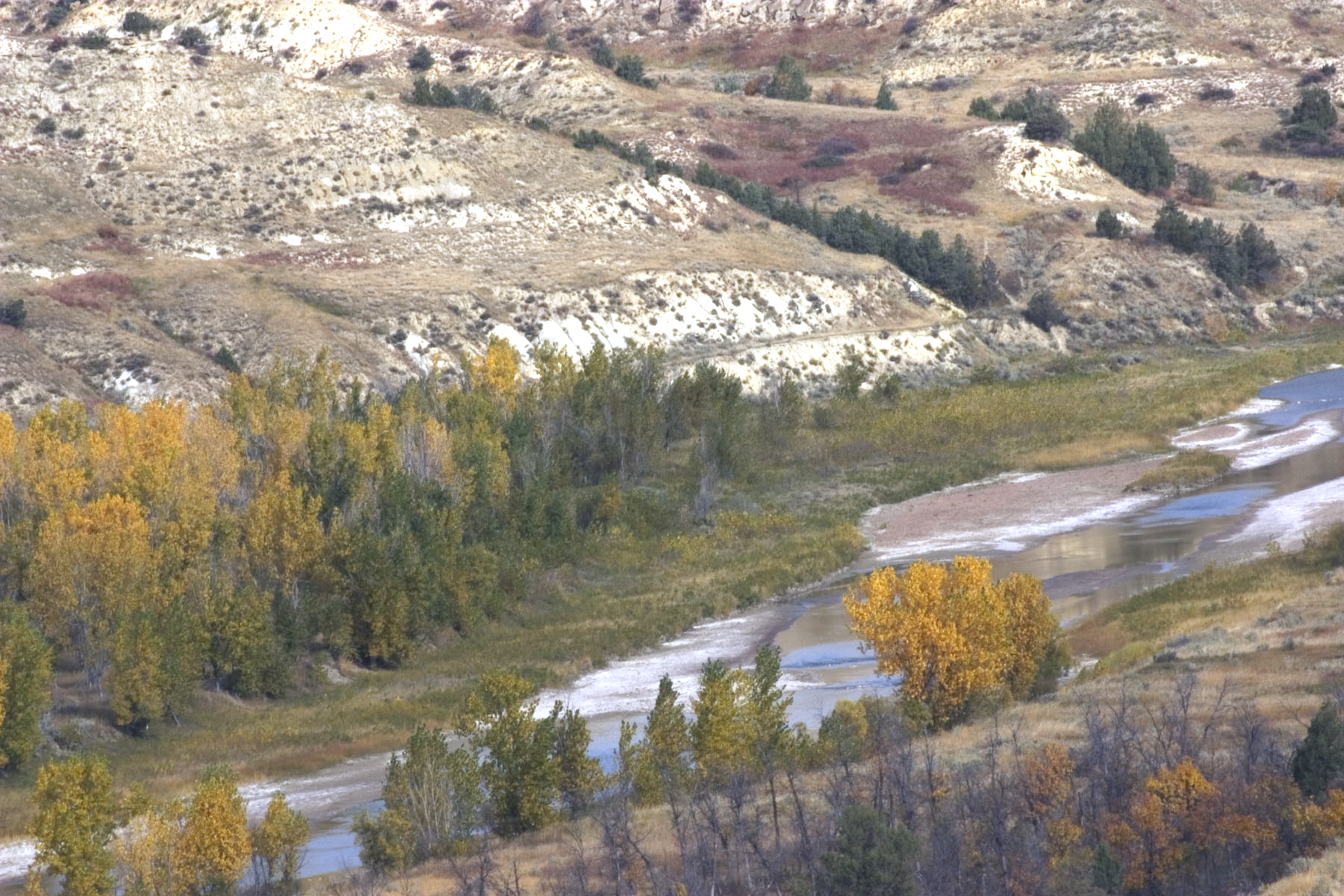
Friends, this image is the bottom of the badlands, fall foliage along the Little Missouri River. Like these trees along the river, my roots lie here and i often think of this place as home. On this site just to the right of the orange tree, my mother was raised on a ranch. Now it is a campground in the Theodore Roosevelt National Park. Where cattle and horses once grazed, the bison and elk now roam the bottoms in search of the best tasting grasses. Cottonwood trees, ash thickets and wild plum trees grow in abundance near the water. This is a little river in the fall, but is often full to the brim in the spring and sometimes the family needed to leave the river bottom to escape the floods. The river flooded last spring (2011) and reminded us that the river can still be an awesome force. til Tomorrow MJ
Trees?

Friends, I have often heard people describe North Dakota as barren and containing no trees. Well that may be true of some parts of the state, but this image shows the badlands with plenty of trees. They are evergreens, cedars and junipers, and keep the green all winter. The northern slopes are usually covered in green, while the south-facing slopes are often bare. In the autumn, the fall colors are apparent in the gullies and along the Little Missouri River. More badlands tree images tomorrow, til Tomorrow MJ
Weekly Photo Challenge:Arranged
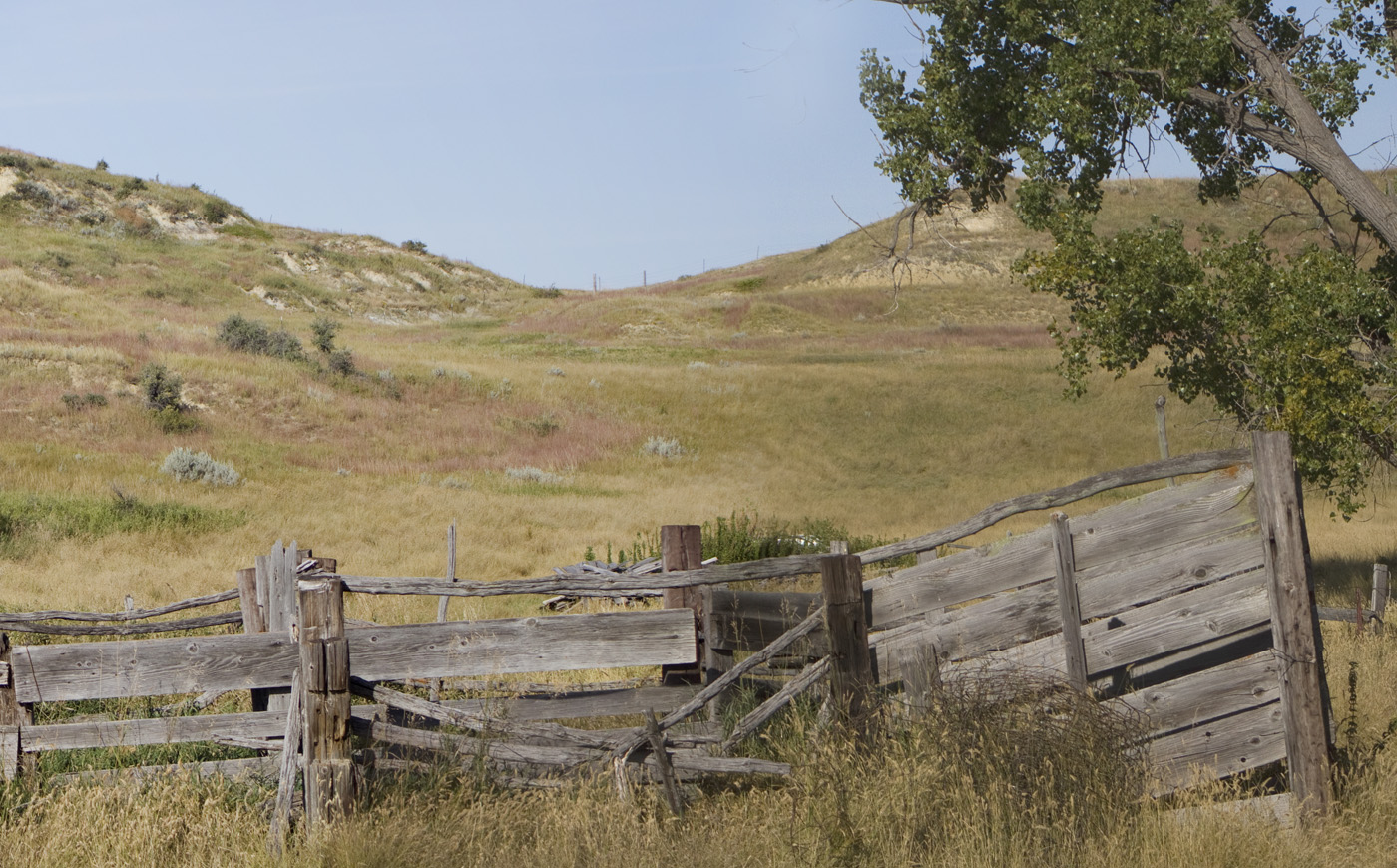
Friends, These old corral logs and loading chute were arranged by cattlemen to load cattle into trucks. This remnants of ranch life appears abandoned, the fence is falling down and looks like a wild cow went through it ( sorry last week’s theme) . There are still a great number of ranches in the badlands running cattle on the rich grasslands. Over 1 million acres within the Little Missouri National Grassland are in federal, state and private ownerships, but all are managed by the US Forest Service. The Maah Daah Hey trail traverses the grasslands and connects the South unit of Theodore Roosevelt National Park to the Northern Unit. This trail is over 90 miles and is open to travel by horseback, bicycles or hiking. When traveling this trail, remember to close any gates, don’t want to let the cows out, til Tomorrow MJ
Grasslands
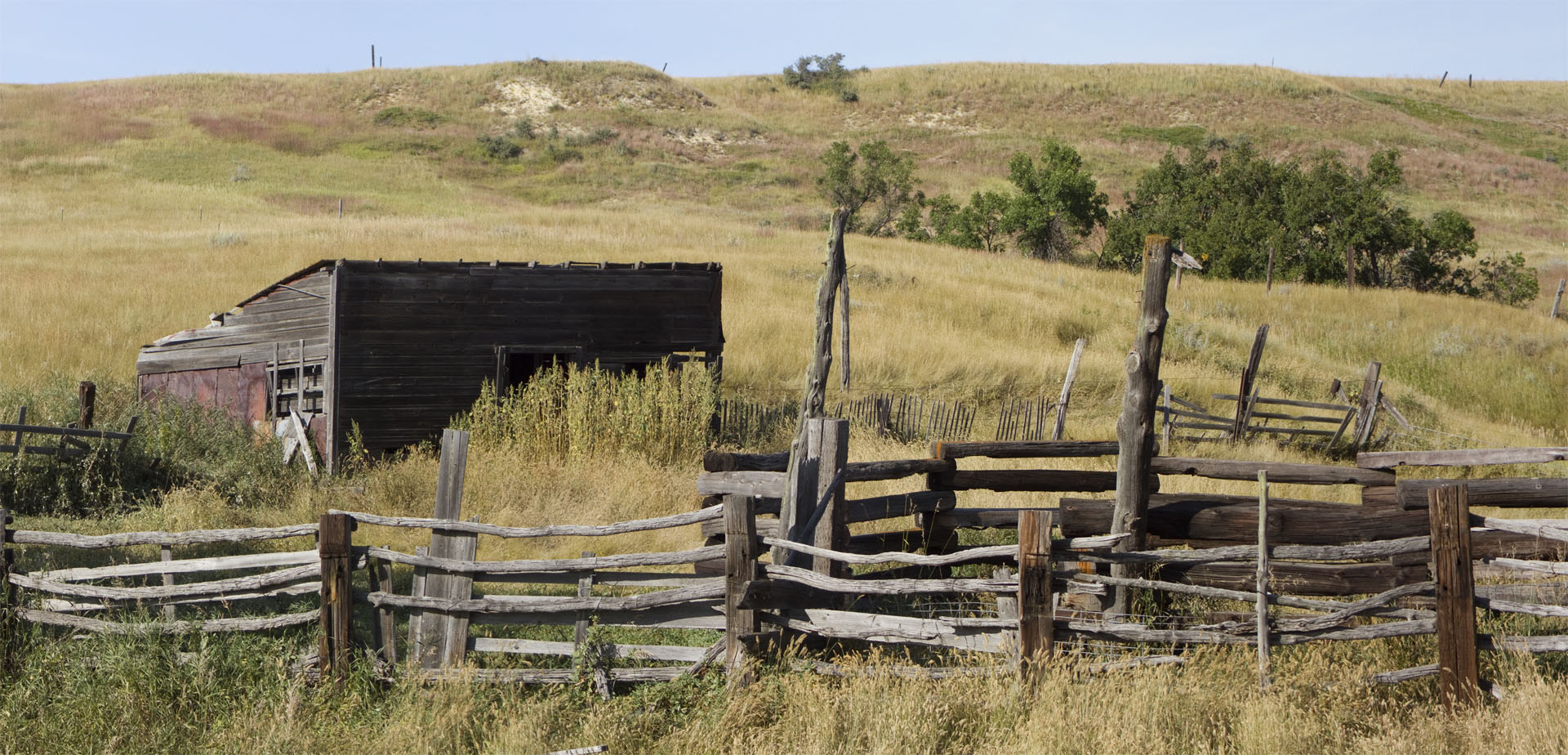
Friends, The badlands are known for their grasslands that provided rich grazing for cattle. The country attracted Theodore Roosevelt who invested in two cattle ranches and spent some time “cowboying” in this country. In one of his speeches, he attributed his badlands experiences as instrumental in making him the President of the United States. Others were also attracted to the badlands and the livestock industry. My grandfather raised horses, cattle, pigs, chickens and 5 children in the badlands. With a large garden, they were able to live in relative comfort. Then the depression and droughts of the 1930s made life difficult and many were forced to find other means of support. This barn and corral is a reminder of the hard times and desertion of many homesteads in the badlands. til Tomorrow MJ
Stone Tree Stump

Friends, While this tree stump looks like wood, it has turned to stone. Petrified tree stumps are found all over the badlands, and you would swear that they are made of wood. The preservation of tree structure is so realistic, you can see worm holes and cell structures. These trees were redwoods and a forest of stumps is present in the western side of Theodore Roosevelt National Park. The park roads do not pass close to this forest, but it is only a two mile hike across the flats to access a land of stumps still being eroded from the clay slopes. Like bleached bones, their white is a stark contrast to the dark green of living cedar trees. In the early days, stumps ten feet in diameter and 80 foot logs were found, a remnant of a tropical past. til Tomorrow MJ
Snake Tracks in the Sand

Friends, this pile of sand with a snake track across, reminds me to watch where i put my hands and feet in this country. Rattlesnakes, bull snakes and blue racers appearing on the trail can startle an unwary hiker and put the feet in reverse very quickly. But this image also reminds me that Wind Canyon is slowly turning into a huge pile of sand. Now I love sand. Sand is one of my favorite elements of nature, the tiny grains under a microscope are tiny colorful gems that reflect the colors of their parent rocks. The massive cliffs of Wind Canyon that stand high above the Little Missouri River are being eaten by wind and water and the gap between the sandstone walls has greatly increased even within my lifetime. Below is an image of Wind Canyon today and by the time my great-grandchildren are able to visit this country, the gap between the walls will be much greater than today. til Tomorrow MJ

Sandstone Wind Erosion

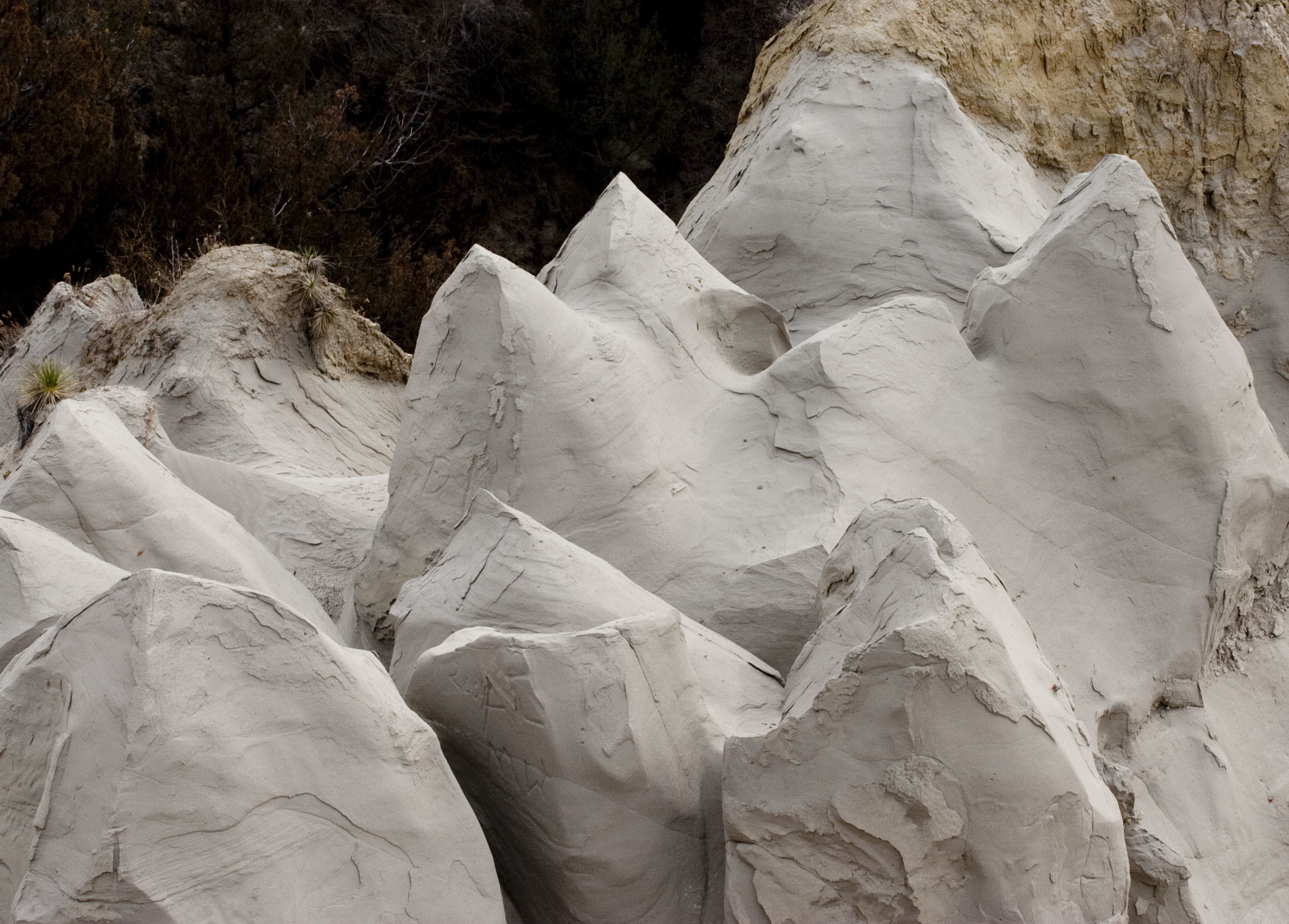
Friends, Sandstone comes in many hues from white to a deep gold color in the Wind Canyon area of the southern Little Missouri Badlands. Wind Canyon is a class room for wind erosion effects on soft sandstone. The wind carves caves, caverns and figures in the soft stone. Many have carved their initials in the rock, only to return a short time later to find them washed away with the sand. The bottom image is another wind-eroded area of Wind Canyon showing pencil tips figures. til Tomorrow MJ
Concretions

Friends, these brown round rocks are concretions, a cemented sandstone that is found throughout the badlands. The Romans made a cement from limestone, volcanic ash and clay. These elements were all present in the early badlands and it is feasible that a natural cement was formed from mixtures of limestone (calcium carbonate) ,clays and volcanic ash. This cement concentrated in a softer sediment and the cannonballs were formed. Now the softer clay layer is eroding and these concretions are falling out of the walls.
The most interesting are the cannon balls that are 2-3 feet in diameter that are present in the Northern Little Missouri Badlands. In the southern badlands, smaller cannon balls are often being exposed on slopes of bentonite that has a popcorn texture when dry. The bottom photo shows a cross section of a small cannonball that has a white nodule in the interior. til Tomorrow MJ

Hot Rock
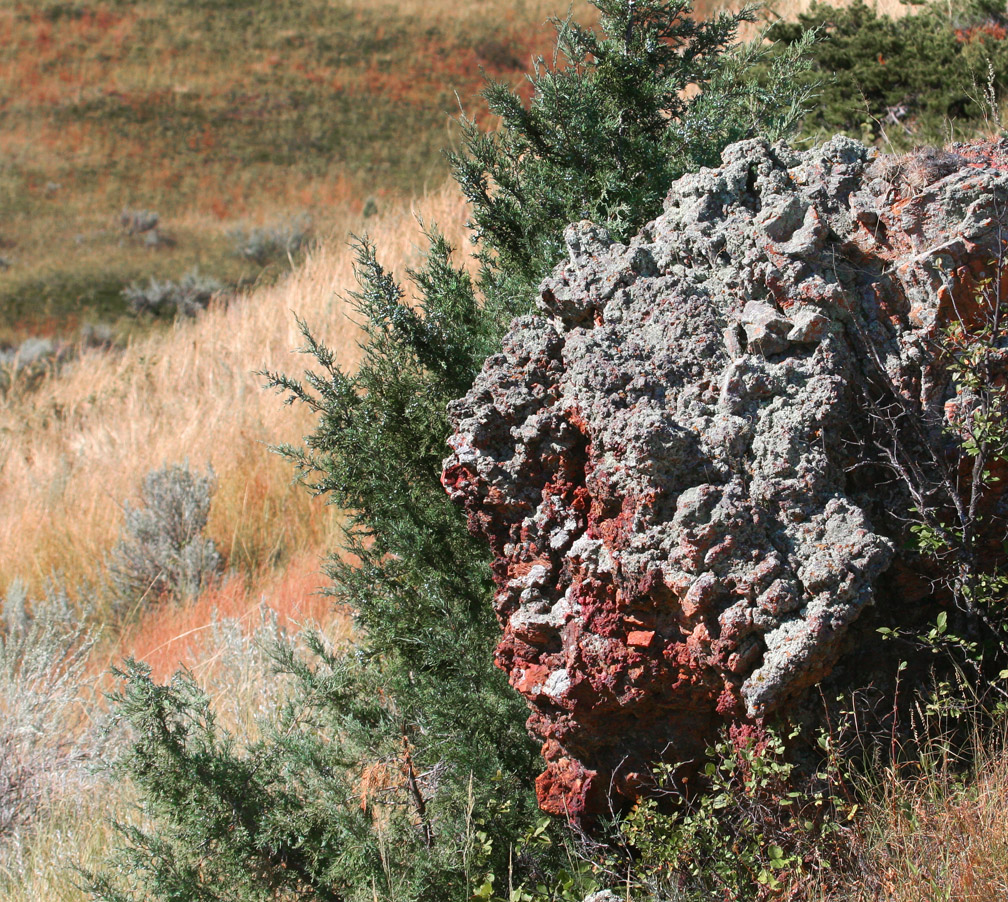
Friends, this holey rock is part burned coal and part scoria. Masses like these are prevalent and scattered throughout an area where a coal vein was burning in the recent past. They resemble lava formed from volcanic activity and are highly vesiculated (new word for the day). Walking the higher ridges around the coal vein area, great areas of the plains have sunk away as a result of the underground clay shrinking in the intense heat. The burned coal is a gray color and sometimes is tightly bound to the adjacent scoria as seen in this image. til Tomorrow MJ
Cap Rock Resistance

Friends, This image shows the principle of differential erosion (i made that up it is not a proper geological term) , the softer material will erode faster (duh) and the red caprock will protect some portions of the clay from erosion. The red cap rock protects the taller pillars, while the foreground pillars are slumping away unprotected, hence differential erosion. til Tomorrow MJ
 MJ Springett