Blog Archives
Erosion at work
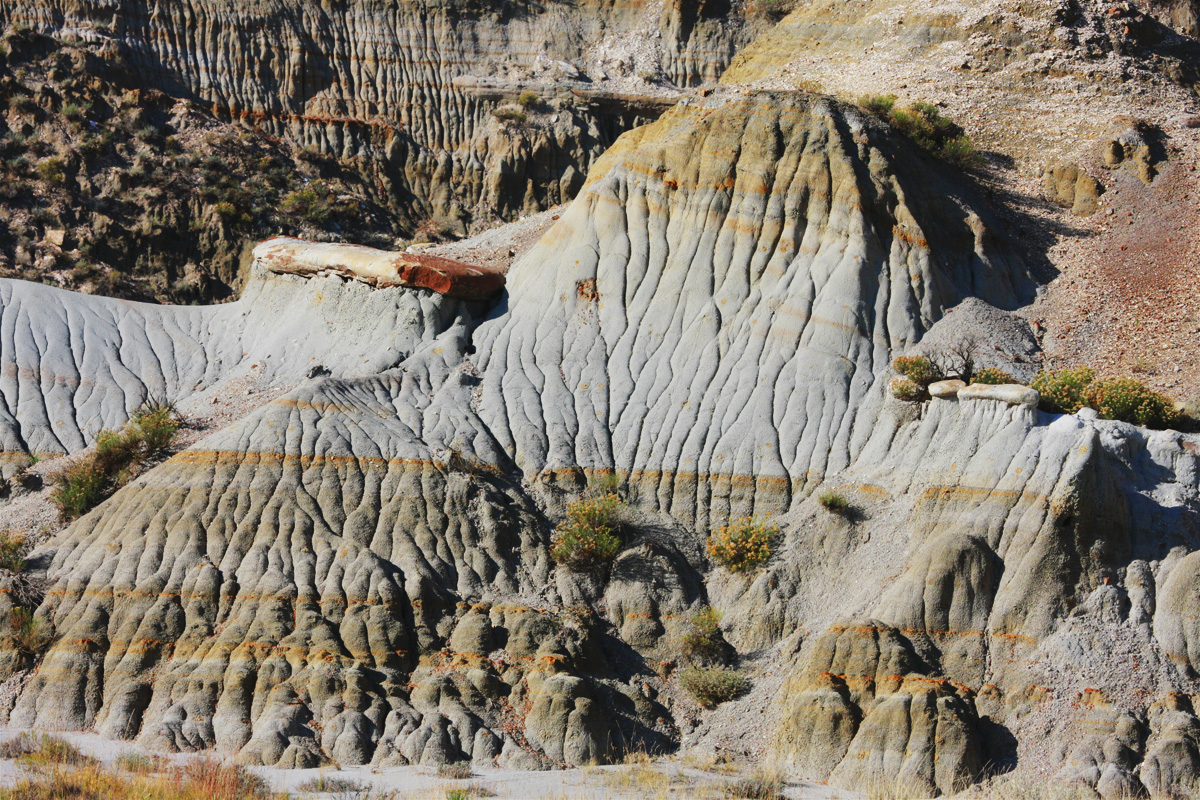
Friends, the clay layers are carved by water on this hillside. The inverted v formations result from water flowing downhill. When meeting resistance the flow slows and forms new channels to continue to flow downhill. The badlands are constantly being washed away downstream so get your photos while you can. They say that one inch/ year is being removed by water. til Tomorrow MJ
Scoria Point in the Snow
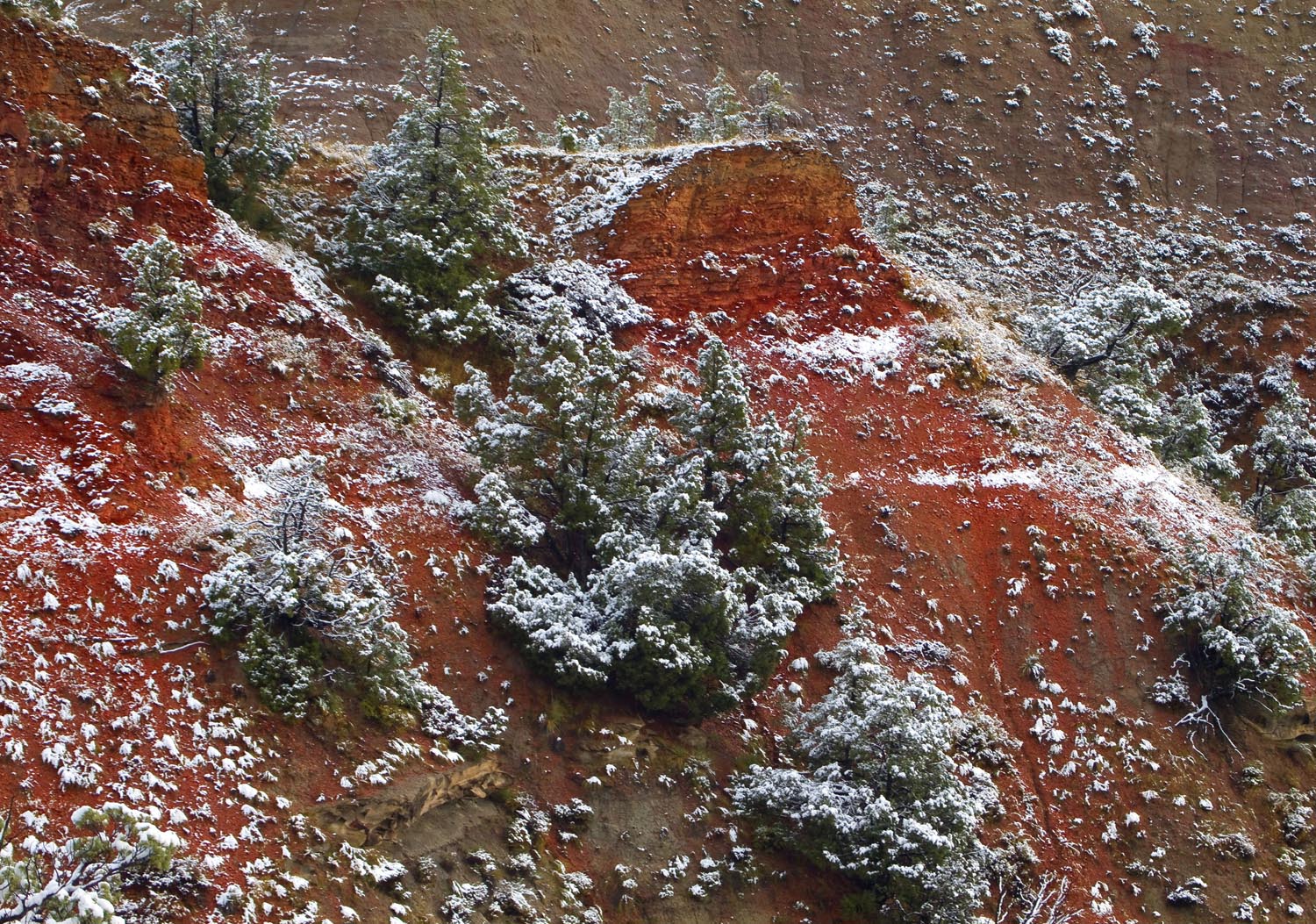
Friends, this is Scoria Point on a September morning when we had an overnight dusting of snow. The next day it all melted, but the day was perfect for photography. The saturated reds of the rock, golds of fall grasses, and greens of cedar trees as well as the fall foliage made for a delightful day. I have visited these hills at least once a year since I was nine years old, and the landscapes never cease to amaze me. My love for this country is very deep within me, I hope i can share it adequately. til Tomorrow MJ
Mountain of Red Rock-Scoria Point
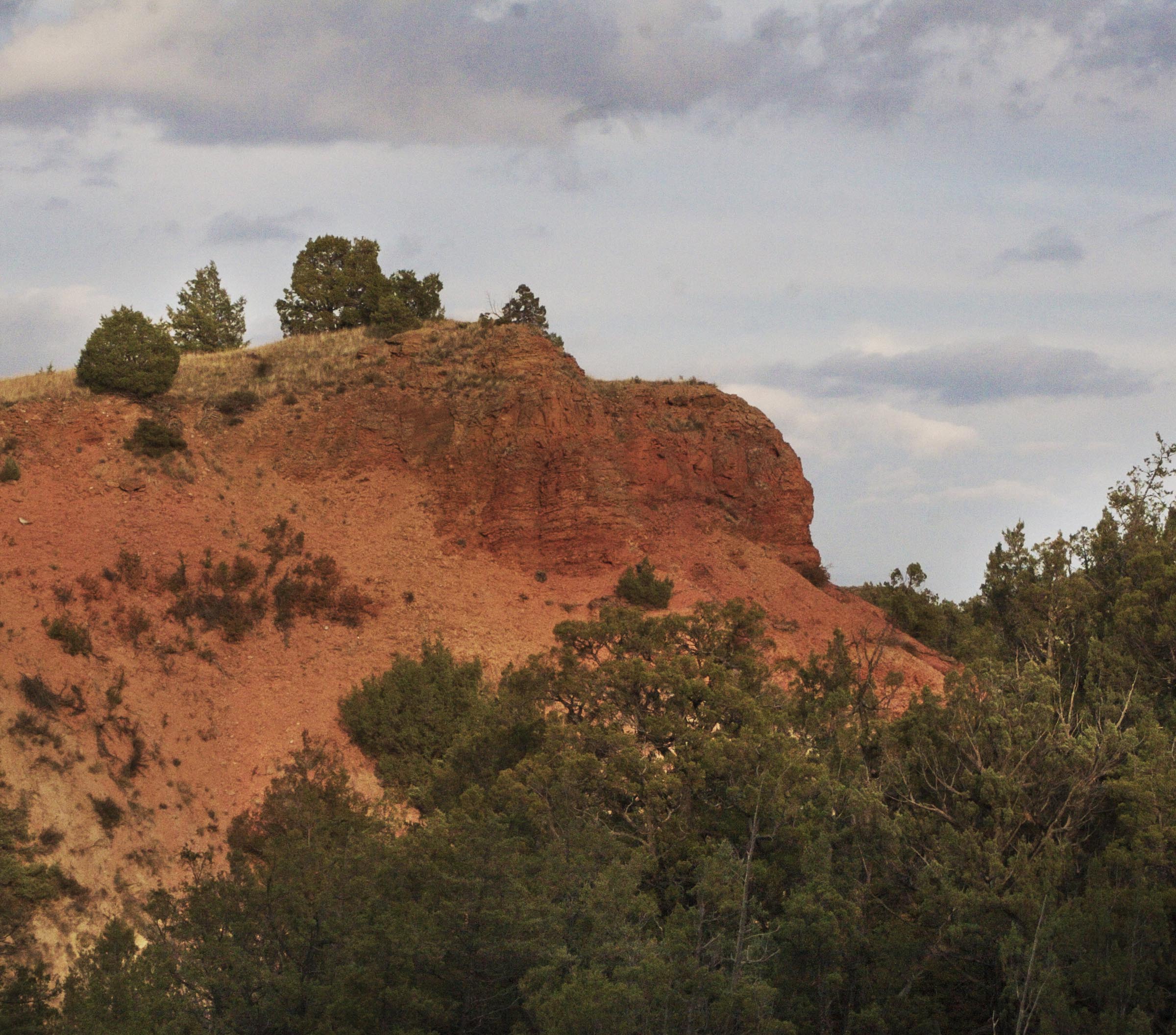
Friends, this is a formation called Scoria Point located within the Theodore Roosevelt National Park in western North Dakota. This red rock or scoria appears many shades of red, from pink to purple and all the oranges in between and the shade is dependent on the light. The day this image was taken, the light was slightly diffused through some clouds and the color appears a rusty orange with pink accents. But in the evening with a setting sun, the hill appears a bright orange and in the snow with cloud cover, the rock appears a very deep almost iridescent red. I haven’t yet captured the spirit of this rocky scene, but i keep trying. til Tomorrow MJ
Badlands Red Rock

Friends, this red rock is fragile and will break like any good china cup. The formation process is similar to producing bricks or fine tiles. A clay (bentonite) is baked by a coal vein that is burning underground. The coal is a soft lignite and may be spontaneously ignited or the vein may be lit by grass fires whipped by the wind. These fires may burn trees and then travel down the roots to the seam underground. When the various clays are baked and glazed by the igneous process, they are a form of porcelain or as it is locally called, scoria. When a chunk of this light rock is dropped, it clinks on a hard surface, and it is often called North Dakota Clinker. I know i am at home when i see the scoria peaks at sunset. til Tomorrow MJ
Badlands-The land
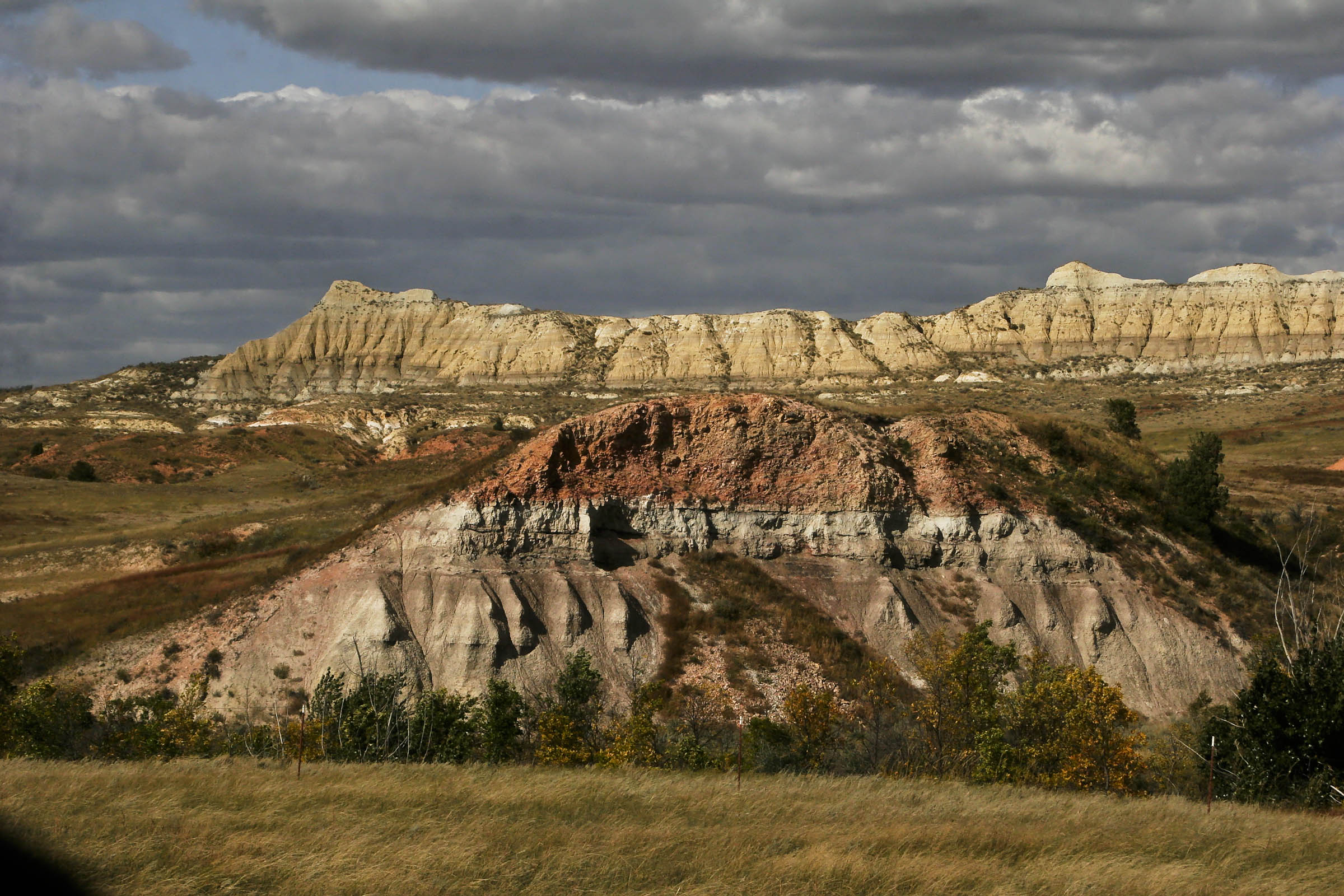
Friends, This image illustrates the two formations that make up the Little Missouri Badlands in North Dakota. Sediments layers that were deposited after the demise of the dinosaur were eroded by wind and water to form the rugged topography. The hill nearest is topped by a red rock deposit, locally called scoria, that was formed by coal burning under a layer of bentonite clay. When Lewis and Clark traveled through these badlands, they saw many of these burning coal veins. As a child, i remember walking on the warm clay and peeking down through the cracks of an actively burning vein with great wonder. So we begin a journey into a land lit by the setting sun and ancient fired formations. til Tomorrow MJ
Sandhill Sunrise
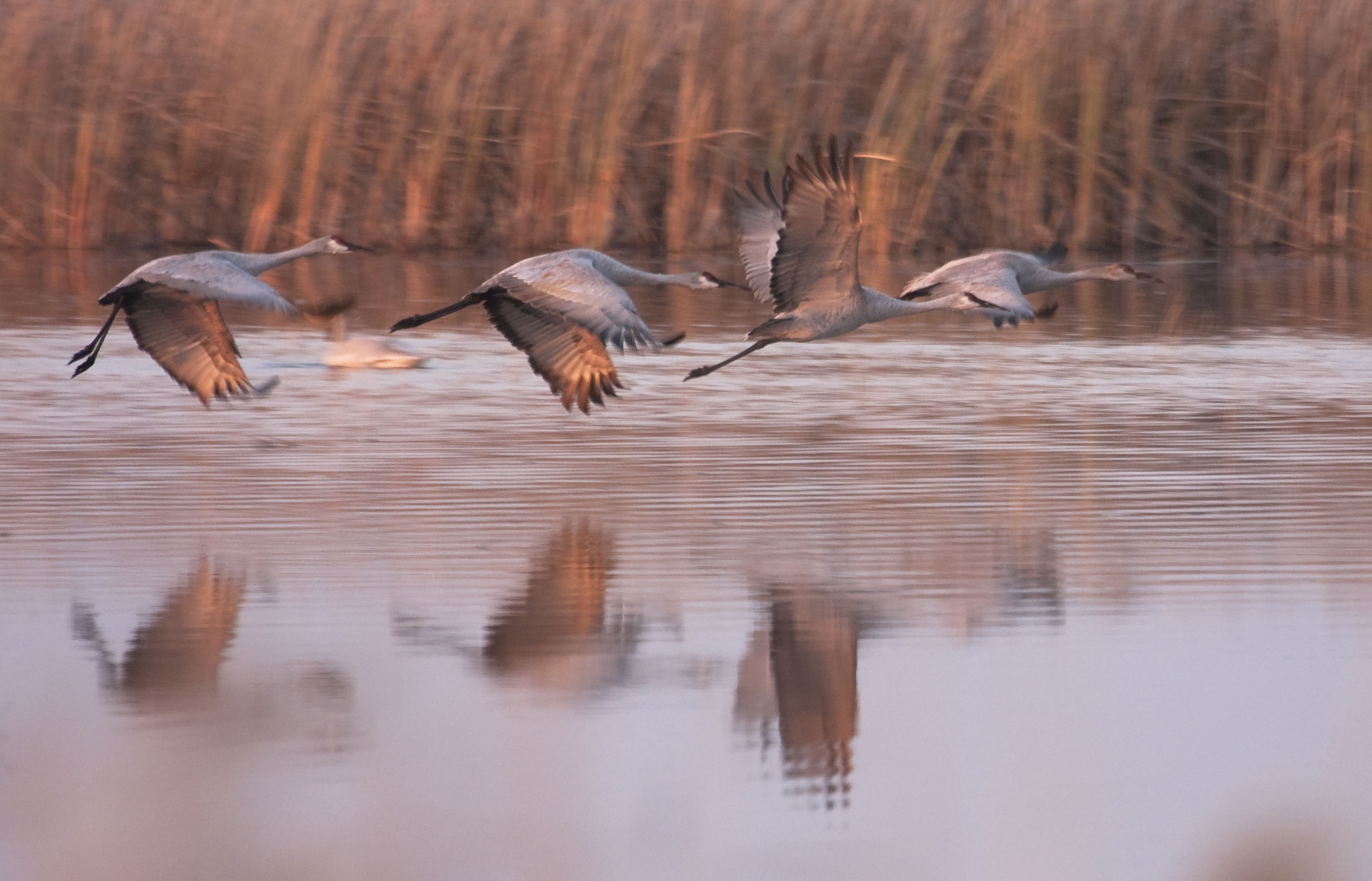
Friends, these Sandhills are taking off into the sunrise, pretty colors in the morning especially as the sun peeks over the horizon. Now i am done showing any more crane images until next fall. Tomorrow i start in a new direction, i will still be doing the nature photography, but the location will change from the Wisconsin birds to North Dakota badlands. I will show you the land, critters, wildflowers, lichens and tell you some natural history stories along the way. Tune in for a fascinating journey into a land touched by the sun,wind and history. til Tomorrow MJ
Sego lily-fine art photography
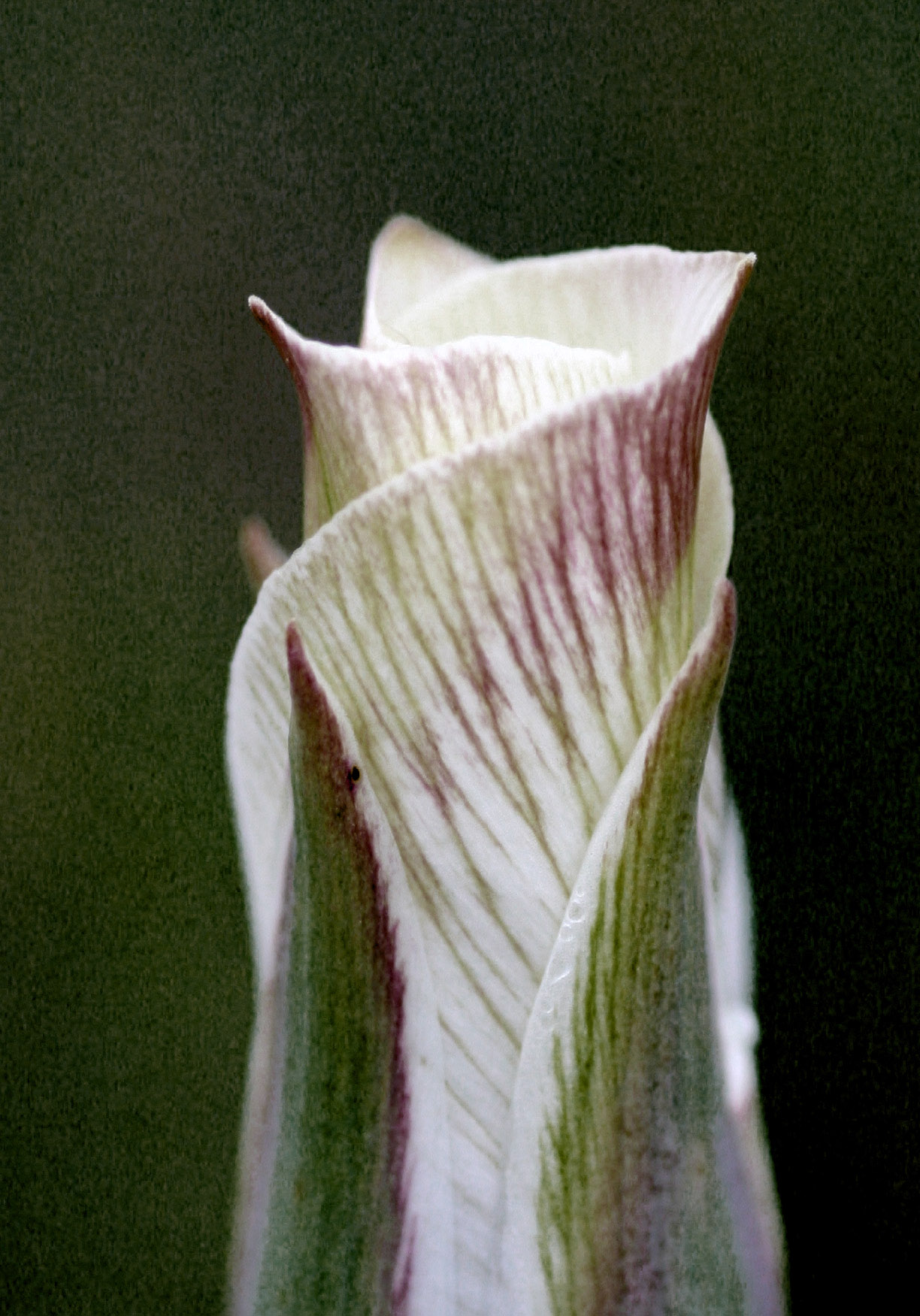
Friends, the Sego Lily grows in the badlands of North Dakota among other places. When i examined this bud with my macro lens, i fell in love with all the colorful veining present in the unopened bud. When the flower opens, it has three white petals with magenta toward the centers. The root can be a food source when roasted. I know that the background is grainy, but i like it that way. This is my vain attempt at fine art photography, what do you think? til Tomorrow MJ
Winter Sundogs

Friends, Sundogs are rainbows formed when ice crystals are in the air. The hexagonal ice crystals act as tiny prisms and when falling vertically oriented appear as colored patches on both sides of a low-lying sun. The cirrus and alto-cirrus clouds may also suggest ice crystals and folk lore says that sundogs form when colder weather is in store. We saw this guy in the badlands of North Dakota so i included the grasses in the foreground to show the wind, that always seems to blow in ND. til Tomorrow MJ
Weekly Photo Challenge:Ready
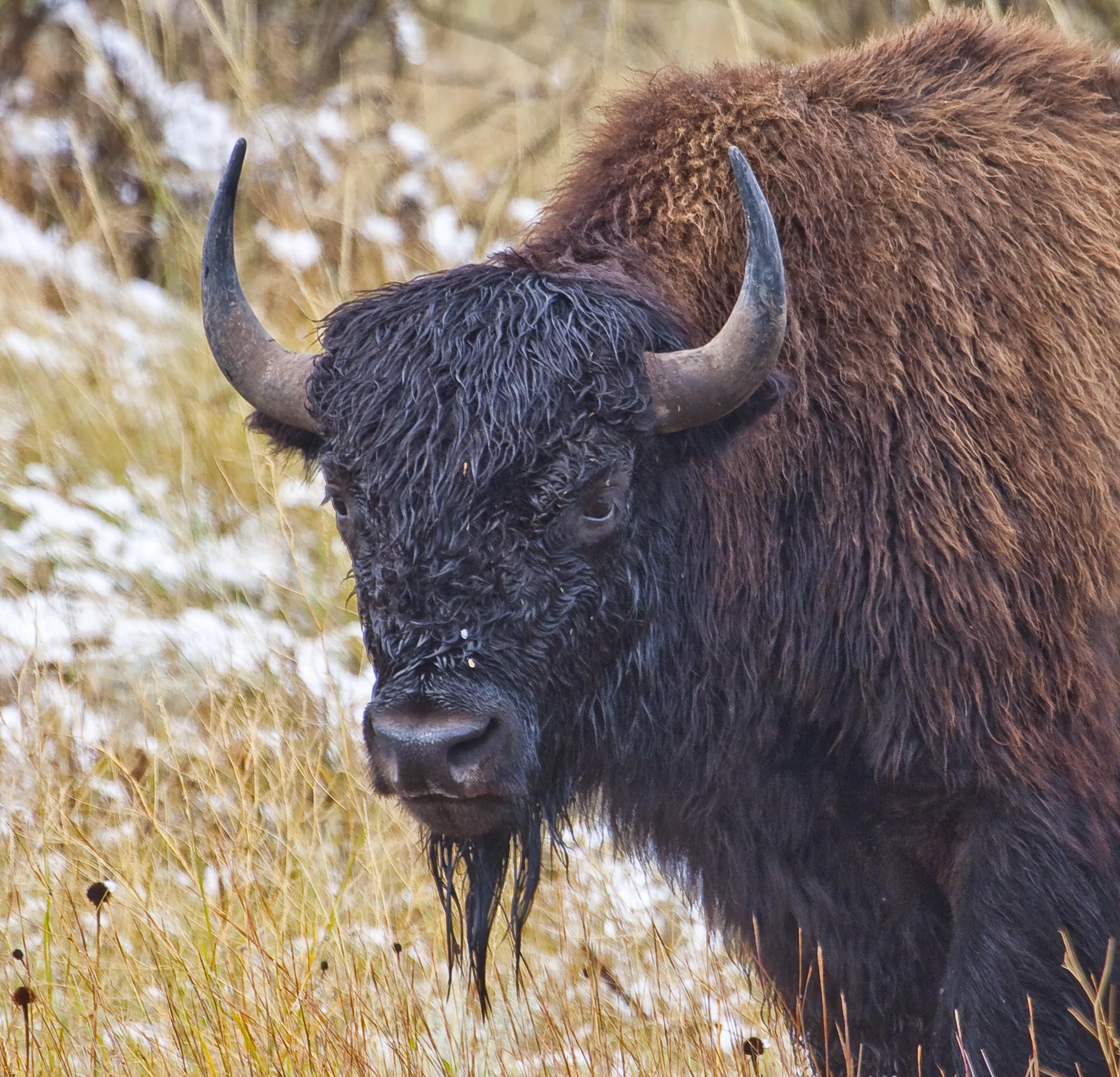
Friends, this young bison bull is ready for the winter winds to blow across the prairie and encase the land in ice and snow. Even though the wet snow of this first winter storm has melted all over him, he is still ready to take on all adversaries, even the larger bulls. His horns have not yet been torn up in battle and with his black head he looks rather menacing. I did not test his courage and after taking his picture, retreated to my vehicle. til Tomorrow MJ
Grouse in the Grasses

Friends, today we return to color and the wild birds. This is a grouse from the badlands of North Dakota, taken in late summer or early fall. Not sure if it is a sharp-tail grouse or a sage grouse( or other?). I am not a very good birder so I don’t know all the differences between the species. But these birds come to the road in the early morning light to get their gravel and pose for pictures :). I didn’t crop this image closely because i wanted to show the relationship between the grouse and her grassy environment. What do you think? til Tomorrow MJ
 MJ Springett