Category Archives: Geology
A River flows through it
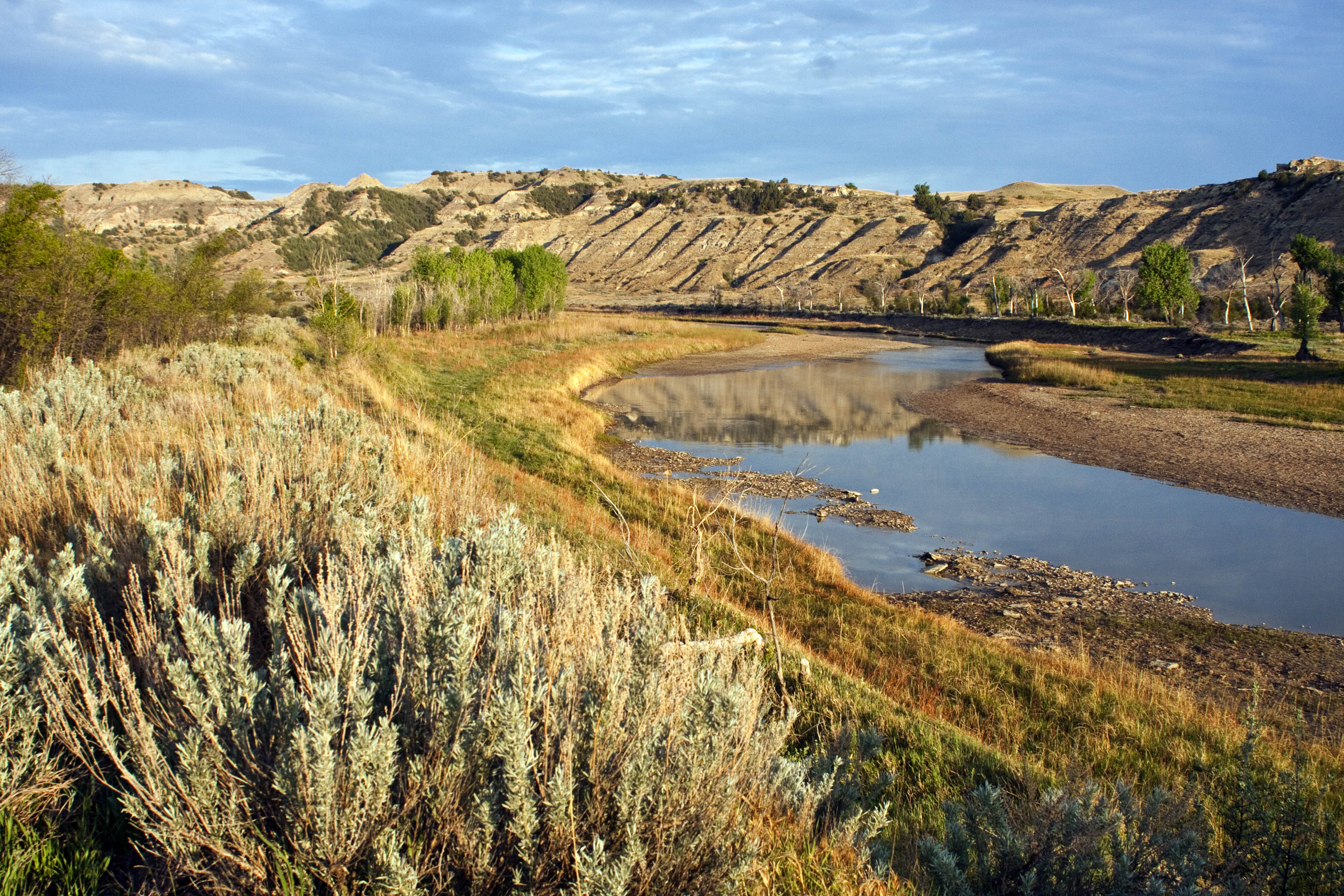
Friends, a river view in the badlands at the point where Knutson Creek enters the Little Missouri River. This spring the water was quiet and very peaceful, unlike last spring when a hundred year flood had turned this scene into a raging torrent. This river is about 560 miles long with headwaters in Wyoming, moving north into South Dakota badlands, north into the North Dakota badlands and north to empty into the Big Missouri River. My Grandfather tells of escaping a massive flood with his wife and young son on the back of a single horse. In their marriage book, my Grandmother had written “this was damaged in the flood of 1910” . The power of water. til Tomorrow MJ
Petrified Forest

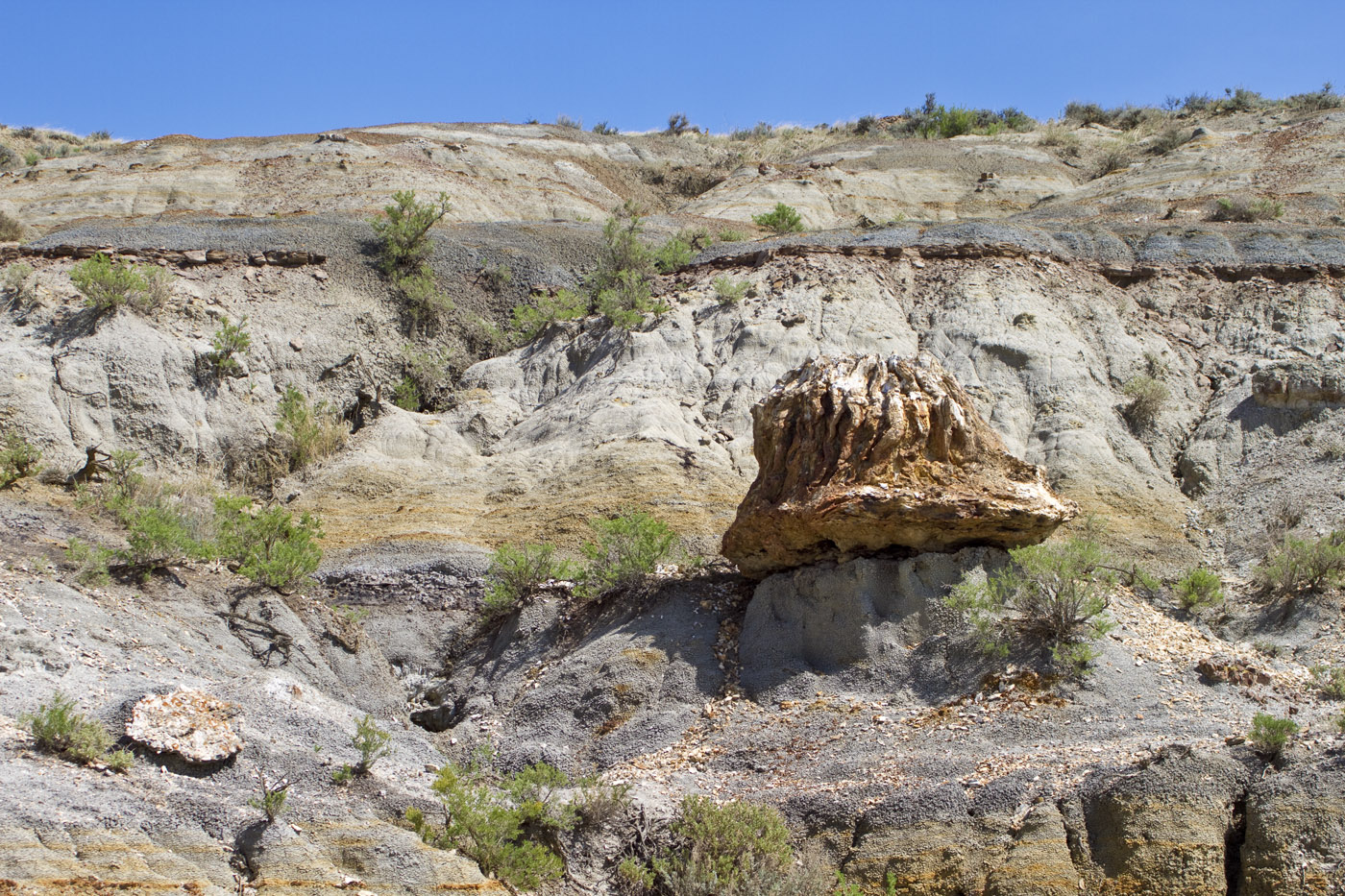
Friends, on our recent trip to the badlands, we were fortunate to find one whole day when rain and thunderstorms were not in the forecast. The walk into the Petrified Forest is only 1.5 miles but the terrain is very rugged and for me it was challenging. We spent about five hours in the sun and wind, hiking in and exploring the ancient ruins (trees). These trees were a tropical redwood and are 65 million years old. Younger than the dinosaurs but older than the mammals. The top stump is about six feet tall and sits high on a mud pedestal that will eventually erode away and dump the stump 🙂 into the valley below. The bottom image shows a stump that is about six feet in diameter. til Tomorrow MJ
Orton Landscape
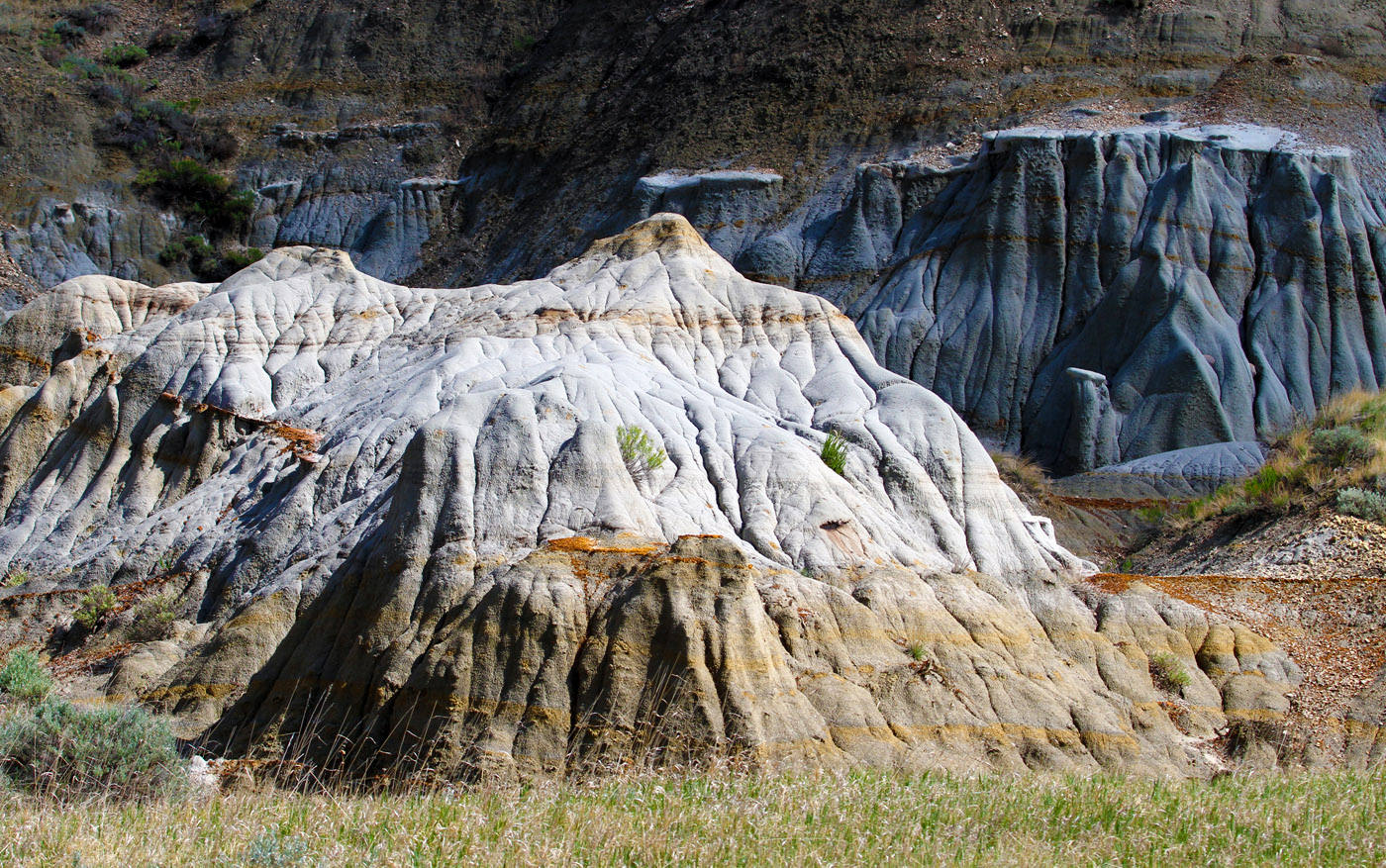
Friends, this image was taken right after a rain that left the clouds spotty The clouds were shading the background, while the foreground hill was in the light. I love to photograph the badlands right after a rain when the sun peeks out and gives spotlights on the saturated landscapes. This might be a candidate for the Orton Effect in Photoshop. Which rendition do you like? til Tomorrow MJ

Petrified Forest
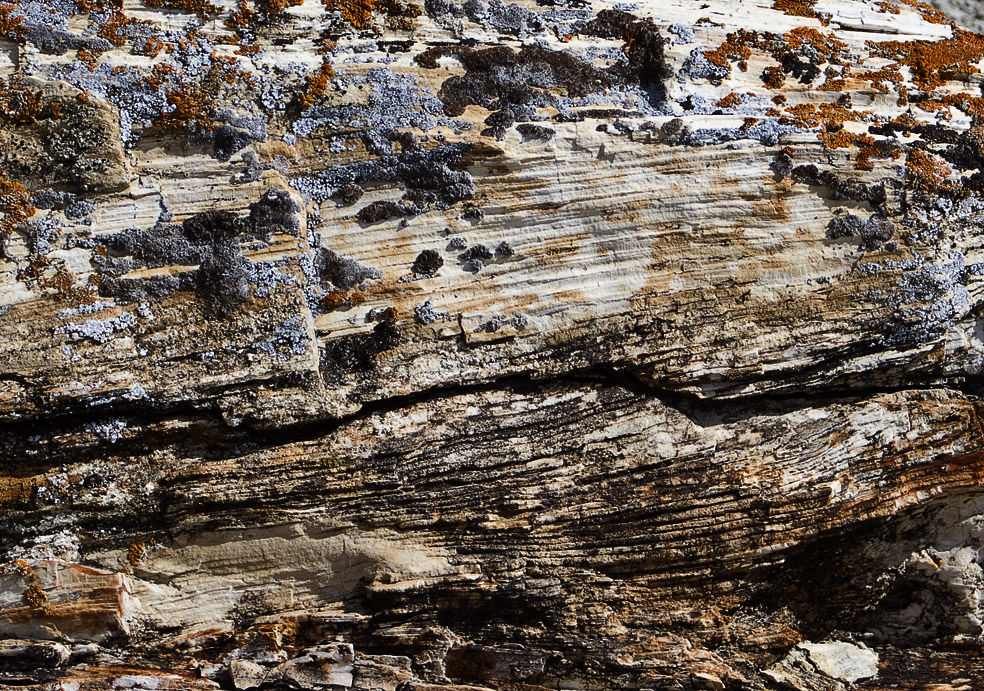
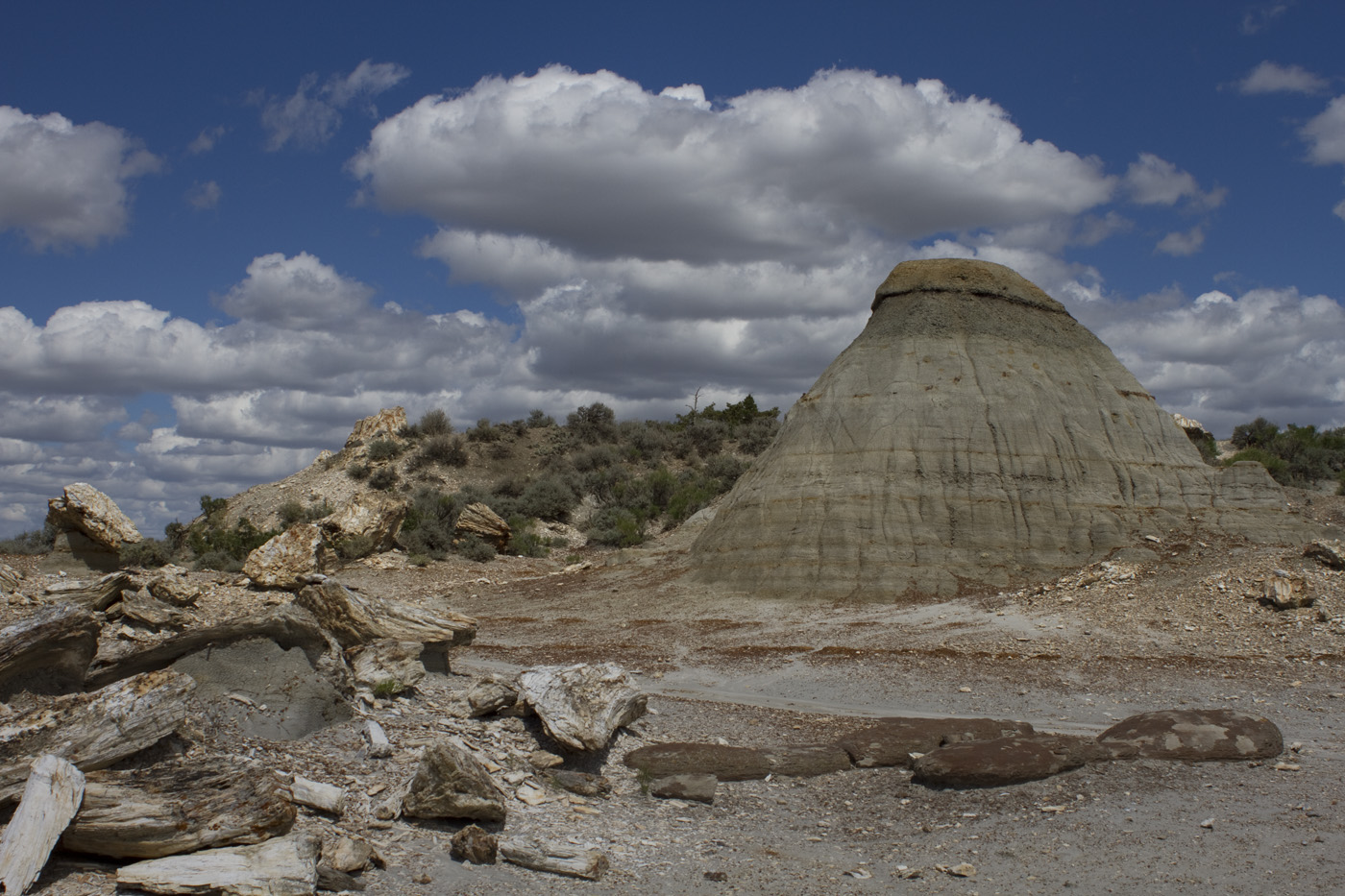
Friends,looks like a piece of rotten wood, right?, you would be wrong, this old wood has turned to stone and has lichen growth almost covering the surface. You can see the wood grain in spots where the lichen growth is minimal. We walked into the petrified forest yesterday, a three mile loop, but lots of steep up and down. Spent six hours hiking in, shooting photos, and walking back out. The temperatures were in low 70s, bright sunshine, no shade, and blasting North Dakota wind. We were exhausted by the time we got back to the car. The day would have been perfect if not for the constant wind, at times it tried to blow me over, so i was careful not to stand too close to any edges. The bottom image shows a scenic of the area around this ancient forest. Enjoy til Tomorrow MJ
Grasslands
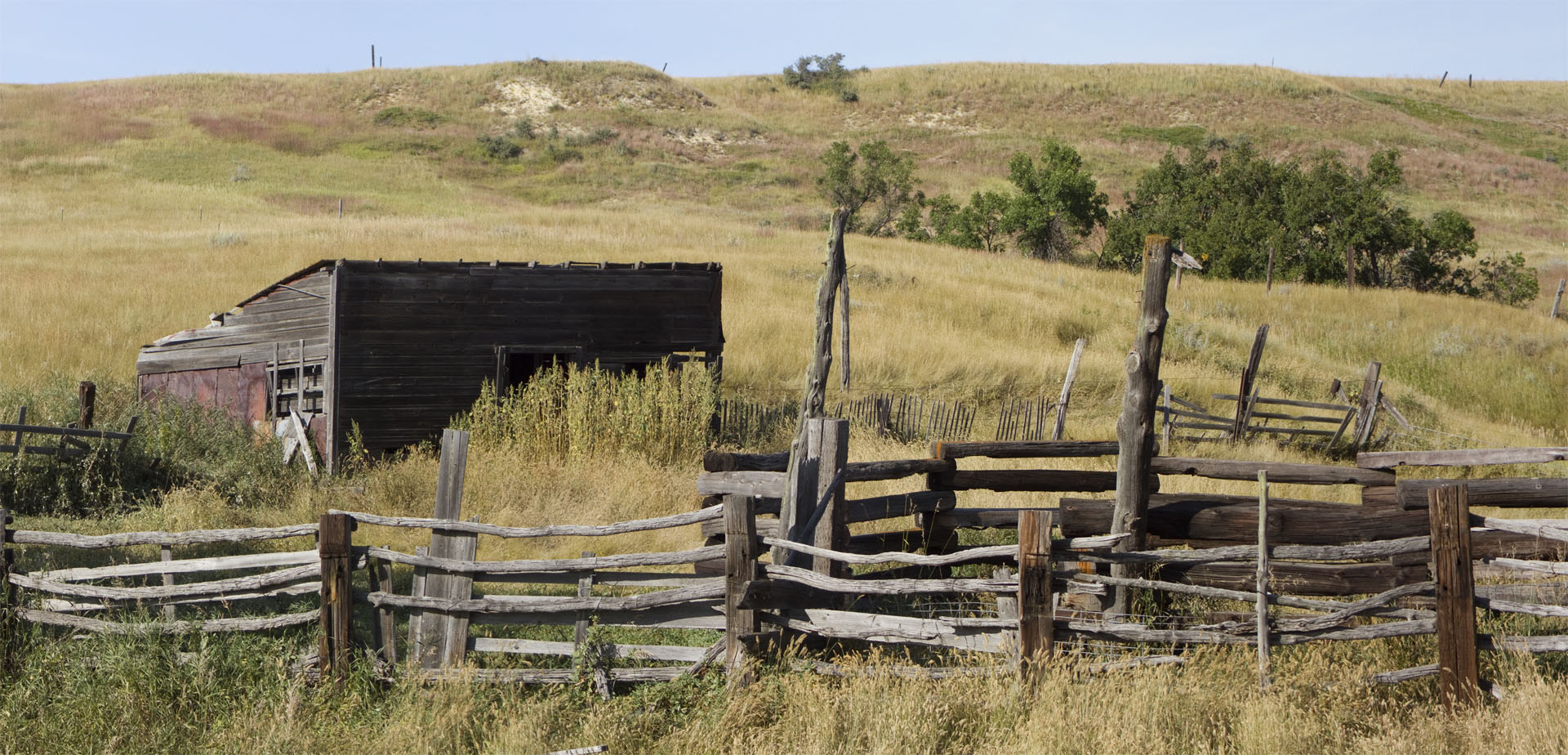
Friends, The badlands are known for their grasslands that provided rich grazing for cattle. The country attracted Theodore Roosevelt who invested in two cattle ranches and spent some time “cowboying” in this country. In one of his speeches, he attributed his badlands experiences as instrumental in making him the President of the United States. Others were also attracted to the badlands and the livestock industry. My grandfather raised horses, cattle, pigs, chickens and 5 children in the badlands. With a large garden, they were able to live in relative comfort. Then the depression and droughts of the 1930s made life difficult and many were forced to find other means of support. This barn and corral is a reminder of the hard times and desertion of many homesteads in the badlands. til Tomorrow MJ
Stone Tree Stump

Friends, While this tree stump looks like wood, it has turned to stone. Petrified tree stumps are found all over the badlands, and you would swear that they are made of wood. The preservation of tree structure is so realistic, you can see worm holes and cell structures. These trees were redwoods and a forest of stumps is present in the western side of Theodore Roosevelt National Park. The park roads do not pass close to this forest, but it is only a two mile hike across the flats to access a land of stumps still being eroded from the clay slopes. Like bleached bones, their white is a stark contrast to the dark green of living cedar trees. In the early days, stumps ten feet in diameter and 80 foot logs were found, a remnant of a tropical past. til Tomorrow MJ
Snake Tracks in the Sand

Friends, this pile of sand with a snake track across, reminds me to watch where i put my hands and feet in this country. Rattlesnakes, bull snakes and blue racers appearing on the trail can startle an unwary hiker and put the feet in reverse very quickly. But this image also reminds me that Wind Canyon is slowly turning into a huge pile of sand. Now I love sand. Sand is one of my favorite elements of nature, the tiny grains under a microscope are tiny colorful gems that reflect the colors of their parent rocks. The massive cliffs of Wind Canyon that stand high above the Little Missouri River are being eaten by wind and water and the gap between the sandstone walls has greatly increased even within my lifetime. Below is an image of Wind Canyon today and by the time my great-grandchildren are able to visit this country, the gap between the walls will be much greater than today. til Tomorrow MJ

Sandstone Wind Erosion

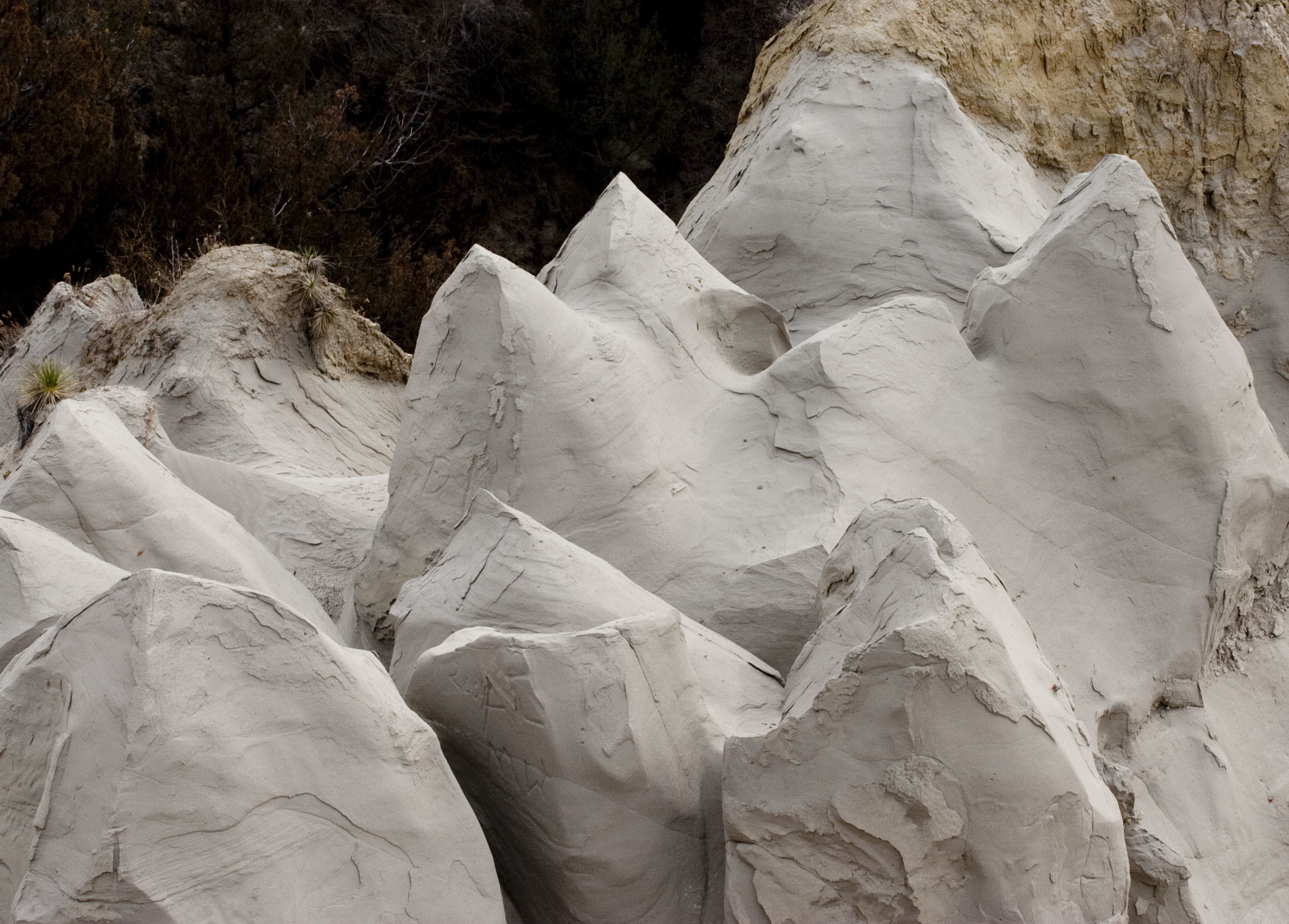
Friends, Sandstone comes in many hues from white to a deep gold color in the Wind Canyon area of the southern Little Missouri Badlands. Wind Canyon is a class room for wind erosion effects on soft sandstone. The wind carves caves, caverns and figures in the soft stone. Many have carved their initials in the rock, only to return a short time later to find them washed away with the sand. The bottom image is another wind-eroded area of Wind Canyon showing pencil tips figures. til Tomorrow MJ
Concretions

Friends, these brown round rocks are concretions, a cemented sandstone that is found throughout the badlands. The Romans made a cement from limestone, volcanic ash and clay. These elements were all present in the early badlands and it is feasible that a natural cement was formed from mixtures of limestone (calcium carbonate) ,clays and volcanic ash. This cement concentrated in a softer sediment and the cannonballs were formed. Now the softer clay layer is eroding and these concretions are falling out of the walls.
The most interesting are the cannon balls that are 2-3 feet in diameter that are present in the Northern Little Missouri Badlands. In the southern badlands, smaller cannon balls are often being exposed on slopes of bentonite that has a popcorn texture when dry. The bottom photo shows a cross section of a small cannonball that has a white nodule in the interior. til Tomorrow MJ

Hot Rock
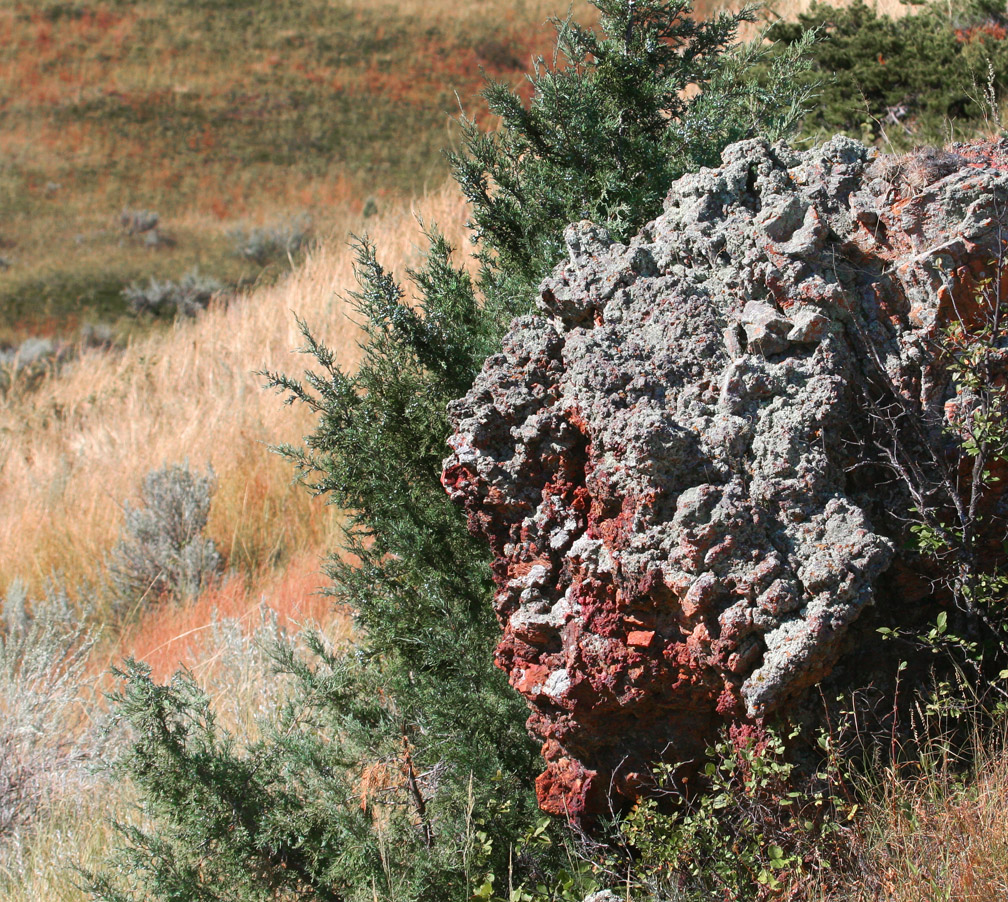
Friends, this holey rock is part burned coal and part scoria. Masses like these are prevalent and scattered throughout an area where a coal vein was burning in the recent past. They resemble lava formed from volcanic activity and are highly vesiculated (new word for the day). Walking the higher ridges around the coal vein area, great areas of the plains have sunk away as a result of the underground clay shrinking in the intense heat. The burned coal is a gray color and sometimes is tightly bound to the adjacent scoria as seen in this image. til Tomorrow MJ
 MJ Springett