Blog Archives
Hot Rock
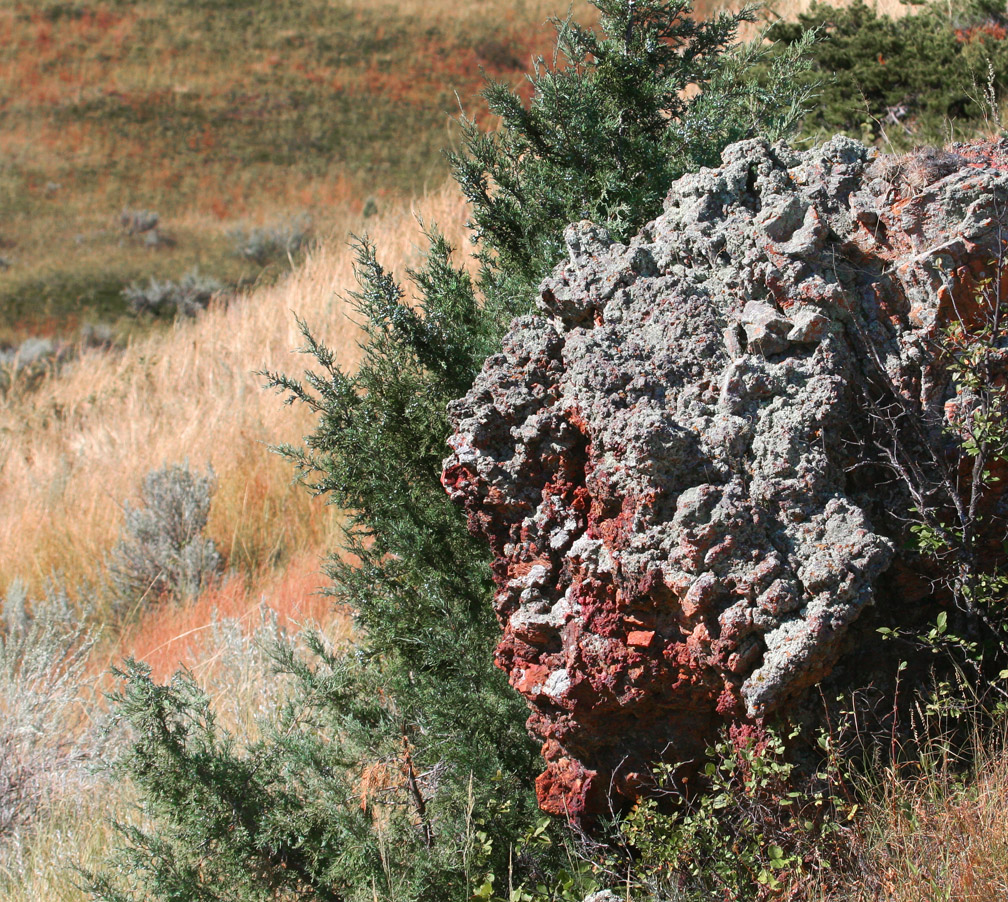
Friends, this holey rock is part burned coal and part scoria. Masses like these are prevalent and scattered throughout an area where a coal vein was burning in the recent past. They resemble lava formed from volcanic activity and are highly vesiculated (new word for the day). Walking the higher ridges around the coal vein area, great areas of the plains have sunk away as a result of the underground clay shrinking in the intense heat. The burned coal is a gray color and sometimes is tightly bound to the adjacent scoria as seen in this image. til Tomorrow MJ
Cap Rock Resistance

Friends, This image shows the principle of differential erosion (i made that up it is not a proper geological term) , the softer material will erode faster (duh) and the red caprock will protect some portions of the clay from erosion. The red cap rock protects the taller pillars, while the foreground pillars are slumping away unprotected, hence differential erosion. til Tomorrow MJ
Rivlets

Friends, I like to call this image “rivlets”, i know it isn’t a proper geological term, but it describes what i see. These little rivlets are not yet rivers, but still display the properties of rivers. The yellow stream on the left shows a braided formation while the middle shows a more meandering stream. Both rivlets are washing yellow sediments downhill following the path of least resistance and going around the harder scoria (red) deposits as they are very resistant to erosion by water. The toadstool formations near the top of the image show the results of erosion on layers of differing densities and hardness. I love the colorful patterns after a rain or in this case, a snowfall, melting and running downhill. til Tomorrow MJ
Bentonite deposit

Friends, don’t adjust your monitor, these clay beds are definitely blue. This bentonite clay, the raw material for scoria formation, is often found adjacent to stripes of lignite coal. Bentonite can be used in pottery to form ceramics and glazes as well as other commercial applications. The most valuable applications are dependent on the ability of very small particles to hold water . Suspensions, colloids and emulsifiers made with bentonite are commercially viable. When water hits these bentonite slopes, the surface is extremely slippery, sticky and mucky. Many times I have come back to camp with clay snowshoes attached to my boots that take days to wear off. til Tomorrow MJ
Erosion at work
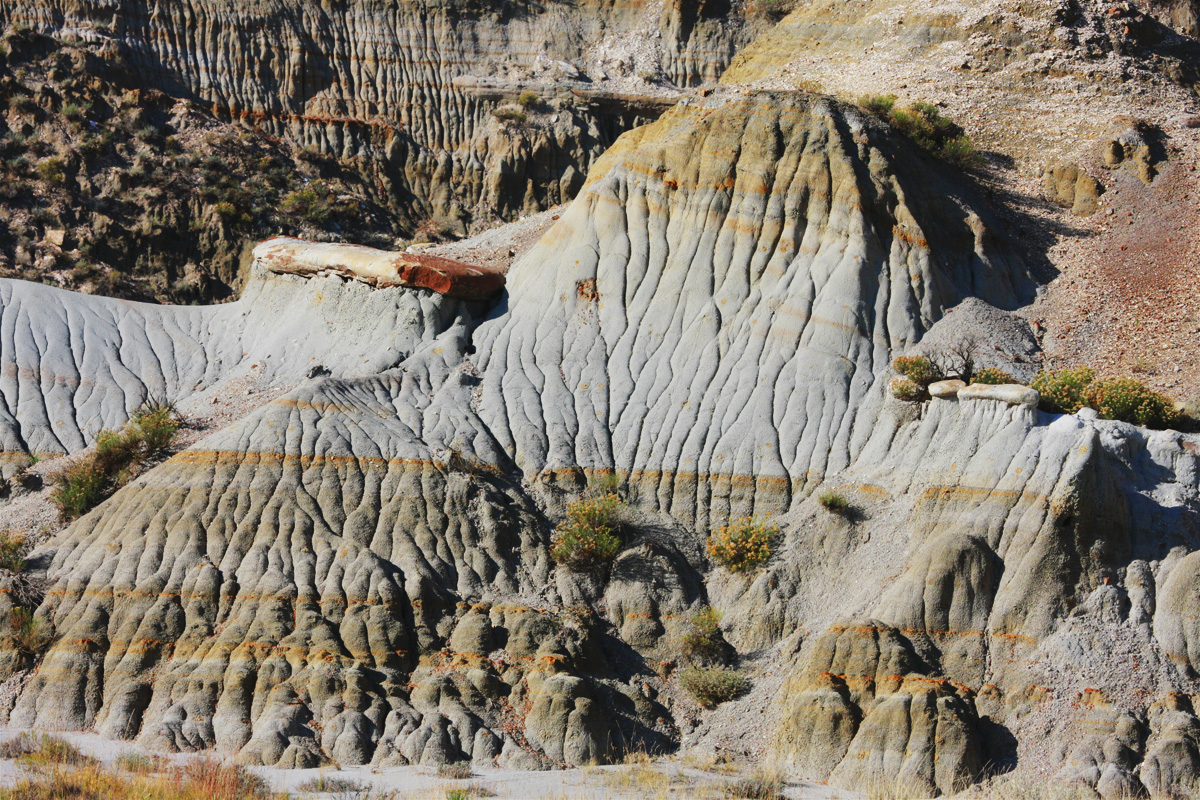
Friends, the clay layers are carved by water on this hillside. The inverted v formations result from water flowing downhill. When meeting resistance the flow slows and forms new channels to continue to flow downhill. The badlands are constantly being washed away downstream so get your photos while you can. They say that one inch/ year is being removed by water. til Tomorrow MJ
Scoria Point in the Snow
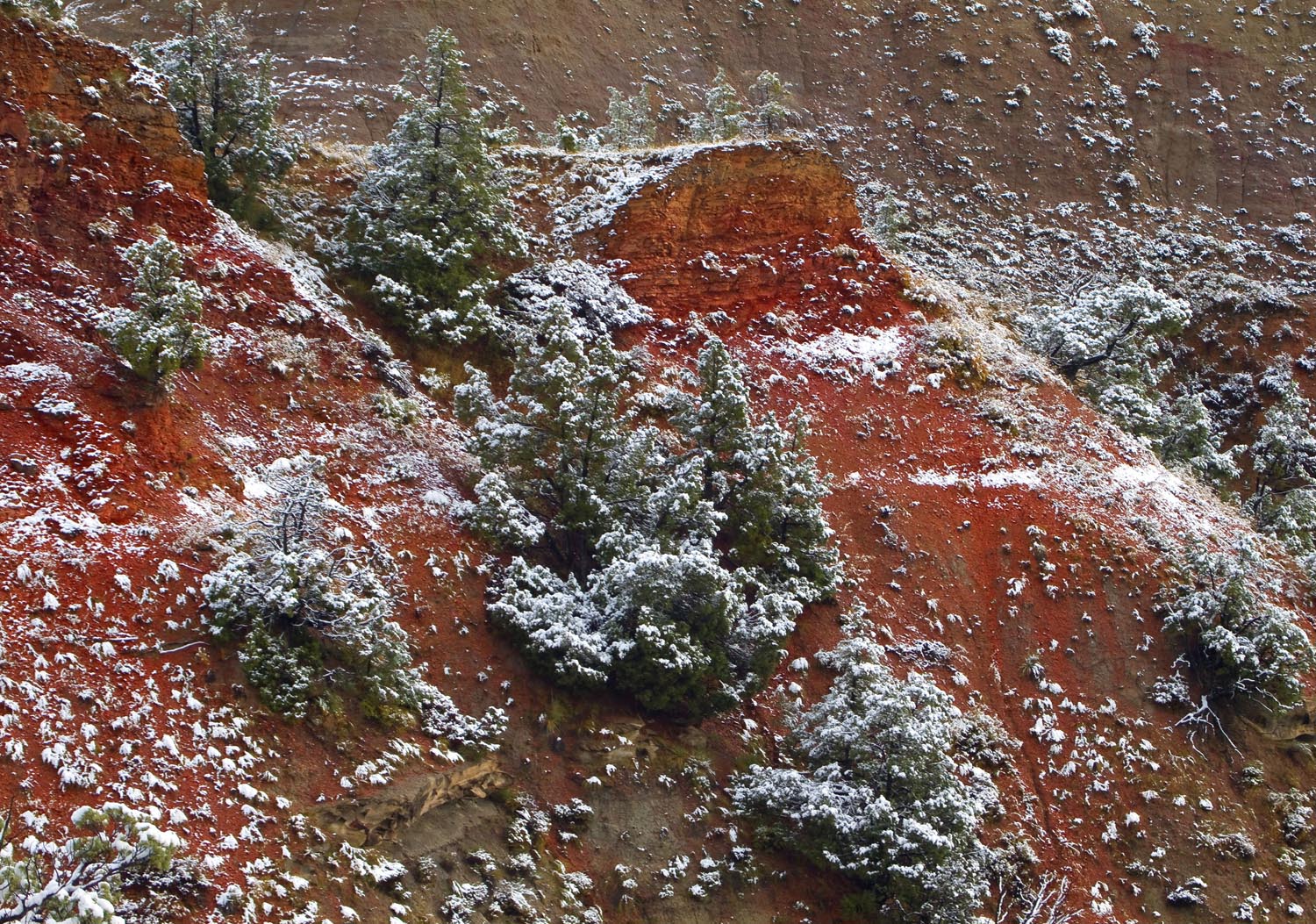
Friends, this is Scoria Point on a September morning when we had an overnight dusting of snow. The next day it all melted, but the day was perfect for photography. The saturated reds of the rock, golds of fall grasses, and greens of cedar trees as well as the fall foliage made for a delightful day. I have visited these hills at least once a year since I was nine years old, and the landscapes never cease to amaze me. My love for this country is very deep within me, I hope i can share it adequately. til Tomorrow MJ
Mountain of Red Rock-Scoria Point
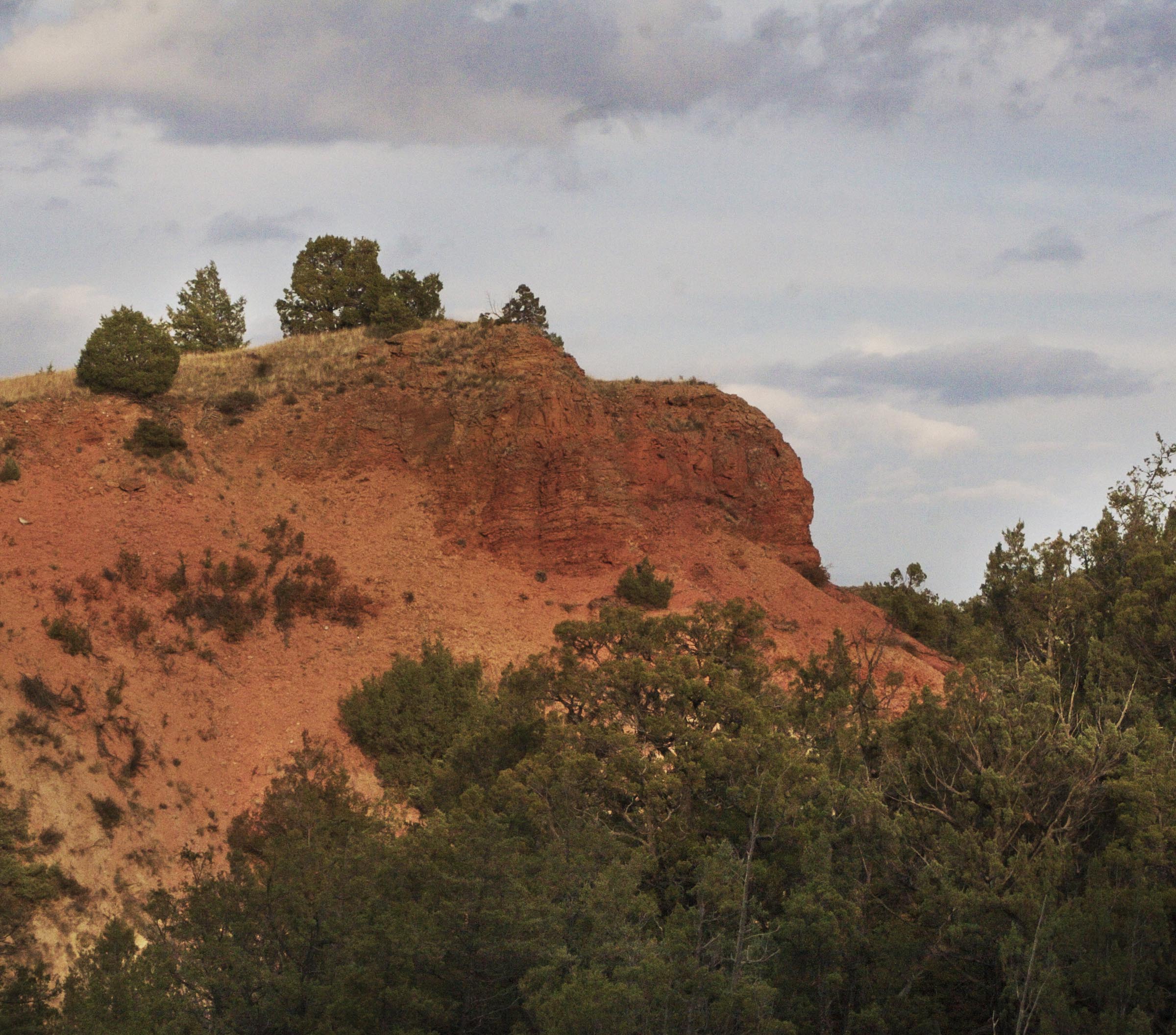
Friends, this is a formation called Scoria Point located within the Theodore Roosevelt National Park in western North Dakota. This red rock or scoria appears many shades of red, from pink to purple and all the oranges in between and the shade is dependent on the light. The day this image was taken, the light was slightly diffused through some clouds and the color appears a rusty orange with pink accents. But in the evening with a setting sun, the hill appears a bright orange and in the snow with cloud cover, the rock appears a very deep almost iridescent red. I haven’t yet captured the spirit of this rocky scene, but i keep trying. til Tomorrow MJ
Badlands Red Rock

Friends, this red rock is fragile and will break like any good china cup. The formation process is similar to producing bricks or fine tiles. A clay (bentonite) is baked by a coal vein that is burning underground. The coal is a soft lignite and may be spontaneously ignited or the vein may be lit by grass fires whipped by the wind. These fires may burn trees and then travel down the roots to the seam underground. When the various clays are baked and glazed by the igneous process, they are a form of porcelain or as it is locally called, scoria. When a chunk of this light rock is dropped, it clinks on a hard surface, and it is often called North Dakota Clinker. I know i am at home when i see the scoria peaks at sunset. til Tomorrow MJ
Badlands-The land
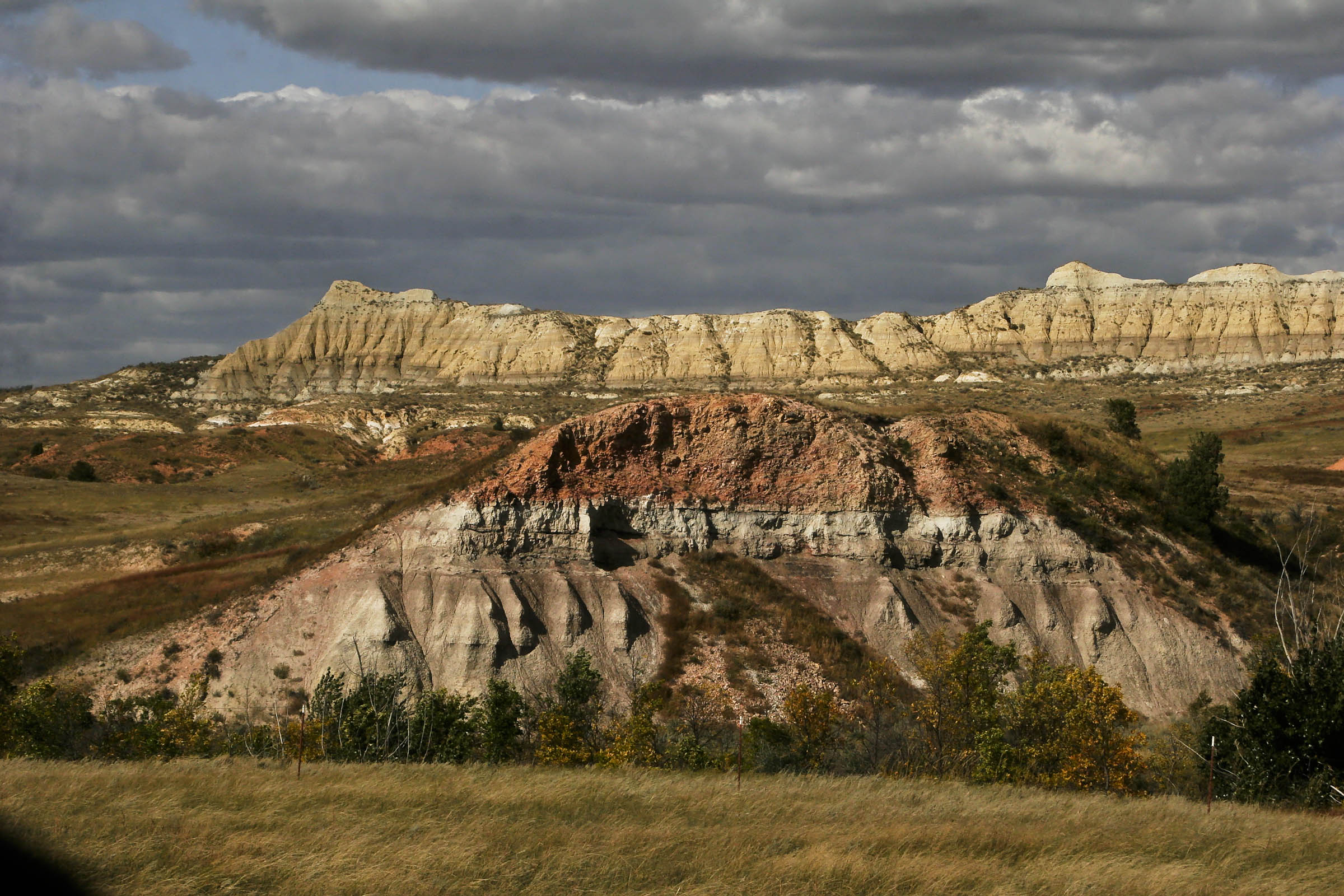
Friends, This image illustrates the two formations that make up the Little Missouri Badlands in North Dakota. Sediments layers that were deposited after the demise of the dinosaur were eroded by wind and water to form the rugged topography. The hill nearest is topped by a red rock deposit, locally called scoria, that was formed by coal burning under a layer of bentonite clay. When Lewis and Clark traveled through these badlands, they saw many of these burning coal veins. As a child, i remember walking on the warm clay and peeking down through the cracks of an actively burning vein with great wonder. So we begin a journey into a land lit by the setting sun and ancient fired formations. til Tomorrow MJ
Sandhill Sunrise
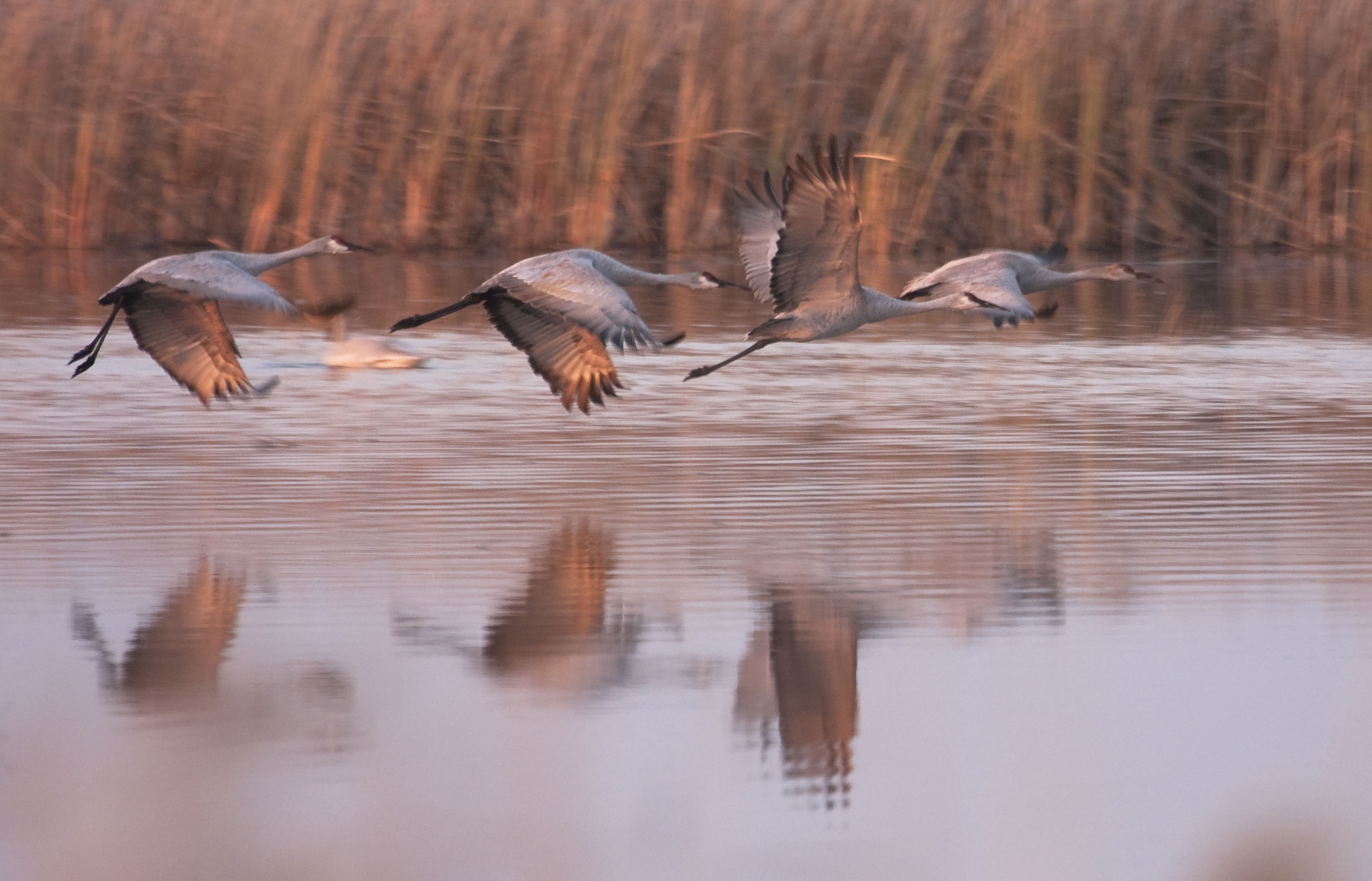
Friends, these Sandhills are taking off into the sunrise, pretty colors in the morning especially as the sun peeks over the horizon. Now i am done showing any more crane images until next fall. Tomorrow i start in a new direction, i will still be doing the nature photography, but the location will change from the Wisconsin birds to North Dakota badlands. I will show you the land, critters, wildflowers, lichens and tell you some natural history stories along the way. Tune in for a fascinating journey into a land touched by the sun,wind and history. til Tomorrow MJ
 MJ Springett