Blog Archives
Old stallion

Friends, this old boy has turned white in the summer sun, wind and rain. I think he is called, silver.
Wild and Free

Friends, this beautiful youngster was loping through the prairie dog town and easily jumped a hole. It is deep summer and he has shed his foaling coat to become a sleek wild horse in miniature. He /she is the future. If you wish to read more these wild horses and efforts to domesticate and eventually rid the badlands of these beautiful animals see this blog http://wildhorsesoftrnp.blogspot.com/. These fine folk are dedicated to keeping tabs on the wild horses by riding the badlands, keeping a wild horse registry as well as buying and training horses “culled” from the park. til Tomorrow MJ
Wild Stallion-Blaze

Friends, this wild eyed guy is called Blaze. He is a red roan and has one blue eye. He is a very dominant stallion and puts on a show every spring defending his “girls” and generally raising a fuss. I raised horses for a time in my life and i would have trimmed his mane, but it lends to his wild look. I am looking forward to again seeing the wild horses in the spring, when stallions are fighting and babies are finding their wobbly legs. I am going very soon now and you will get live images instead of from my archive. til Tomorrow MJ
The Black Stallion-Mystery
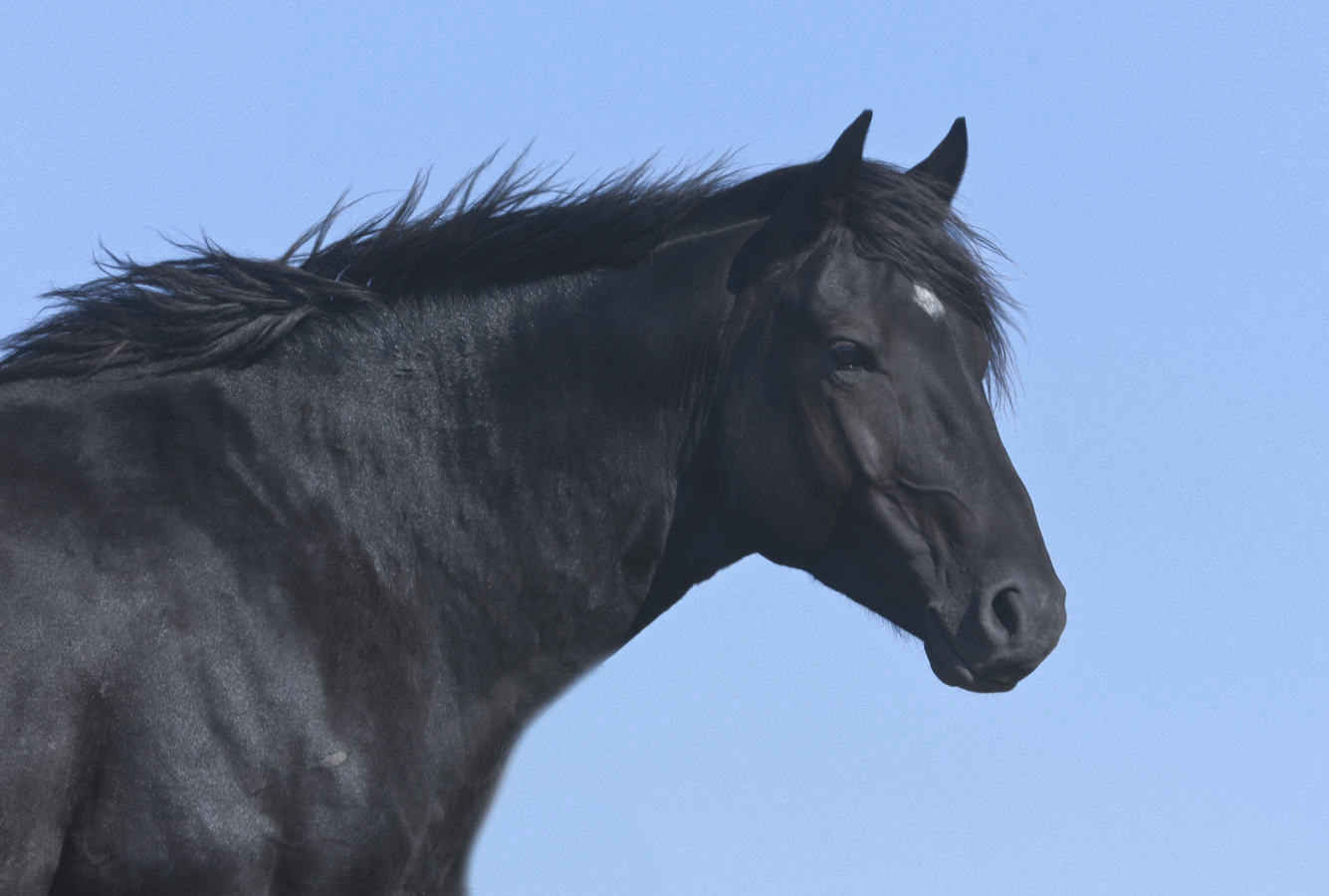
Friends, this fine animal is named, Mystery, one of the wild horses that run free within the confines of the Theodore Roosevelt National Park in western North Dakota. I especially like seeing these animals cause some may be descendants of domestic horses raised by my grandfather in the early 20th century. He ranched along the Little Missouri River and raised horses for the army. Some of the remount stallions leased by the army were part-Morgan and i think this horse looks like Morgan type. Others with more knowledge will disagree, but it warms my heart to see this stallion, running free as in the bottom image. So today, the black stallion of the badlands. til Tomorrow MJ

Weekly Photo Challenge: Together

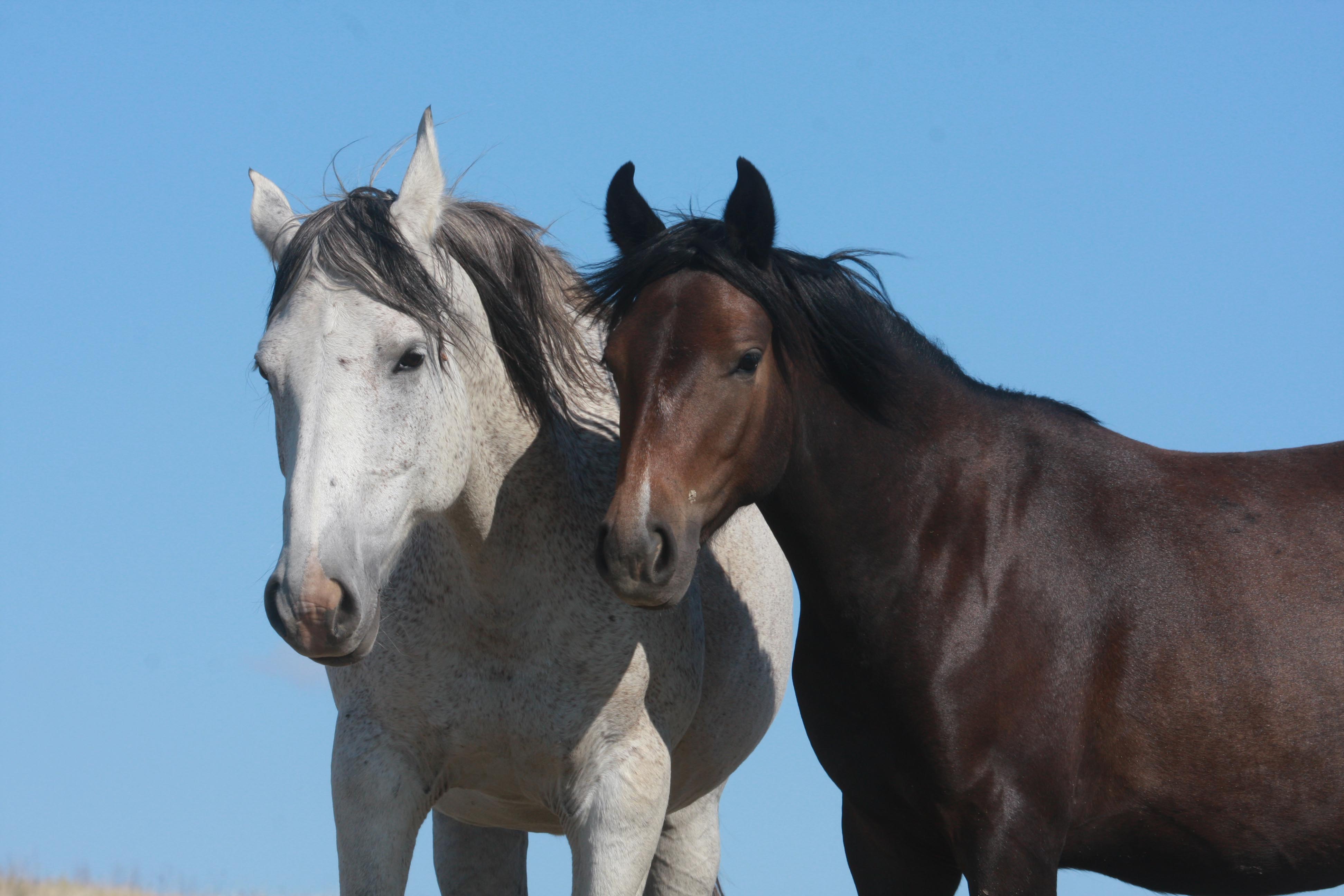
Friends, wild horses are very together in a natural setting of the North Dakota badlands. Often i have seen them with their heads together and we humans interpret that as affection, and maybe it is horse affection. Or maybe they are chasing flies away from each face region. Whatever it really is, i like to think of them as affectionate,gentle creatures that at the same time are wild and free. This post starts a series of posts on the wild horses of the Theodore Roosevelt National Park (TRNP) til Tomorrow MJ
Wild rabbits-anytime of year
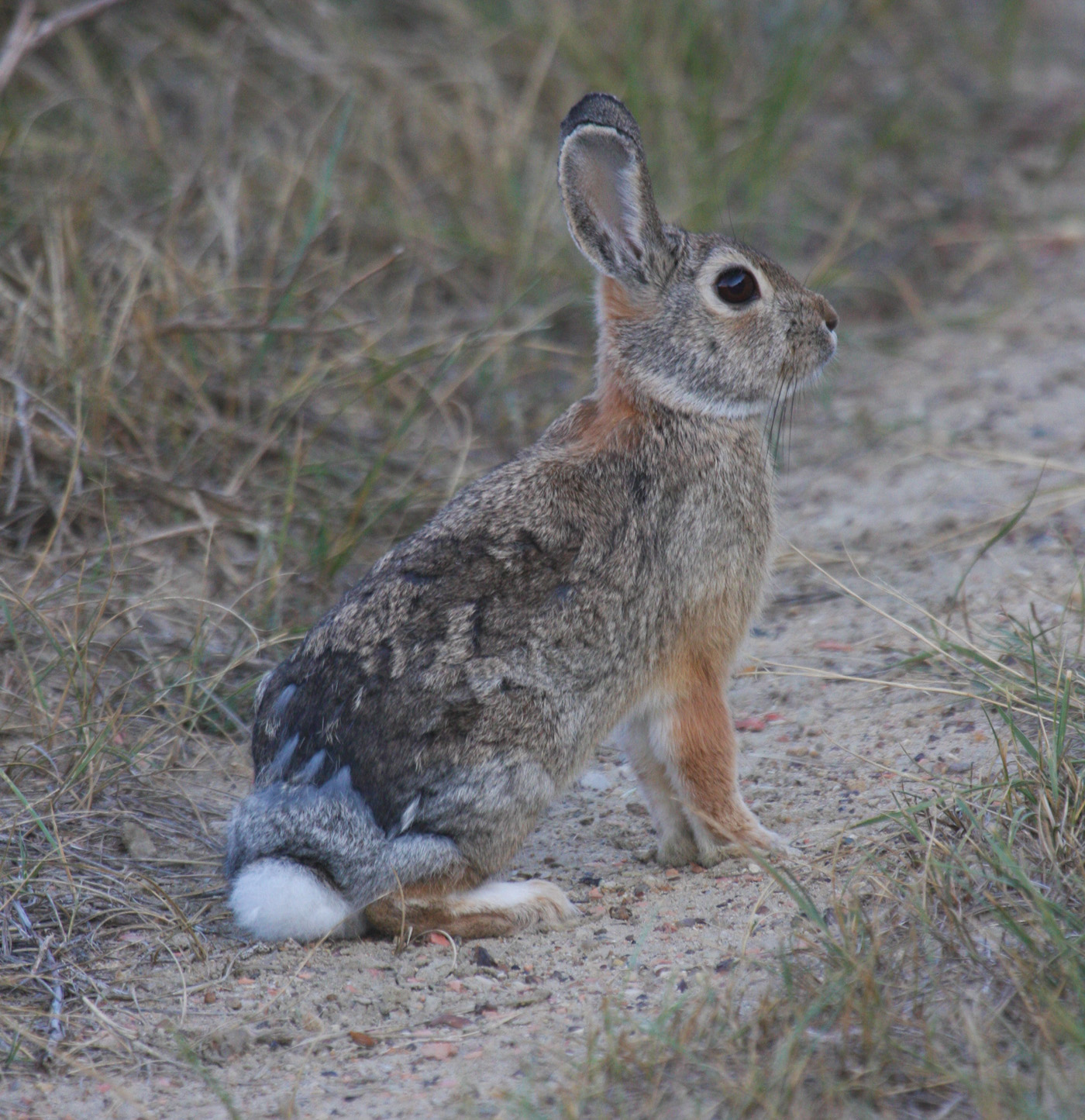
Friends, Rabbits are everywhere in the badlands and I am always amazed by the many colors in their fur. I am not an expert at identifying rabbit species, but these are probably cottontails of which there are three types in the badlands region. Whatever their names, they are very secretive and will usually freeze when danger is near, and allow the photographer to snap their portrait. 🙂 til Tomorrow MJ

Battles-Bison and Muleys
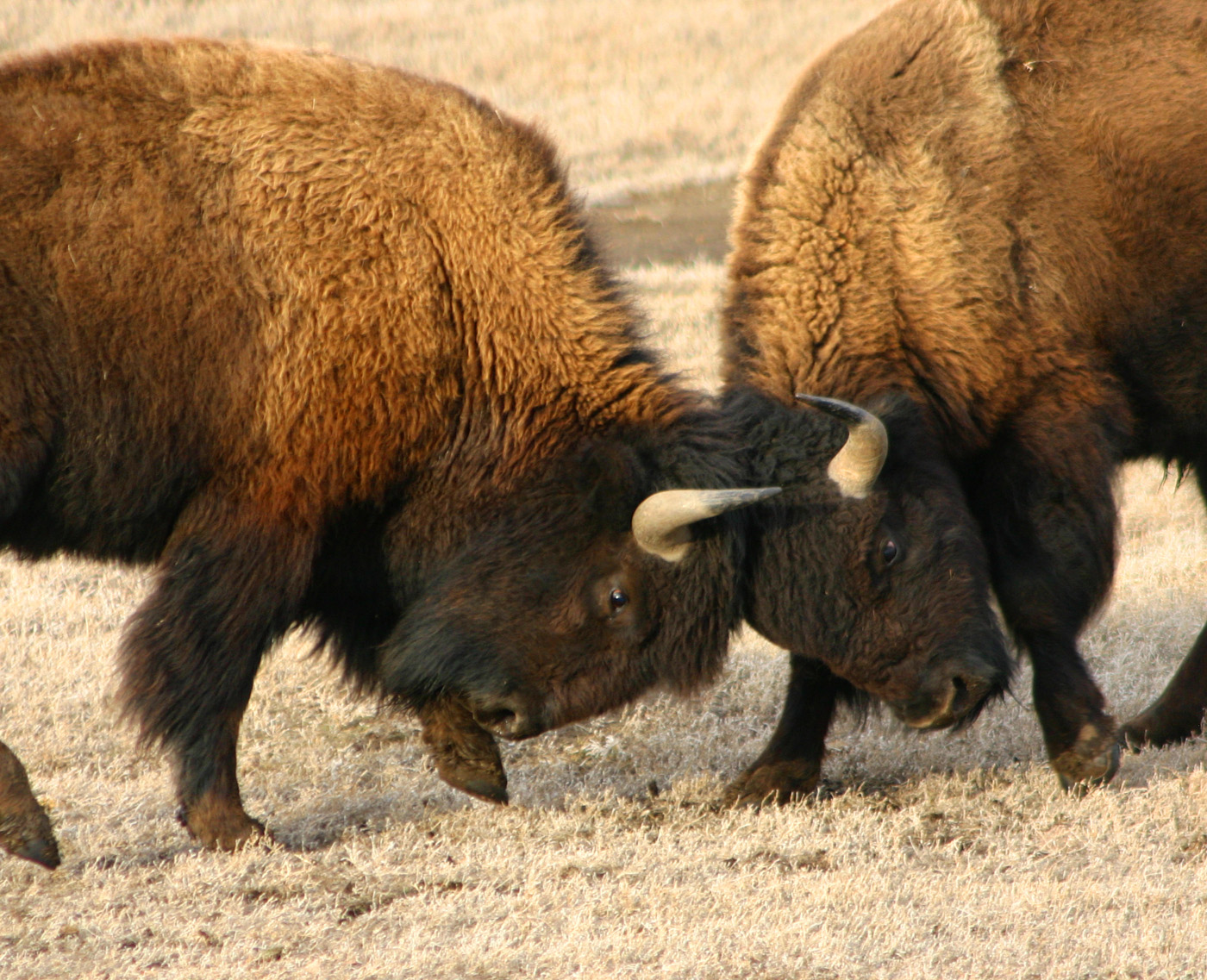
Friends, these youngsters are rehearsing for more serious battles over breeding rights when they reach the age of consent. The bison were shot in late winter or early spring and near sundown for the perfect golden light. The young mule deer are also tussling but not very seriously, with their newly polished antlers in the fall of the year. Enjoy til Tomorrow MJ

Stampede-Raising the dust

Friends, a herd of bison can be peacefully grazing or taking dust baths in prairie dog town, when suddenly something sets them off and they are off, stampeding across the prairie raising the dust. You can see from the horns that these are young animals, while the older ones seem to follow along, somewhat unwillingly. Shooting into the sun, emphasizes the dust, but also hides the details in the bison. A photography trade-off that needs to be solved with photoshop. til Tomorrow MJ
Pronghorn

Friends, this is a male pronghorn from the badlands. They get their name from the horn grown by males that is forked with a hook-like branch. They do not grow antlers like the deer and elk, but grow a horn that is partially shed each year. They can run 60 MPH and rely on their speed and agility to survive out on the open grasslands. til Tomorrow MJ

Bull Elk
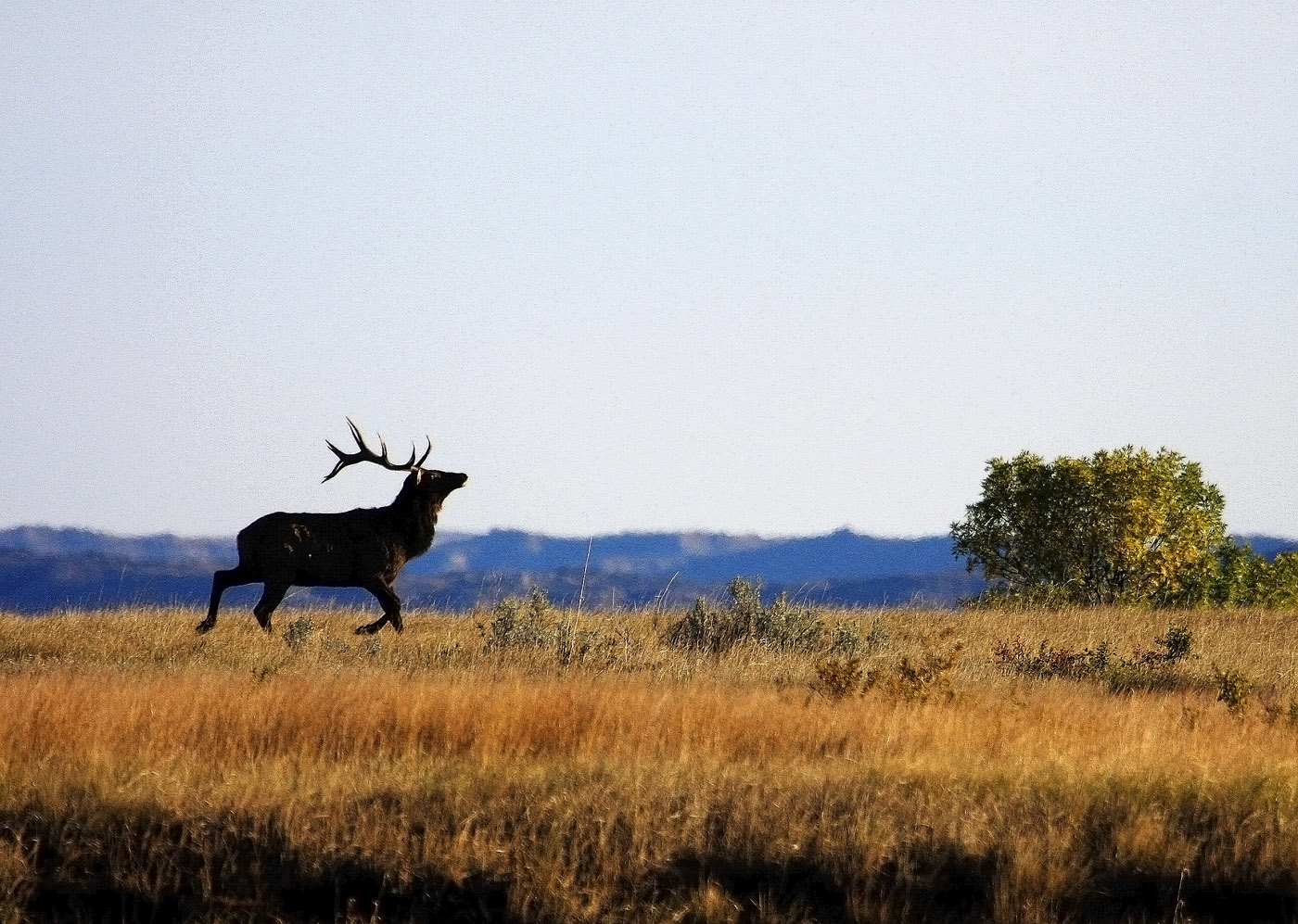
Friends, In the fall after his antlers are polished, this male elk runs the ridge top in search of a harem of cows. Males lose these antlers in the late winter and grow a new and bigger set in the spring and summer. The Rocky Mountain Elk have been transplanted to the park after being extinct from the badlands. Now they thrive within the Theodore Roosevelt National Park where they are protected.
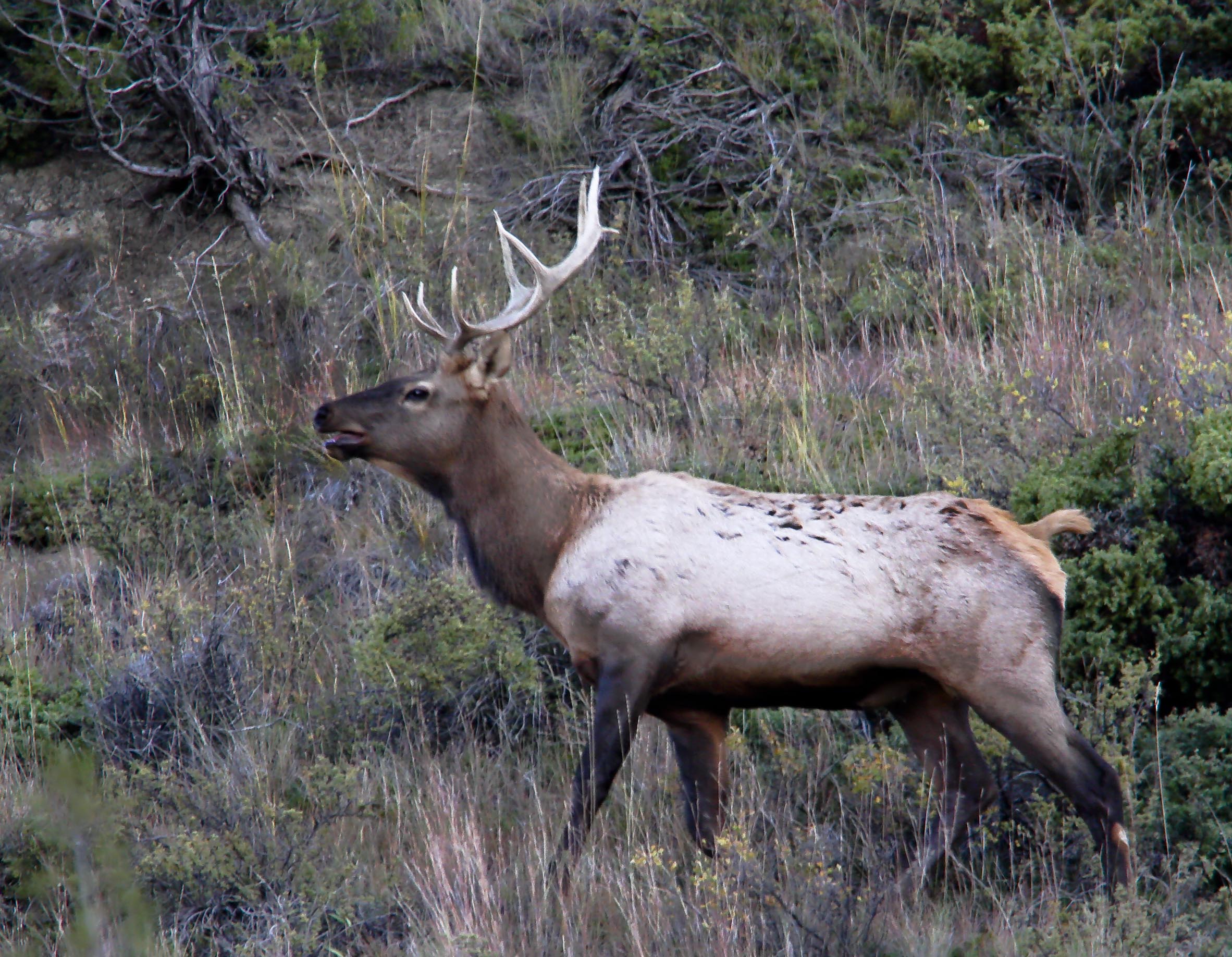
The fall grasses have lost their green and have cured to a straw color and bushes are turning into spectacular hues of yellows and oranges. Elk are larger than the deer species and are harder to find in the vast acres of badlands. The male in the bottom images is a smaller bull and is gathering his cows while keeping a watchful eye on the photographer. It is always a thrill to see elk in the wild and it makes my heart beat faster or maybe it is because i am chasing them uphill. til Tomorrow MJ

 MJ Springett