Grasslands
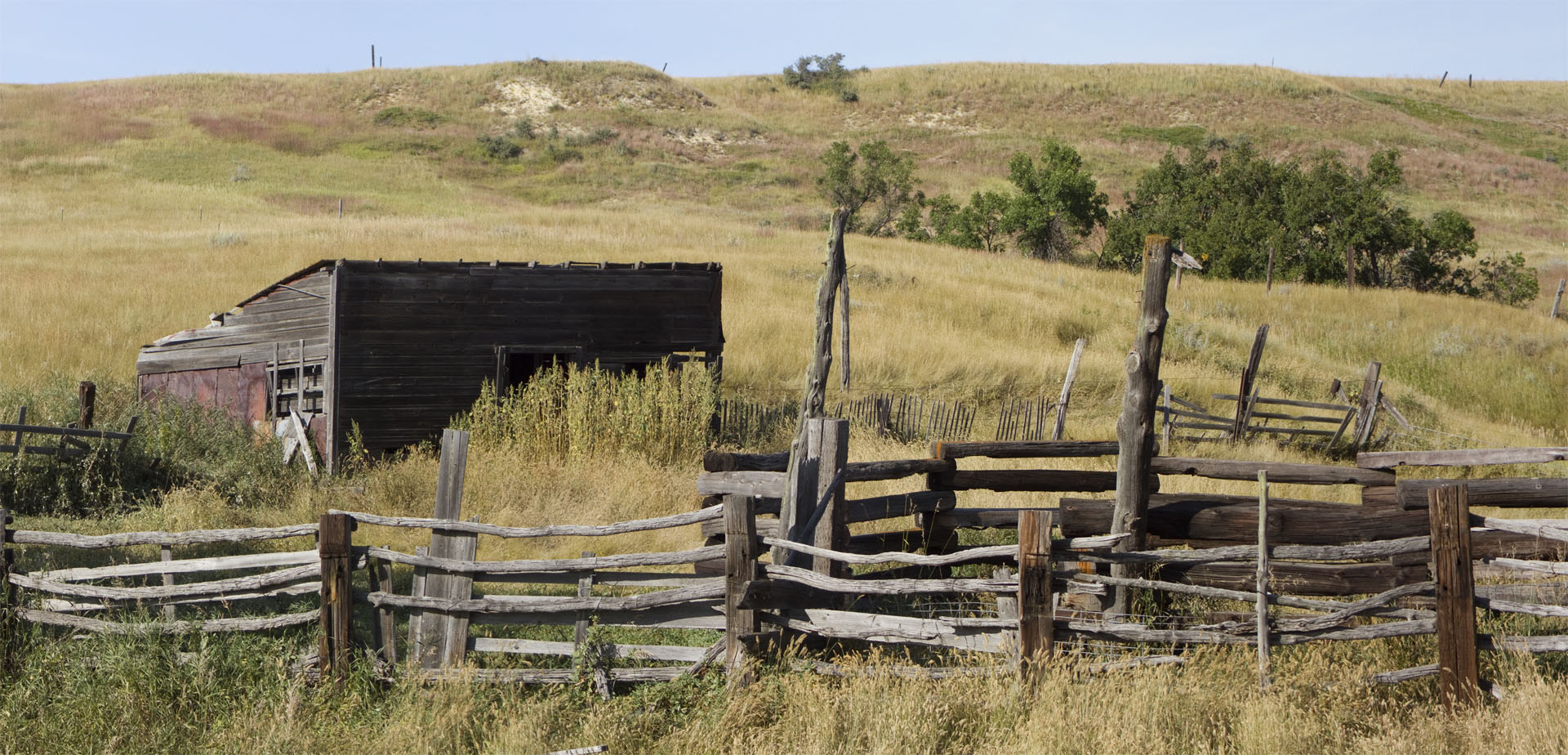
Friends, The badlands are known for their grasslands that provided rich grazing for cattle. The country attracted Theodore Roosevelt who invested in two cattle ranches and spent some time “cowboying” in this country. In one of his speeches, he attributed his badlands experiences as instrumental in making him the President of the United States. Others were also attracted to the badlands and the livestock industry. My grandfather raised horses, cattle, pigs, chickens and 5 children in the badlands. With a large garden, they were able to live in relative comfort. Then the depression and droughts of the 1930s made life difficult and many were forced to find other means of support. This barn and corral is a reminder of the hard times and desertion of many homesteads in the badlands. til Tomorrow MJ
Stone Tree Stump

Friends, While this tree stump looks like wood, it has turned to stone. Petrified tree stumps are found all over the badlands, and you would swear that they are made of wood. The preservation of tree structure is so realistic, you can see worm holes and cell structures. These trees were redwoods and a forest of stumps is present in the western side of Theodore Roosevelt National Park. The park roads do not pass close to this forest, but it is only a two mile hike across the flats to access a land of stumps still being eroded from the clay slopes. Like bleached bones, their white is a stark contrast to the dark green of living cedar trees. In the early days, stumps ten feet in diameter and 80 foot logs were found, a remnant of a tropical past. til Tomorrow MJ
Another Award? Thanks
 Thanks, Christine for nominating my blog for the Kreativ Blogger Award, her blog can be found at dadirridreaming.wordpress.com, thanks again and keep writing your wonderful blogs.
Seven things about myself:
1) I am driven by creativity even in retirement
2) I live in a white pine woods in a house covered with cedar siding
3) I am a great problem solver as long as the problems are not mine
4) I photograph nature at least four days a week
5) I learn at least one new photo technique every week, during noon hours on the bright sunny days not suited for photography
6) I love macro photography and all the tiny things that most people overlook
7) I love researching the natural history story behind an image
So now I am supposed to nominate seven other blogs for this award: but only have time for five, here they are:
bluebirdslivinginthemeadow.blogspot.com to my lovely sister, who is very creative
http://claudeschillingphotography.wordpress.com/ to my friend in southern Wisconsin
http://ceeslifephotographyblog.wordpress.com/
Snake Tracks in the Sand

Friends, this pile of sand with a snake track across, reminds me to watch where i put my hands and feet in this country. Rattlesnakes, bull snakes and blue racers appearing on the trail can startle an unwary hiker and put the feet in reverse very quickly. But this image also reminds me that Wind Canyon is slowly turning into a huge pile of sand. Now I love sand. Sand is one of my favorite elements of nature, the tiny grains under a microscope are tiny colorful gems that reflect the colors of their parent rocks. The massive cliffs of Wind Canyon that stand high above the Little Missouri River are being eaten by wind and water and the gap between the sandstone walls has greatly increased even within my lifetime. Below is an image of Wind Canyon today and by the time my great-grandchildren are able to visit this country, the gap between the walls will be much greater than today. til Tomorrow MJ

Sandstone Wind Erosion

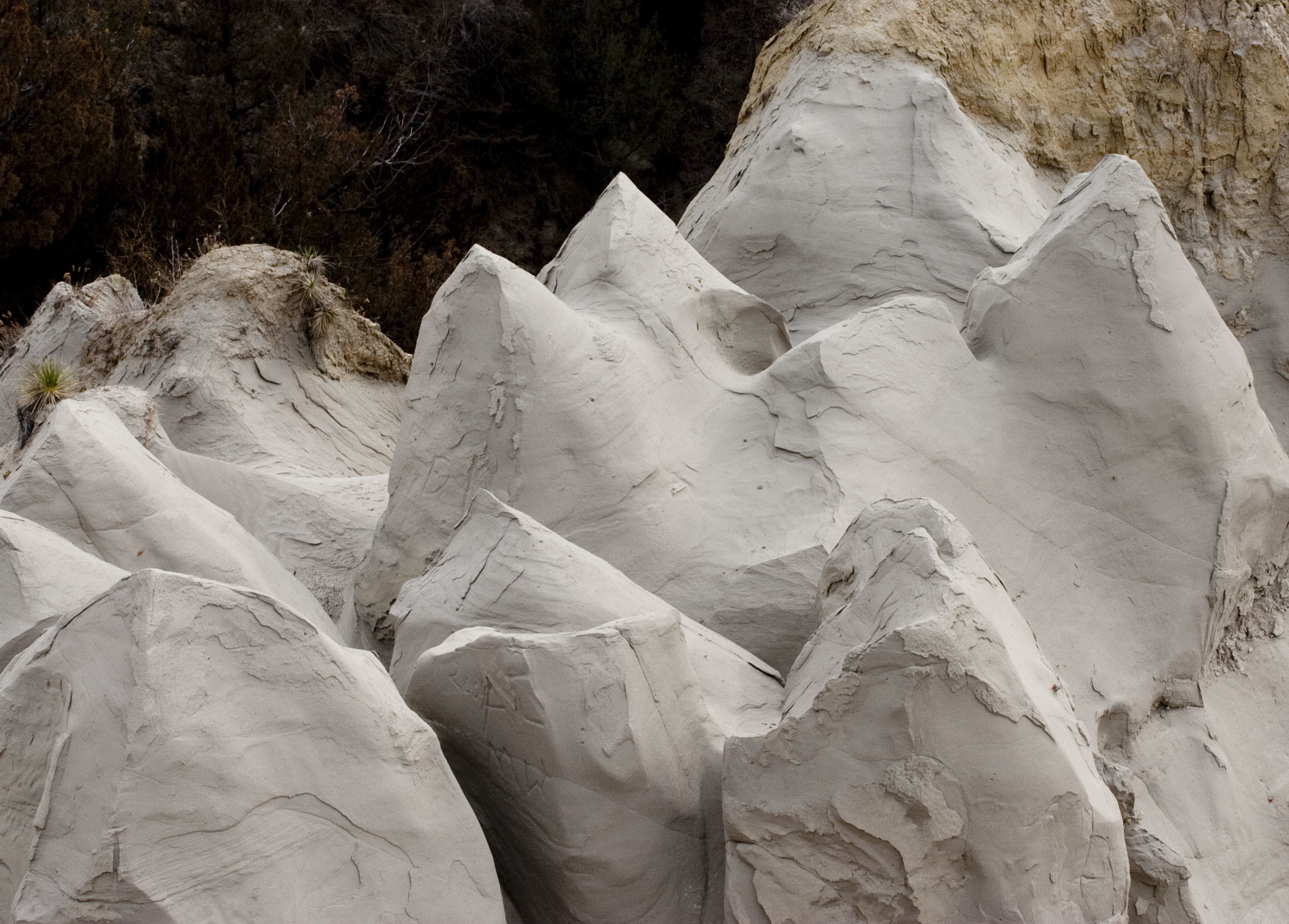
Friends, Sandstone comes in many hues from white to a deep gold color in the Wind Canyon area of the southern Little Missouri Badlands. Wind Canyon is a class room for wind erosion effects on soft sandstone. The wind carves caves, caverns and figures in the soft stone. Many have carved their initials in the rock, only to return a short time later to find them washed away with the sand. The bottom image is another wind-eroded area of Wind Canyon showing pencil tips figures. til Tomorrow MJ
Concretions

Friends, these brown round rocks are concretions, a cemented sandstone that is found throughout the badlands. The Romans made a cement from limestone, volcanic ash and clay. These elements were all present in the early badlands and it is feasible that a natural cement was formed from mixtures of limestone (calcium carbonate) ,clays and volcanic ash. This cement concentrated in a softer sediment and the cannonballs were formed. Now the softer clay layer is eroding and these concretions are falling out of the walls.
The most interesting are the cannon balls that are 2-3 feet in diameter that are present in the Northern Little Missouri Badlands. In the southern badlands, smaller cannon balls are often being exposed on slopes of bentonite that has a popcorn texture when dry. The bottom photo shows a cross section of a small cannonball that has a white nodule in the interior. til Tomorrow MJ

Hot Rock
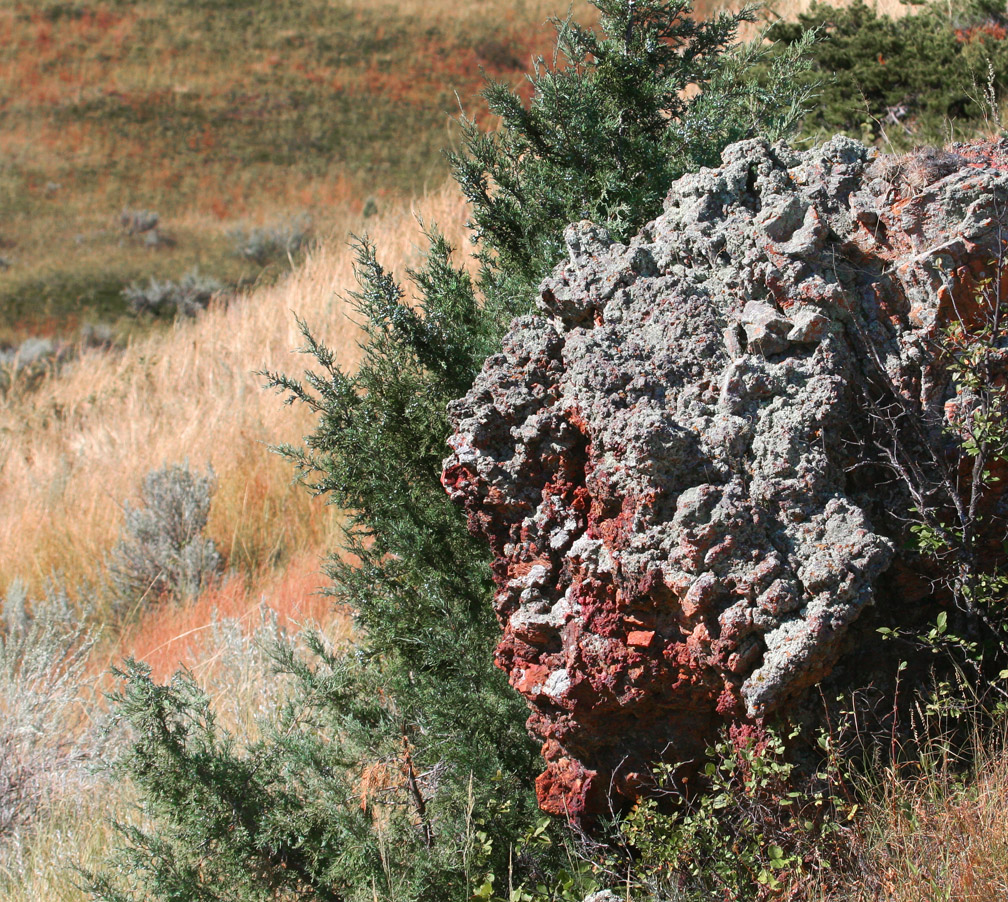
Friends, this holey rock is part burned coal and part scoria. Masses like these are prevalent and scattered throughout an area where a coal vein was burning in the recent past. They resemble lava formed from volcanic activity and are highly vesiculated (new word for the day). Walking the higher ridges around the coal vein area, great areas of the plains have sunk away as a result of the underground clay shrinking in the intense heat. The burned coal is a gray color and sometimes is tightly bound to the adjacent scoria as seen in this image. til Tomorrow MJ
Cap Rock Resistance

Friends, This image shows the principle of differential erosion (i made that up it is not a proper geological term) , the softer material will erode faster (duh) and the red caprock will protect some portions of the clay from erosion. The red cap rock protects the taller pillars, while the foreground pillars are slumping away unprotected, hence differential erosion. til Tomorrow MJ
Weekly Photo Challenge: Through

Friends, this thistle growing in the badlands is through blooming, the top bloom has gone to seed and the bottom bloom is in its full glory. This plant is 2-4 feet high perennial that grows on a dry plain, and if it is a native thistle, may be a wavy-leaved thistle. The white fuzz has seeds attached that are dispersed on a windy day to all parts. Many non-native thistle specie are invasive and farming practices are directed toward eliminating thistles from grain fields. But the native thistles are strongly linked to bees and butterflies life cycles and may have some medicinal benefits to humans. Thistles are also valuable to survival of goldfinches. They line their nests with the fuzz and feed the processed seeds to their young. I do not know if this is a native or non-native thistle, but next time I see such a plant, I will look more closely. The underside of leaves of native thistles have a whitish appearance and are covered with tiny hairs. So ends the botany lesson for the day. til Tomorrow MJ
Rivlets

Friends, I like to call this image “rivlets”, i know it isn’t a proper geological term, but it describes what i see. These little rivlets are not yet rivers, but still display the properties of rivers. The yellow stream on the left shows a braided formation while the middle shows a more meandering stream. Both rivlets are washing yellow sediments downhill following the path of least resistance and going around the harder scoria (red) deposits as they are very resistant to erosion by water. The toadstool formations near the top of the image show the results of erosion on layers of differing densities and hardness. I love the colorful patterns after a rain or in this case, a snowfall, melting and running downhill. til Tomorrow MJ
 MJ Springett