Blog Archives
Badlands Red Rock

Friends, this red rock is fragile and will break like any good china cup. The formation process is similar to producing bricks or fine tiles. A clay (bentonite) is baked by a coal vein that is burning underground. The coal is a soft lignite and may be spontaneously ignited or the vein may be lit by grass fires whipped by the wind. These fires may burn trees and then travel down the roots to the seam underground. When the various clays are baked and glazed by the igneous process, they are a form of porcelain or as it is locally called, scoria. When a chunk of this light rock is dropped, it clinks on a hard surface, and it is often called North Dakota Clinker. I know i am at home when i see the scoria peaks at sunset. til Tomorrow MJ
Badlands-The land
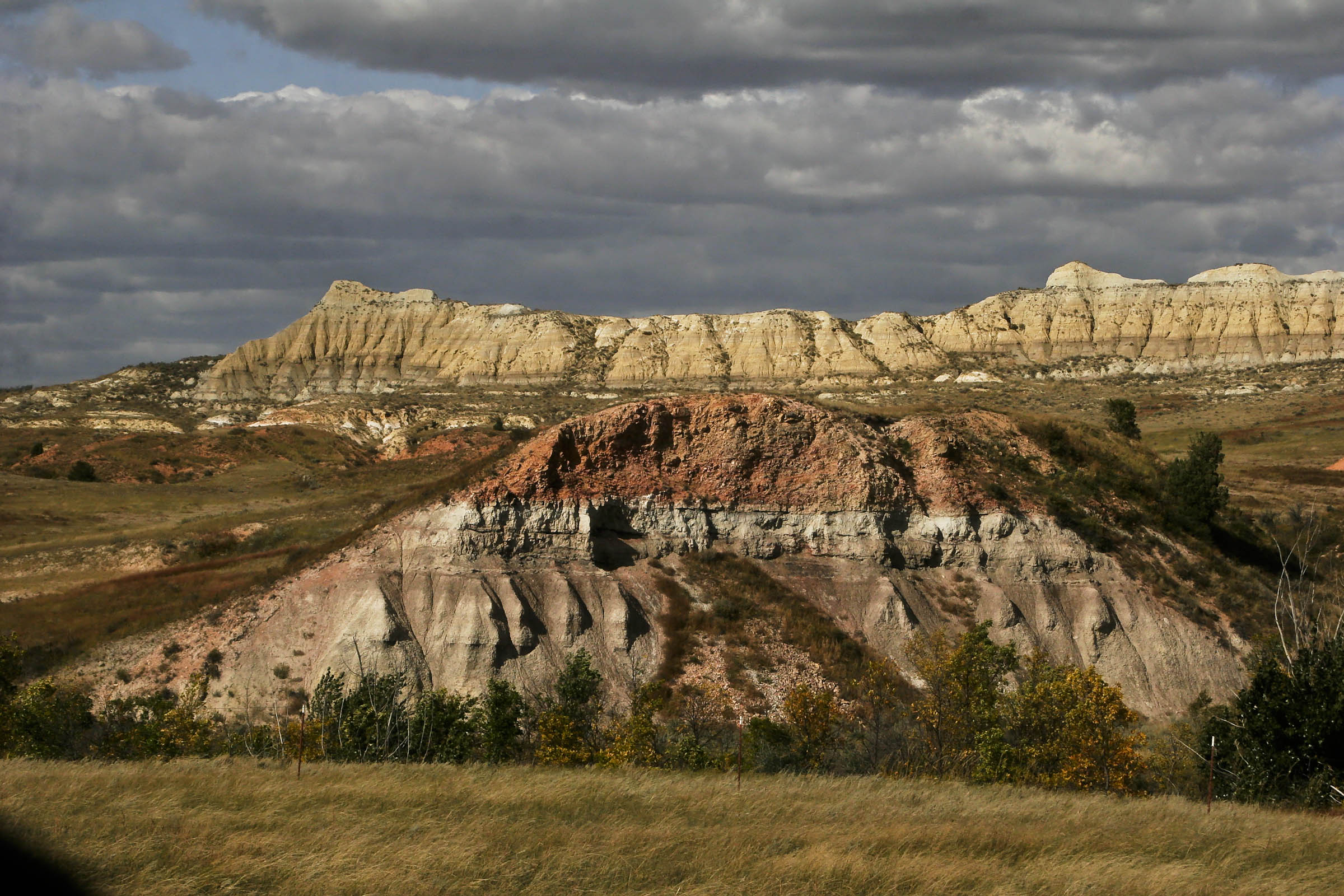
Friends, This image illustrates the two formations that make up the Little Missouri Badlands in North Dakota. Sediments layers that were deposited after the demise of the dinosaur were eroded by wind and water to form the rugged topography. The hill nearest is topped by a red rock deposit, locally called scoria, that was formed by coal burning under a layer of bentonite clay. When Lewis and Clark traveled through these badlands, they saw many of these burning coal veins. As a child, i remember walking on the warm clay and peeking down through the cracks of an actively burning vein with great wonder. So we begin a journey into a land lit by the setting sun and ancient fired formations. til Tomorrow MJ
 MJ Springett